

00.
Preface
As the living standards of people continually improve, the food industry has developed rapidly. This is reflected in an increased demand for a variety of food products with numerous amounts being traded frequently. Packaging, as one of the essential processes in food production, has become increasingly important. To facilitate and optimize food packaging more efficiently, various types and functions of packaging machinery have been further improved; beverage filling production lines are particularly significant among them.
- Definition of Canned Beverages: Canned beverages are drinks contained in non-hazardous plastic or metal containers, filled with edible liquid food products.
- Key Features: These beverages offer convenience, safety, and hygiene, as they can be consumed anytime, anywhere.
- Growing Demand: The thriving market for bottled beverages necessitates new requirements for filling equipment and processes, such as attractive packaging, food safety, production efficiency, and cost-effectiveness.
- The Need for Advanced Control Systems: Considering these factors, there is an urgent need to address the development of intelligent, efficient, and precise control systems for filling production lines.
As the last step of beverage processing, bottling plays a pivotal role in production efficiency, product quality, cost and enterprise benefits. To some extent, the stability and automation level of bottle filling equipment is critical for beverage companies.
As it stands, many beverage production companies in China still rely on traditional manufacturing processes which involve manual labor like bottle washing, filling, capping & labeling and packing. Such a production process not only fails to guarantee safety and sanitation but is also inefficient leading to poor quality of output and low rates. To solve this problem, automatic liquid fillers have been developed yet the challenge of improving control precision as well as response speed remains unsolved.
Given the current issues of slow filling speeds, low accuracy, and over- or underfilling in domestic automatic fillers, we have concentrated our research on analyzing the processes of a filling production line to propose an adaptive level control method. Furthermore, this paper outlines both structure and software design for the control system with hopes of improving precision within a filler production line.
01.
Analysis of filling production line
The filling production line mainly consists of fillers, bottle washers, cappers, coding machines, labeling machines and packing machines. According to the requirements of the filling process, we will focus on discussing several main procedures including grasping and cleaning as well as loading and sealing.
1.1 Grasping & Cleaning
The robot arm moves up-down-left-right according to a programmed procedure then grabs empty bottles before placing them on conveyor belt 1. After arriving at the washing station they are rinsed thoroughly while being disinfected in preparation for filing.
1.2 Filling
After the bottles are thoroughly rinsed and sterilized, Conveyor Belt 1 delivers them to the filling station. At this point, both Motor 1 and Travel Switch must be re-activated while opening up Filling Solenoid Valve. This Valve will then fill beverages into each bottle until it reaches its predetermined volume; afterwards Filling Solenoid is shut off while resetting Motor 1 & Travel Switch before beginning a second round of filling operations.
1.3 Capping
After the filled bottle from Conveyor Belt 1 reaches Conveyor Belt 2, it will be sent to the Capping Station. This station is equipped with a Limit Switch that detects when the beverage bottle has arrived; once this occurs, Motor 2 resets and stops Conveyor belt 2 so that capping can begin. Once complete, Motor 2 sets again for another journey as Travel switch resets for successive cappings.
1.4 Packing
The robotic arm will place an empty box on the conveyor belt 3 when it reaches loading station, causing motor 3 to reset and the conveyor belt to stop in preparation for packing. If the amount of beverage bottles meets requirements, then the robot hand will grab them up and put them into this empty box. At that time, a gravity sensor located at bottom of conveyer belt 3 responds accordingly thus allowing robot hand to reset itself as well prepare for next cycle; likewise with motor 3 set position along with running again of conveying band which also has its travel switch being resettled ready for following loading session.
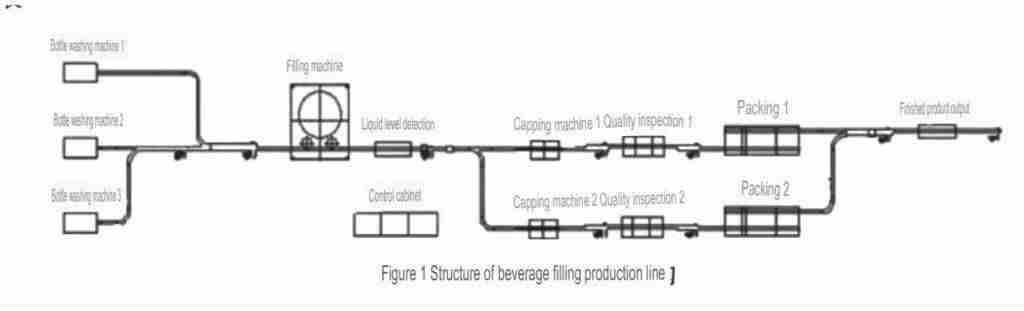
In addition to the aforementioned processes, inspections and sorting are usually conducted after filling, capping, packaging etc. in order to eliminate inferior products. Based on this discussion, a beverage filling production line is diagrammatically presented in Figure 1. During the entire process of manufacturing it poses an arduous task for liquid level control with respect to precision which can directly affect the whole procedure of filling; if not precise enough "overflow" or "half-bottle cases may occur--hence we have designed herein a self-adaptive control method for level regulation.
02.
Liquid level adaptive control
Since the liquid level control system is easily affected by external disturbances and its parameters are uncertain, the nonlinear characteristics of the system are quite strong. To ensure the control performance, the designer must conduct reasonable parameter optimization according to the fluctuation of the parameters of the controlled object.
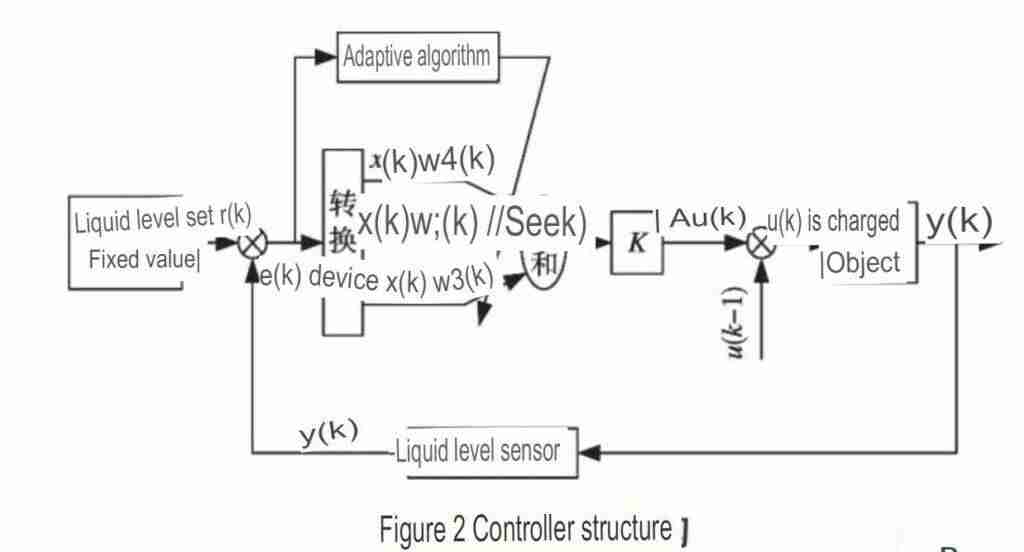
Taking into account all factors, a self-adaptive control algorithm based on single neuron is proposed in this paper to improve the accuracy of level control. The structure of the controller can be seen in Figure 2 as follows: In which r(k) represents setpoint for liquid level; y(k) stands for actual value; e (K ) denotes deviation from target and u (K ) denotes amount of controlling force applied. Meanwhile, converter helps transform liquid discrepancy e( K ) and state variables x1 ( k ), x2 ( k ), x3 ( k ).
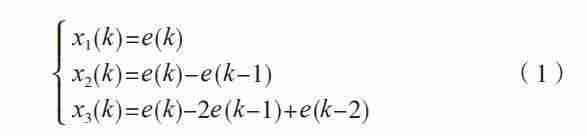
In order to elevate the self-adjusting capacity of a system, we need to adjust the weights for state variables xi(k) (wi(k)) based on liquid level deviation, control value and states of the system as follows:
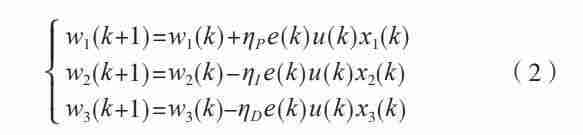
Within the formula, ηP, ηI and ηD all represent learning rates that are greater than zero. The effect of these learning rates can be observed as: increasing the value of ηP will quicken system response but increase overshoot; a larger amount of ηI reduces system overshoot while decreasing reaction speed; an elevated level of ηD also decreases responsiveness and minimizes overshoot. Taking into consideration the requirements for liquid level control systems, this paper has chosen to use a neural activation function such as below:

In this equation, K represents the proportional coefficient. As K increases, system responses will become faster; however, it can also impact the stability of a system. Determining an ideal value for K must be determined through experimentation. Additionally, control increment can be described as follows:

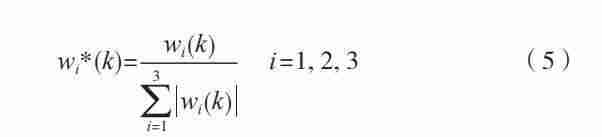
In conclusion, the liquid level control can be expressed as:

By designing a liquid level control program according to formula (6), we can achieve precise control of beverage filling levels.
03.
Control system design
3.1 Hardware Design
Compared to other controllers, Programmable Logic Controllers (PLCs) are exceptionally practical and can be easily expanded. Their programming language - Ladder Diagram is intuitive, simple and straightforward. Moreover, PLCs are easy to install with good stability and strong anti-interference ability so they're especially suitable for environments with a lot of interference factors.
To conclude, the S7-300 PLC model is a superior choice due to its robust expansion capabilities, compact design, and powerful instruction system. Additionally, this series of PLCs has various digital input/output interfaces as well as analog inputs that satisfy the control requirements for filling production lines. Based on our analysis of these production lines above, 24 input ports and 16 output ports are needed; please refer to Table 1 below for I/O allocations in the PLC.
Table 1 I/O allocation
| Input Item | Input Function Description | Input Address | Output Item | Output Function Description | Output Address |
|---|---|---|---|---|---|
| SB1 | Production Line Start | I0.0 | SQ4 | Filling Completed and Qualified | I2.4 |
| SB2 | Production Line Stop | I0.1 | SQ5 | Filling Completed but Unqualified | I2.5 |
| SB3 | Mode Selection - Automatic | I0.2 | SQ6 | Capping Completed and Qualified | I2.6 |
| SB4 | Mode Selection - Manual | I0.3 | SQ7 | Capping Completed but Unqualified | I2.7 |
| SB5 | Filling Operation Start | I0.4 | HL1 | Production Line Start Indicator | Q0.0 |
| SB6 | Filling Operation Stop | I0.5 | HL2 | Manual Mode Indicator | Q0.1 |
| SB7 | Capping Operation Start | I0.6 | HL3 | Automatic Mode Indicator | Q0.2 |
| SB8 | Capping Operation Stop | I0.7 | KM1 | Filling Operation | Q0.3 |
| SB9 | Boxing Operation Start | I1.0 | KM2 | Capping Operation | Q0.4 |
| SB10 | Boxing Operation Stop | I1.1 | KM3 | Packaging Operation | Q0.5 |
| SB11 | Finished Product Output Start | I1.2 | KM4 | Conveyor Belts 1, 2, 3 | Q0.6 |
| SB12 | Finished Product Output Stop | I1.3 | KM5 | Downward Movement | Q0.7 |
| SB13 | Robotic Arm Downward Movement | I1.4 | KM6 | Upward Movement | Q1.0 |
| SB14 | Robotic Arm Upward Movement | I1.5 | KM7 | Rightward Movement | Q1.1 |
| SB15 | Robotic Arm Rightward Movement | I1.6 | KM8 | Leftward Movement | Q1.2 |
| SB16 | Robotic Arm Leftward Movement | I1.7 | KM9 | Clamping Operation | Q1.3 |
| FR1 | Fault Detection | I2.0 | KM10 | Nozzle Cleaning | Q1.4 |
| SQ1 | Filling Stroke Switch Response | I2.1 | KM11 | Normal Push Rod | Q1.5 |
| SQ2 | Capping Stroke Switch Response | I2.2 | KM12 | Abnormal Push Rod | Q1.6 |
| SQ3 | Sorting Stroke Switch Response | I2.3 | AL1 | Buzzer | Q1.7 |
3.2 Software Design
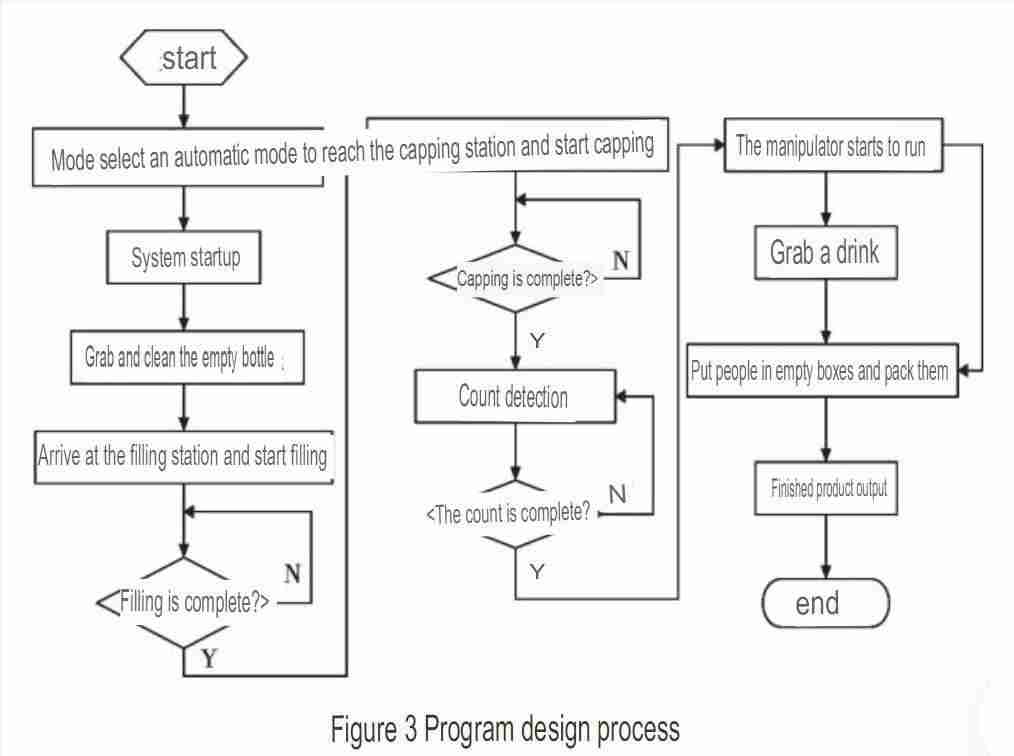
For the purpose of illustration, take automated control mode as an example. As shown in Figure 3, the programming design process is focused on key processes such as cleaning, filling, testing and sealing.
04.
Experimental research
4.1 Hardware Platform
To demonstrate the viability and efficacy of our proposed control system, we have established a platform and conducted experimental studies to validate its performance.
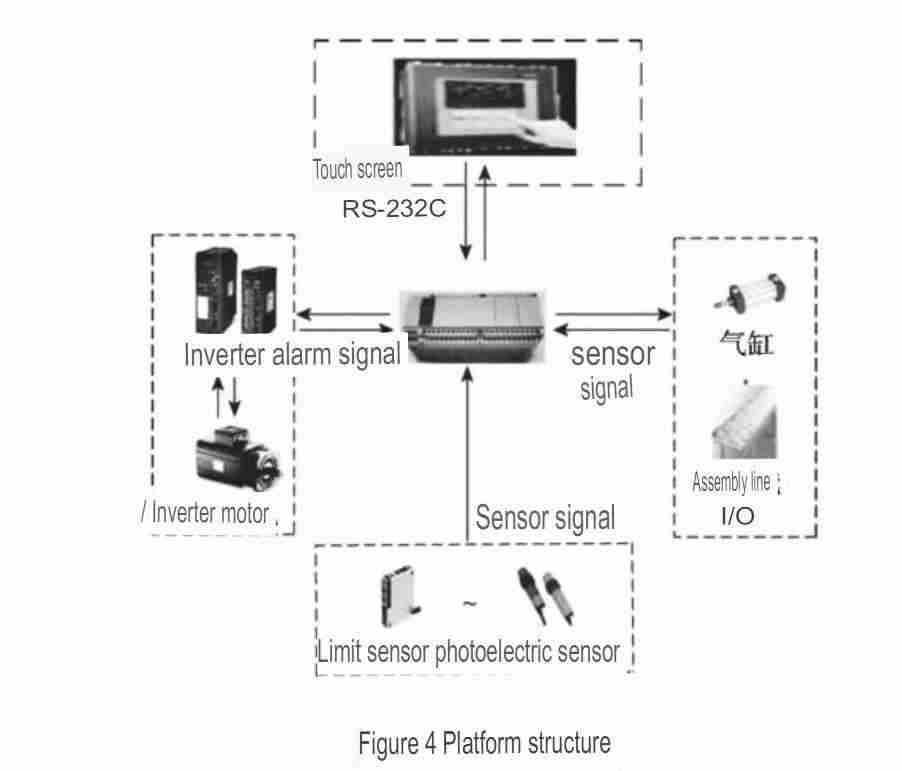
As the core of control, S7-300 series programmable logic controllers are equipped with analog output modules to facilitate variable frequency motor control. To ensure a smooth user experience, Weintek MT6070IH touchscreens have been selected for human-machine interaction interfaces. Furthermore, sensors such as photoelectric sensors and limit switches have also been utilized in this system design. All collected signals are sent directly to the PLC which analyses and processes them according to algorithms before finally transmitting appropriate commands through its output terminals that can be used by actuators accordingly (see Figure 4).
The power source of the automatic filling production line is three-phase five-wire 380 V/50 Hz AC power, and the AC contactor is used for motor start and stop control while an overload relay protects it from overuse. Through ABB frequency converter, we can adjust and control the speed of a variable frequency motor.
4.2 Test results
To test the conditions, 500 mL of mineral water was filled into bottles under a controlled temperature range between 18-24 ℃ and with a filling speed at 60 bottles per minute. After 5 minutes of running, inspection began by comparing the standard weight to the measured value in order to determine accuracy. Twenty data sets were randomly selected from multiple filled containers as shown in Table 2 below.
Table 2: Experimental Results
| S.No. | Actual Mass (g) | Error (g) | S.No. | Actual Mass (g) | Error (g) |
|---|---|---|---|---|---|
| 1 | 498 | -2 | 11 | 496 | -4 |
| 2 | 499 | -1 | 12 | 498 | -2 |
| 3 | 500 | 0 | 13 | 500 | 0 |
| 4 | 501 | 1 | 14 | 503 | 3 |
| 5 | 502 | 2 | 15 | 504 | 4 |
| 6 | 500 | -3 | 16 | 501 | 1 |
| 7 | 497 | -3 | 17 | 500 | 0 |
| 8 | 498 | -2 | 18 | 499 | -1 |
| 9 | 499 | -1 | 19 | 502 | 2 |
| 10 | 500 | 0 | 20 | 501 | - |
The experimental results have demonstrated that the greatest weight error for filling is 4g, and the accuracy of filling has improved; Furthermore, during the entire process of filling, it runs smoothly and quickly enough to meet production requirements.
05.
Wrapping up
In this study, the focus is on the design of a filling line control system and an adaptive liquid level controller. Based upon analysis of the filling process, PLC and touch screen-based controllers have been designed accordingly.
Drawing on the Single Neuron Control Algorithm, we present a liquid level self-adjusting control algorithm to further enhance filling precision. Experiment results indicate that this system can not only improve accuracy in filling but also enable stable production line running and higher speed of packaging - effectively meeting technological requirements for packing operations.
At the same time, our research has implications for beverage production lines other than those involving mineral water, such as Carbonated Soft Drink (CSD) filling machines, bottled water filling machines, fruit juice filling machines,water treatment and bottle blow molding machines. With this in mind, we hope that our findings can contribute to the development of automated control systems for beverage production lines in general.
Reference:
- https://www.beckhoff.com/en-en/industries/packaging-machines/
- https://www.processanddata.com/tag/share2act/
- https://www.sprecherschuh.com/content/rockwell-automation/language-masters/en/industries/food-beverage/food-packaging-automation.html
- https://www.packaging-gateway.com/features/how-iot-is-revolutionising-the-packaging-industry/
- https://apfoodonline.com/industry/from-product-to-system-the-evolution-of-packaging-machine-design/
- https://www.optima-packaging.com/en/consumer
- https://www.se.com/ie/en/work/solutions/machine-control/packaging-machines/
- https://www.frontiersin.org/articles/10.3389/fsufs.2021.630393/full
- https://innovationsfood.com/wp-content/uploads/2021/05/IPP-MAY-2021-SMALL.pdf
- https://www.rockwellautomation.com/en-us/industries/food-beverage.html
- https://www.alfalaval.nl/industries/food-dairy-and-beverage/food-processing/meat-and-poultry-processing/poultry-mechanically-deboned-meat-processing/
- https://imago-technologies.com/
- https://www.jbtc.com/foodtech/products-and-solutions/solutions/intelligent-conveyor/
- https://new.siemens.com/us/en/markets/solutions-for-machine-builders/packaging-machines.html
- https://www.ncbi.nlm.nih.gov/pmc/articles/PMC8350558/
- https://novantaphotonics.com/how-laser-additive-manufacturing-is-revolutionizing-industrial-production/



