
1,500
Maximum cooling tons referenced for ultra-large beverage plants in the published capacities section.
Water cooling tower · industrial cooling tower · heat rejection system
Beverage Cooling Tower packages from iBottling support breweries, distilleries, and beverage plants with 10–1,500 ton heat-rejection ranges published on the original listing.
Since 1995 · CE & ISO 9001 · 150+ countries
iBottling maps Beverage Cooling Tower scope to evaporative heat rejection for wort cooling, fermenter jackets, pasteurization, CIP returns, and other beverage utilities—using the 10–1,500 cooling ton span and configuration guidance published on the original water cooling tower listing.

 Satisfaction Guaranteed
 2 Years Warranty
 Overseas Engineer Support
 On-time Delivery
Beverage Cooling Tower systems reject heat from beverage utilities through evaporative fill media, induced or forced draft fans, and closed-loop friendly basins—premium mechanical scope for breweries, distilleries, wineries, and bottling plants exactly as described on the published cooling tower page.
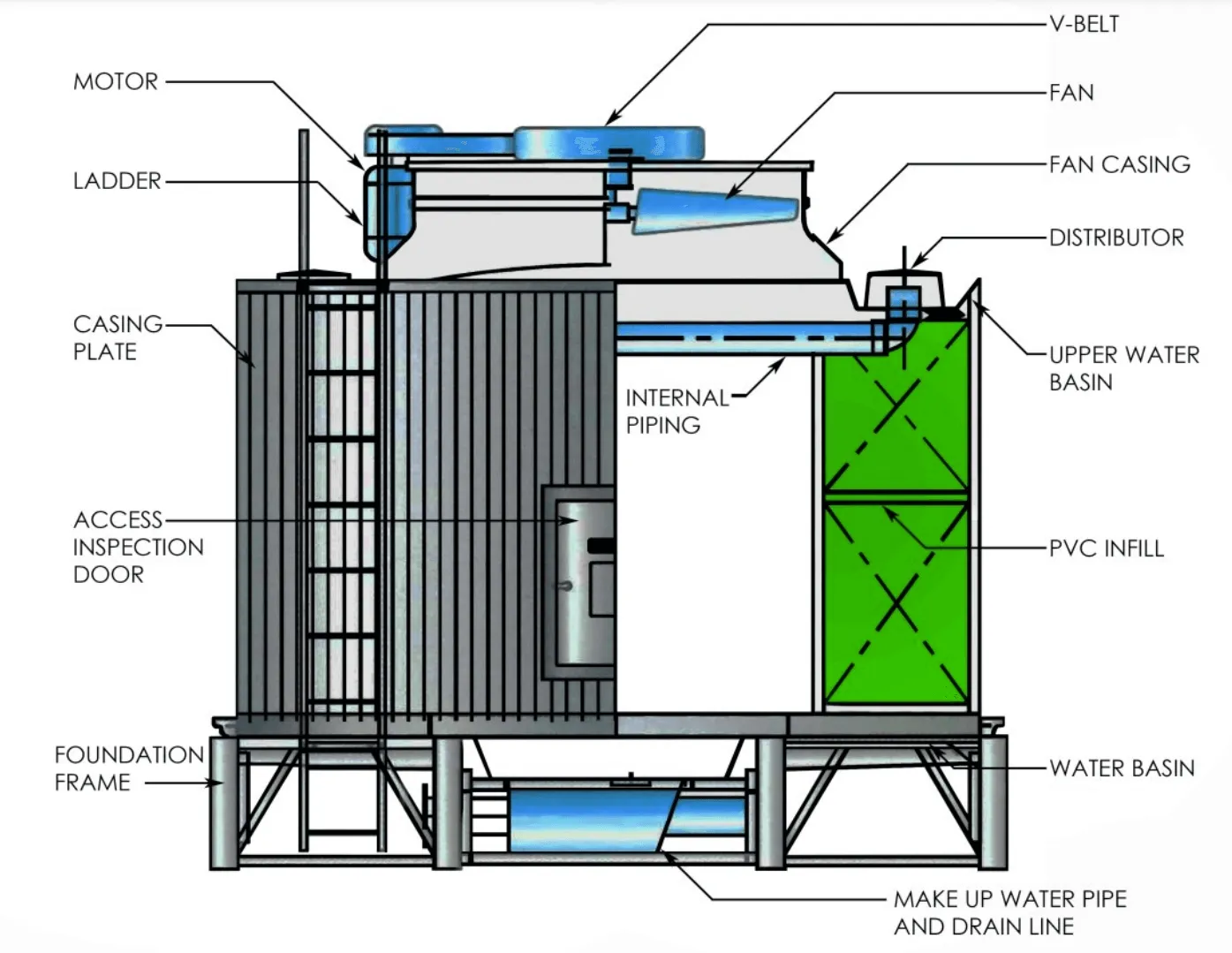
Warm process water enters the Beverage Cooling Tower basin, travels across high-efficiency film or splash fill, and exits cooler after fan-induced evaporation—matching the “How Do Water Cooling Towers Work?” narrative on the original listing.
Every Beverage Cooling Tower ships with 304 stainless basins, tri-clamp fittings, crevice-free surfaces, and food-grade construction bullets published beside the sanitary construction section.
PLC + HMI supervision keeps each Beverage Cooling Tower aligned with redundant pumps, redundant fans, surge capacity, and remote connectivity statements taken verbatim from the advanced controls and reliability sections.
1,500
Maximum cooling tons referenced for ultra-large beverage plants in the published capacities section.
25+
Years of beverage process cooling expertise cited in the published trust narrative on the original listing.
4
Published tower families: crossflow, counterflow, induced draft, and forced draft configurations.
Beverage Cooling Tower programs align basin hydraulics, fill selection, and fan laws with the heat loads spelled out for breweries, distilleries, wineries, and beverage plants on the published module.


Final engineering scope, performance values, and documentation are confirmed in the project quotation and technical package.
The published “Different Types of Cooling Towers” section contrasts crossflow, counterflow, induced draft, and forced draft arrangements with benefits and applications bullets for each configuration.
| Item | Specification |
|---|---|
| Equipment focus | Air-cooled and water-cooled cooling towers for beverage plant heat rejection (published module) |
| Capacity span published on-page | 10 to 1,500 cooling tons (verbatim range from introductory copy) |
| Applications enumerated | Wort cooling, fermenter jacket cooling, tank cooling, pasteurization, CIP systems, and other mission-critical beverage processes |
| Construction highlights | 304 stainless basins, FRP or stainless cabinets, polypropylene or PVC fill, fiberglass fans, stainless shafts, TEFC motors, stainless pumps, schedule 10 stainless piping with tri-clamp connections |
| Control claims | PLC + HMI, ±0.5°F temperature statements, redundant fans/pumps, remote monitoring, and DCS/BMS/SCADA integration bullets from the advanced controls copy |
| HS code published with structured data | 8422301090 (JSON-LD on published product listing) |
| Published price band (structured data) | AggregateOffer low/high USD 2,000–200,000 published beside JSON-LD (not a performance guarantee) |
| Nominal fan diameter / motor kW | |
| Delivery scope | Application review, tower configuration selection, integration planning, commissioning support per project |
| Item | Crossflow | Counterflow | Induced draft | Forced draft | Notes |
|---|---|---|---|---|---|
| Equipment focus | Air-cooled and water-cooled cooling towers for beverage plant heat rejection (published module) | ||||
| Capacity span published on-page | 10 to 1,500 cooling tons (verbatim range from introductory copy) | ||||
| Applications enumerated | Wort cooling, fermenter jacket cooling, tank cooling, pasteurization, CIP systems, and other mission-critical beverage processes | ||||
| Construction highlights | 304 stainless basins, FRP or stainless cabinets, polypropylene or PVC fill, fiberglass fans, stainless shafts, TEFC motors, stainless pumps, schedule 10 stainless piping with tri-clamp connections | ||||
| Control claims | PLC + HMI, ±0.5°F temperature statements, redundant fans/pumps, remote monitoring, and DCS/BMS/SCADA integration bullets from the advanced controls copy | ||||
| HS code published with structured data | 8422301090 (JSON-LD on published product listing) | ||||
| Published price band (structured data) | AggregateOffer low/high USD 2,000–200,000 published beside JSON-LD (not a performance guarantee) | ||||
| Nominal fan diameter / motor kW | N/A (not specified in source page) | N/A (not specified in source page) | N/A (not specified in source page) | N/A (not specified in source page) | Released after mechanical FAT |
| Delivery scope | Application review, tower configuration selection, integration planning, commissioning support per project | ||||
Plan Beverage Cooling Tower duty alongside blending, filtration, aging, and chilling assets. Every link below resolves to the current processing silo map for syrup preparation systems.
Evaporative rejection plus VFD staging described on the published module keeps return temperatures closer to setpoint for pasteurizers, fermenters, and CIP loops.
Dedicated loops, drift control, optional treatment, and insulated cabinets referenced in the sanitary and efficiency sections reduce waste heat and biological risk.
"Tower-side VFD staging held our return-water band tight for pasteurizer breakout and reduced glycol trim calls during summer peaks. FAT checklists covered drift eliminators, basin cleanability, and the PLC/HMI points we needed for utilities sign-off."
Since 1995 · CE & ISO 9001 · 150+ countries

Complete beverage line engineering from treatment to packaging.
OEM-grade beverage lines — treatment, filling, blow molding, and packaging systems engineered for uptime, cleanability, and export commissioning.
HK: Chevalier House, 45-51 Chatham Road S.
Shanghai: Hope Business Bldg, No. 655, Fengzhou Rd.
Shenzhen: Overseas Friendship Bldg, No. 12 Yingchun Rd.
+86 (755) 8314-3479


