
Powder Filling Machine & Complete Powder Filling Line
An auger powder filling machine doses milk powder, protein powder, coffee and instant drink mixes into jars and cans by turning a servo-driven screw a set number of revolutions. You can buy it as a standalone filler, or as the heart of a complete powder filling line that also grinds, blends, caps, seals, labels and wraps.

How an auger powder filling machine works
Powder sits in a hopper above a vertical screw (the auger) that runs inside a close-fitting tube. Each turn of the screw pushes out a near-constant volume of powder, so the controller sets the dose by counting revolutions. A servo motor drives the screw, which lets it start, stop and repeat the same number of turns very precisely for every container.
An agitator in the hopper keeps the powder moving and evenly packed around the screw, so the volume delivered per turn stays steady. Once a few sample containers have been weighed, the operator corrects the revolution count on the touch screen until the dose matches the target weight.
| Parameter | Value |
|---|---|
| Drive | Servo motor on the auger, touch-screen (HMI) control |
| Filling heads | 1 (single auger) |
| Filling accuracy | ±0.5–1%, depending on the powder |
| Fill range | Set by the auger screw and funnel size; swap the screw set for a very different weight |
| Output | 10–20 containers/min, depending on container and fill weight |
| Hopper | Transparent, so the powder level is visible; height-adjustable metering unit |
| Construction | Stainless steel frame and product-contact parts |
| Power | 380 V, 3 kW |
| Machine size | 2,000 × 1,200 × 2,000 mm |
Which powders an auger filler handles
Auger dosing suits free-flowing and fine powders that hold their shape inside the screw flights: milk powder, protein powder, coffee, cocoa, glucose, rice flour and sugar-based solid drinks. Very light or sticky powders still fill well but sit at the wider end of the accuracy band. Coarse granules that pour freely are often better dosed by a cup filler or a weigh filler, so send a sample photo and bulk density if you are unsure.
Accuracy depends more on the powder than on the machine. A powder that changes density as it settles, picks up moisture or forms bridges in the hopper will vary more per dose, which is why a stable, closed feed into the hopper matters.
From a single machine to a full line
A semi-automatic setup is a single auger filler where the operator places each jar under the nozzle and the machine doses on a foot pedal or sensor signal. It works for small batches and trial runs. Once output or labor costs rise, the same filler is set on a conveyor and linked to container feeding, capping and sealing so jars move through without hand placement. The rest of this page covers that full line.
Process flow of a powder filling line
Each machine hands the product or the container to the next, with conveyors in between:
- Milling: a pulverizer reduces sugar, grains or lumps to a consistent particle size, with a pulse dust collector to capture fines.
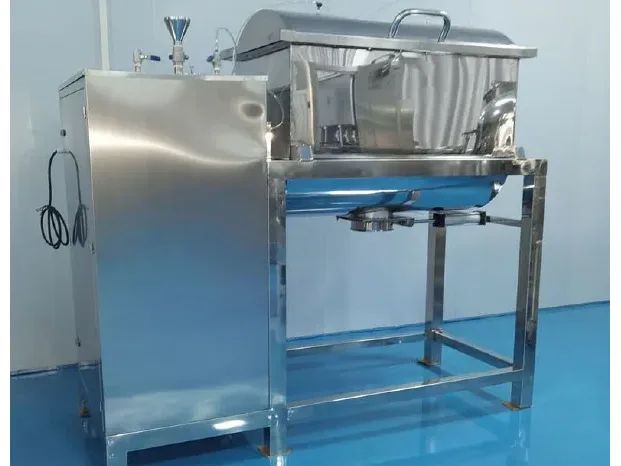
- Mixing: a 1T horizontal ribbon mixer blends the base powder with flavors, vitamins or other minor ingredients.
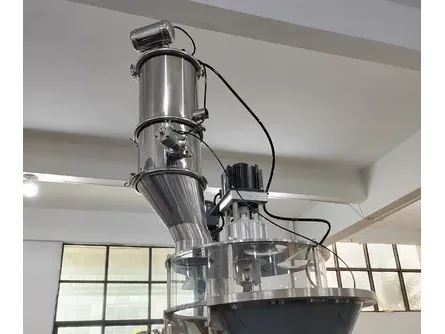
- Vacuum feeding: a closed vacuum conveyor lifts powder into the filler hopper without open scooping or dust.
- Auger filling: a servo-driven screw doses each jar by volume to a set weight.
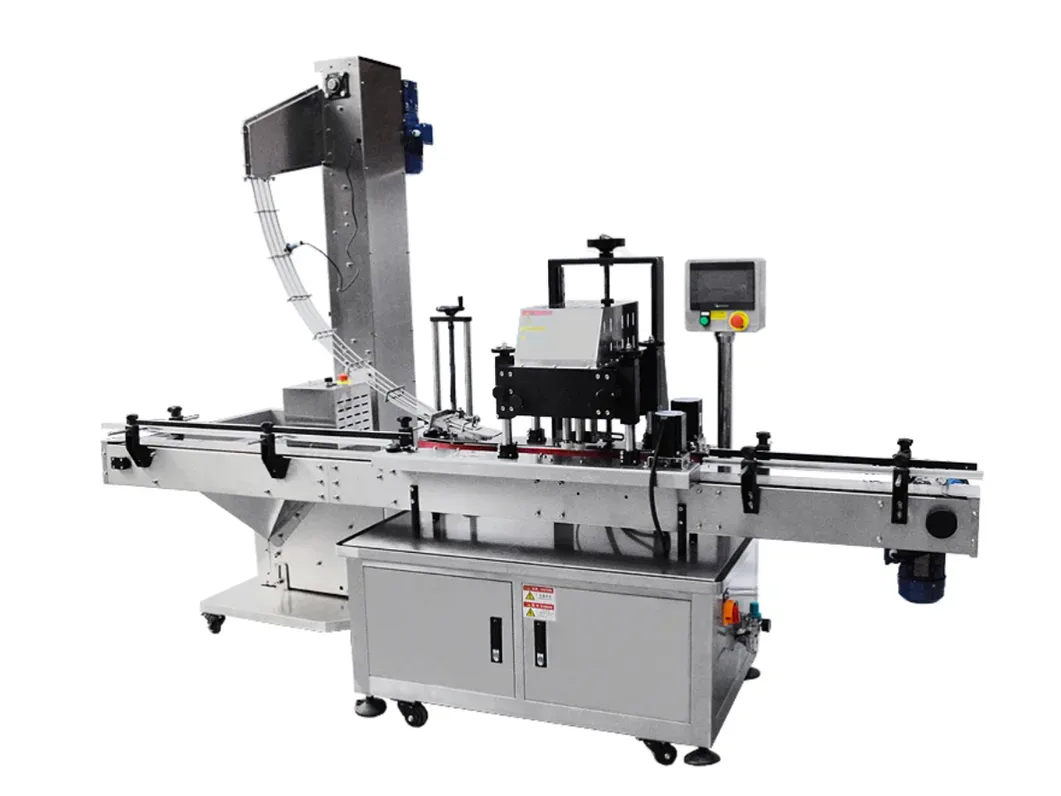
- Capping: screw caps are fed from a cap elevator and tightened by a belt-type capper that rejects skewed caps.
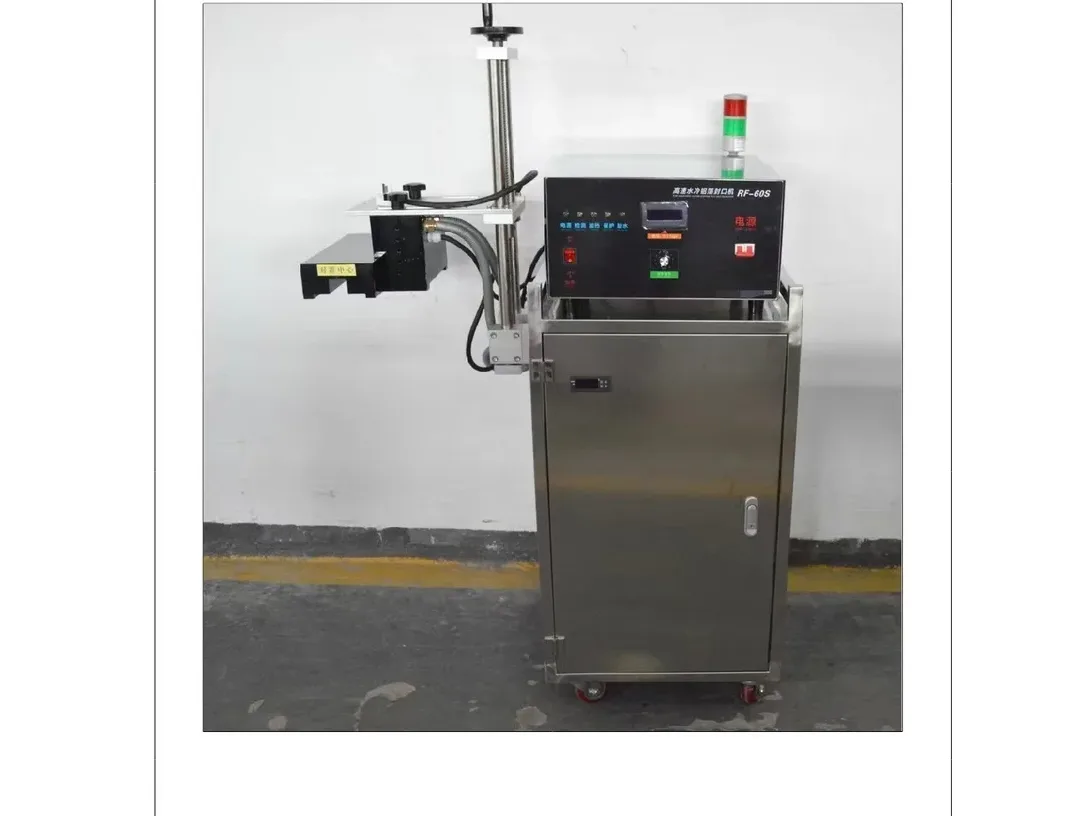
- Foil induction sealing: an electromagnetic coil bonds an aluminum foil liner to the jar mouth for a tamper-evident, moisture-tight seal.
- Labeling: a wrap-around labeler for the jar body, and a top labeler for lids where needed.
- Shrink wrap or carton sealing: jars are bundled in film or packed and taped into cartons.
Suitable powders and solid drinks
The auger filler suits free-flowing and fine powders. Different products only need a matching screw and funnel set.
| Product | Notes |
|---|---|
| Milk powder and infant formula base | Fine powder; closed vacuum feeding limits dust |
| Protein powder (whey, plant protein) | Low bulk density; auger size chosen to suit |
| Coffee powder and instant coffee mixes | Foil seal protects against moisture and aroma loss |
| Solid drinks and instant beverage powders | Sugar-based blends often go through the pulverizer and mixer first |
| Cocoa powder, glucose, rice flour | Same line, with screw set changed per product |
The auger filler inside the line
In the line, the auger filler is fed by a vacuum feeder that refills its hopper through a closed pipe, keeping the level steady for consistent doses. Dust is drawn off at the filling point, and the stainless steel contact parts strip down quickly for cleaning between products.
Container feeding, foil sealing and labeling
Empty jars or cans are loaded onto a rotary unscrambler table, which lines them up single-file onto the conveyor. After capping, the induction sealer heats the foil liner through the cap without touching it, so the line keeps moving at full speed.
The wrap-around labeler places self-adhesive labels on round jars, and a top labeler can add a lid label or seal sticker.
| Machine | Parameter | Value |
|---|---|---|
| Rotary unscrambler | Container height | 25–220 mm |
| Rotary unscrambler | Container diameter | 35–130 mm |
| Rotary unscrambler | Turntable diameter | 1,180 mm |
| Rotary unscrambler | Machine size | 1,430 × 1,180 × 850 mm |
| Top (lid) labeler | Labeling accuracy | ±1.0 mm |
| Top (lid) labeler | Label width | Up to 130 mm |
| Top (lid) labeler | Machine size | 2,000 × 800 × 1,500 mm |
Powder preparation: milling and mixing
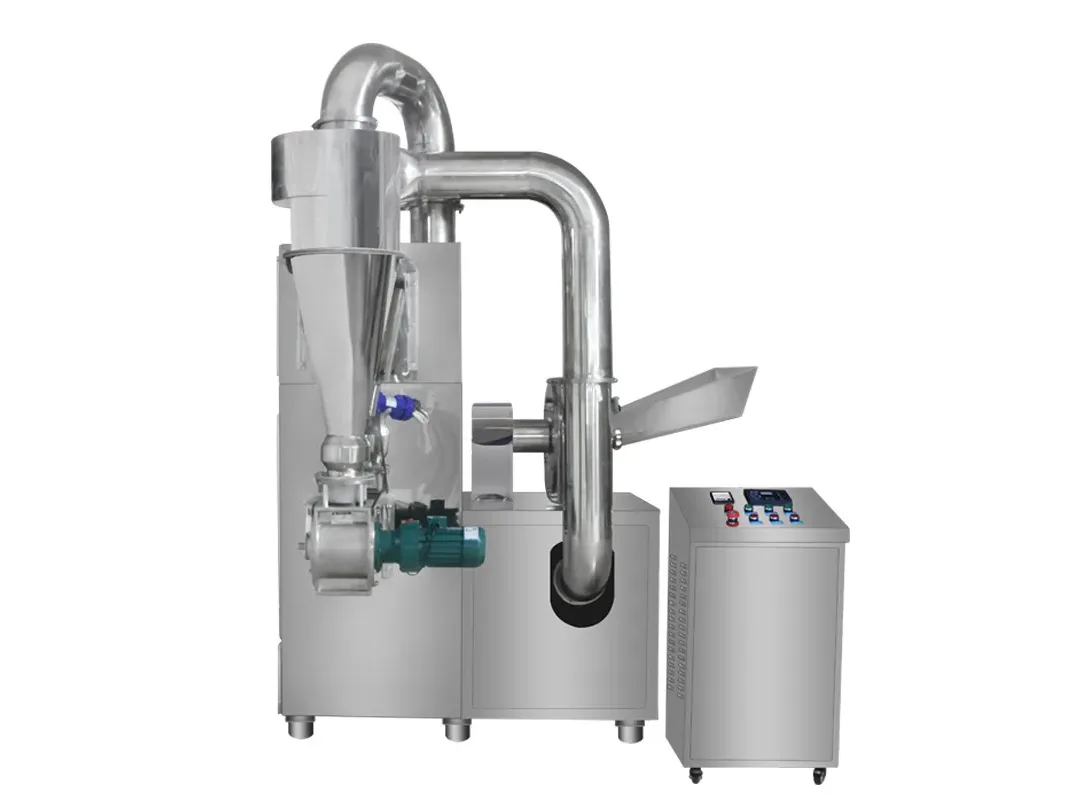
Sugar-based solid drinks and blended formulas are usually ground and mixed before filling. The pulverizer uses a high-speed rotor to break crystals and lumps, and its pulse-jet dust collector keeps the grinding room clean.
The 1T horizontal mixer is built from 304 stainless steel and can spray a small amount of liquid, such as flavor oil, into the powder while it blends. A storage hopper and screw feeder then buffer the blended powder ahead of the vacuum feeder.
End of line: shrink wrapping and carton sealing
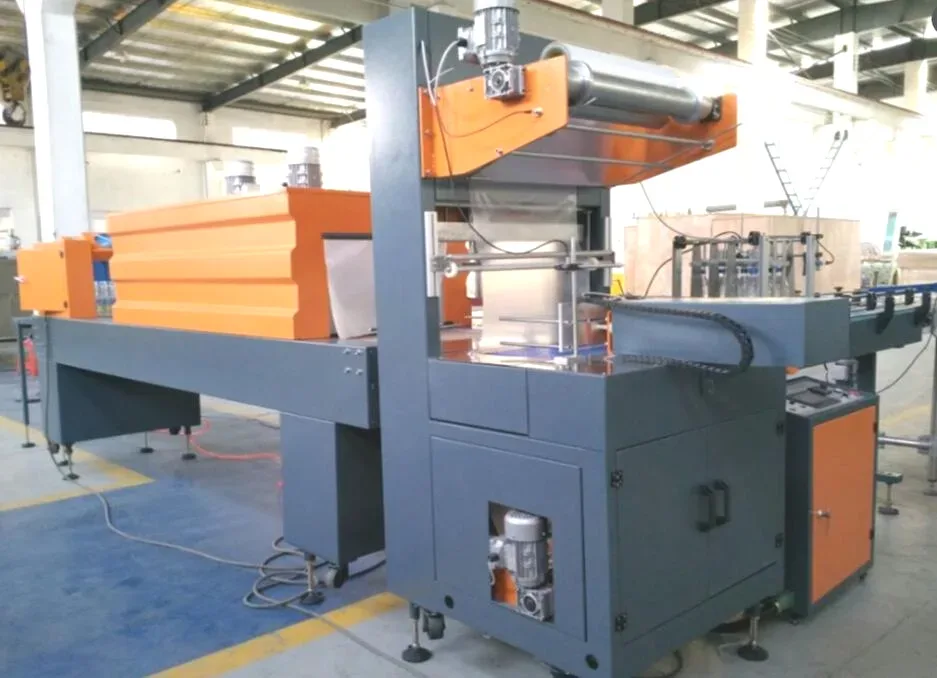
Finished jars can be grouped and wrapped in PE film by an automatic shrink wrapper, or packed into cartons and closed on a tape carton sealer. Many plants run both: shrink packs for retail, cartons for export. See more packaging and end-of-line equipment.
Sample configuration: 10–15 jars/min at 600 g
A typical line for a solid drink or protein brand packing 600 g round jars:
- Pulverizer with pulse dust collector
- 1T horizontal mixer, storage tank, screw feeder and ladder platform
- Vacuum feeder
- Single-head servo auger filler
- Cap elevator and automatic capping machine
- Aluminum foil induction sealer
- Round jar labeler and top (lid) labeler
- Shrink wrapper and carton sealer
What to send for a powder line proposal
Your powder (with a photo or bulk density if known), fill weight, jar or can drawings, cap type, target output per minute or per shift, and whether you need milling and mixing or only filling and packing.
Frequently Asked Questions
How accurate is auger powder filling?
Typically within ±0.5–1% of the target weight. Fine, free-flowing powders sit at the tighter end; sticky or very light powders at the wider end.
Can one machine fill different jar sizes and weights?
Yes. Fill weight is set on the touch screen, and a different auger screw is fitted for a substantially different range. Container guides are adjusted for the new jar.
Why use a vacuum feeder instead of a screw feeder?
A vacuum feeder moves powder through a closed pipe, so there is less dust in the room and less risk of contamination. It also lets the bulk powder sit at floor level rather than on a platform beside the filler.
What does foil induction sealing add?
It bonds a foil liner across the jar mouth. The seal keeps out moisture and air, which protects milk powder, coffee and protein from caking or going stale, and it shows the customer that the jar has not been opened.
Can the line pack powder into cans as well as plastic jars?
Yes. The unscrambler and auger filler handle round jars and cans within the size range above. Tell us the closure type and we will match the closing machine to it.
Can our team be trained on the line?
Yes. Operators and maintenance staff can be trained at our factory in Jiangmen on the actual line before shipment, and again on site during commissioning.
