
Beverage Bottling Equipment & Machinery
Bottling equipment for water, CSD, juice, 5-gallon, can, glass, and oil lines — from PET blow molding and liquid filling to beverage processing, labeling, and end-of-line packaging. Explore machinery by category, or request an engineering proposal for your line.
4 Core Equipment Categories · 20+ Years Manufacturing · Export Engineering Support
Send your bottle & capacity requirements — engineers reply with a recommended configuration.
Four Categories of Beverage Bottling Equipment
Every bottling line is built from four equipment categories. Each category covers a defined production stage and is engineered to integrate with upstream and downstream machinery during project specification.
Browse Equipment by Category
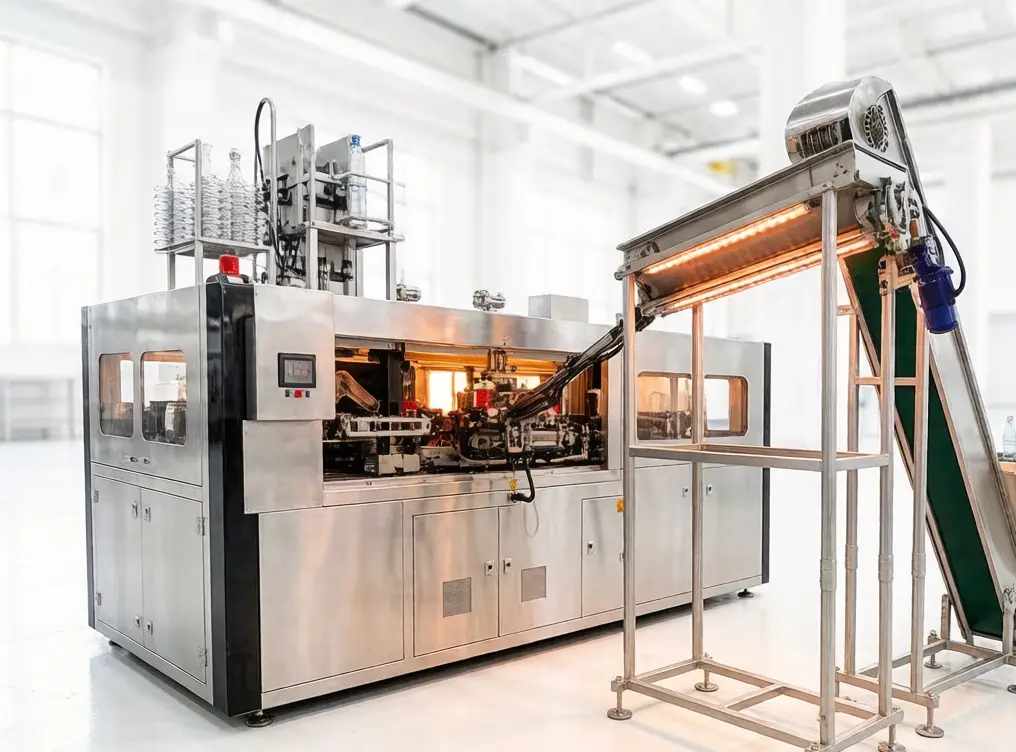
Blow Molding Equipment
PET blow molding equipment converts preforms into finished bottles. Available in semi-automatic, automatic, and variable-pitch configurations for 200 mL to 2 L containers at speeds from 1,000 to 8,000 BPH.
Browse Blow Molding Equipment →
Filling Equipment
Beverage filling equipment includes rotary and inline fillers for still water, carbonated soft drinks, hot-fill juices, glass bottles, aluminum cans, and industrial liquids, with integrated capping modules.
Browse Filling Equipment →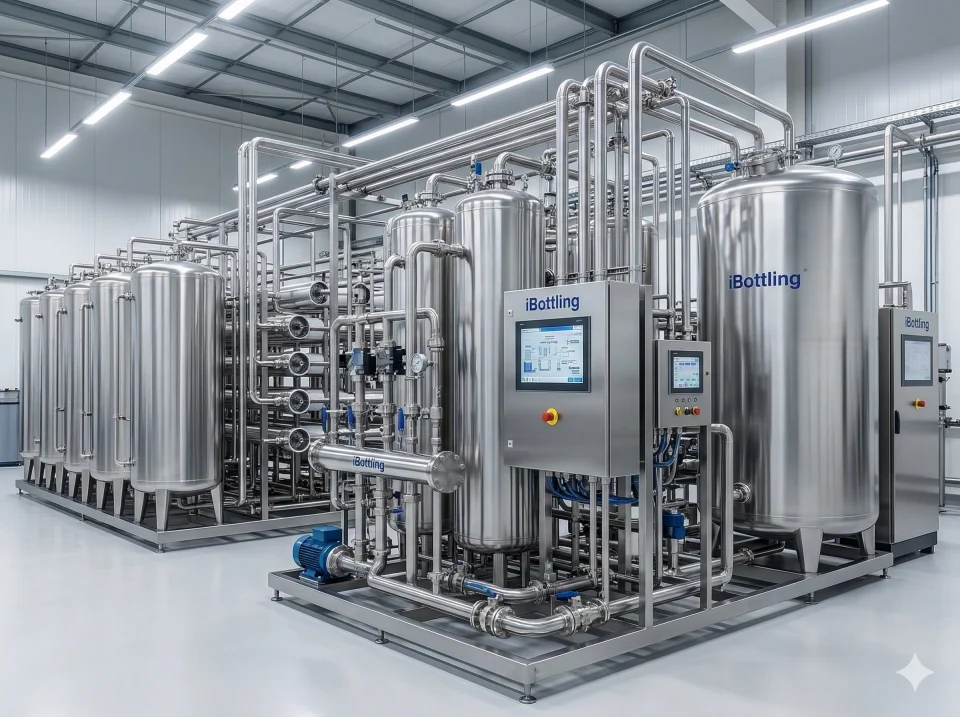
Processing Equipment
Beverage processing equipment covers water treatment, syrup preparation, pasteurization, and sterilization systems that prepare raw inputs before filling and packaging.
Browse Processing Equipment →
Packaging Equipment
Packaging and end-of-line equipment includes labeling machines, case packers, conveyors, palletizers, and stretch wrappers for complete post-filling lines.
Browse Packaging Equipment →How Beverage Bottling Equipment Works Together
The four equipment categories connect in a sequential production workflow. Each stage is coordinated with adjacent stages so the line runs as a single integrated system.
Each stage uses one or more machines from the four equipment categories. All specifications are coordinated during project review.
How to Choose the Right Bottling Equipment
Equipment selection depends on your production requirements, container format, and line configuration. Our engineers review every factor during project specification.
| Selection Factor | Consideration |
|---|---|
| Production capacity | Target BPH determines blow molder cavity count, filler valve quantity, and automation level. |
| Bottle type and material | PET, glass, or can — determines blow molder type, filler technology, and capper configuration. |
| Beverage type | Still, carbonated, hot-fill, or viscous — determines filling method and processing equipment. |
| Line integration | Standalone machine vs. complete line — affects conveyor configuration and auxiliary equipment. |
| Automation level | Semi-automatic for lower volumes and smaller budgets. Full automatic for high-volume lines. |
| Factory layout | Floor space, ceiling height, and line configuration determine machine footprint requirements. |
Frequently Asked Questions
Which machine do I need for my product and bottle format?
It depends on your bottle material and beverage. PET bottles use stretch blow molders with gravity or volumetric fillers (see the PET water filling machine); glass bottles require rinser-filler-capper monoblocks rated for rigid containers (see the glass bottle beverage filler); aluminum cans use isobaric counter-pressure fillers; carbonated and hot-fill products need a compatible filling method plus processing equipment. Tell us your container and beverage and our engineers map it to the correct equipment configuration.
Can I buy only one machine, or do I need a complete line?
Either works. Individual machines can be supplied for line expansion, replacement, or upgrades, and each unit is reviewed for compatibility with your existing equipment during specification. Complete line packages are also available for turnkey projects, where every machine from water treatment to palletizing is coordinated to integrate as one system. Both options include the same engineering review and after-sales support.
Can your equipment connect with my existing production line?
Yes. Machines are reviewed against your existing line during specification — conveyor interfaces, speed matching, control signals, and bottle-handling change parts are checked so the new unit runs in sync with upstream and downstream equipment. When needed we supply interface conveyors and transition components as part of the same project.
What capacity range can you support?
Semi-automatic equipment suits volumes up to about 3,000 bottles per hour for low-volume and startup projects. Automatic configurations scale to high-speed lines above 3,000 BPH, with blow molding from 1,000 to 8,000 BPH and filling capacity matched to the same target. Our engineers confirm the achievable range against your product and bottle format during project review.
What information do you need to prepare a quote?
To quote accurately we need: your beverage type, bottle material and format (PET or glass, can size, or 5-gallon jar), target capacity in BPH (or bottles per day), filling method (still, carbonated, or hot-fill), desired automation level, and factory layout constraints. Photos or drawings of an existing line help when the project is an upgrade. Send these details and our engineers return a recommended configuration and budget.
What is the typical lead time and installation process?
Lead time varies by machine type and configuration. Standard models typically ship within 25 to 45 working days; custom configurations may require 45 to 60 working days. Installation support includes remote commissioning guidance and optional on-site engineering visits, with full documentation for installation, operation, and maintenance. Our team coordinates shipping, customs documentation, and installation scheduling during project review.
Ready to Specify Your Bottling Equipment?
Tell us your production targets, container format, and target capacity. Our engineers will recommend the right equipment configuration.
Get Equipment Proposal →