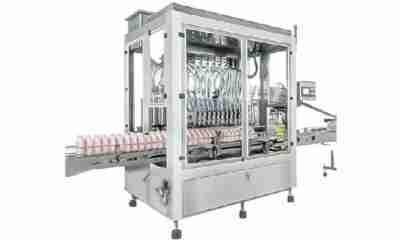
Fill accuracy
Domestic supplier specs make clear that fill consistency is only useful when it stays stable at the actual can size and valve setup.
Aerosol can filling · valve insertion · gas charging
Aerosol buyers do not purchase a generic filler; they purchase a controlled pressure-package process. This line moves empty aluminum cans through can feeding, liquid filling, valve insertion, seam crimping, gas charging, leak testing, and pack-out handoff. Official Chinese supplier pages show compact 30–50 cpm lines, 60–70 cpm medium lines, and higher-speed 120 / 200 cpm classes, but the accepted output still depends on approved can size, fill volume, valve format, gas medium, and leak-test basis.
Since 1995 · CE & ISO 9001 · 150+ countries
Official Chinese Aerosol Line Signals
Domestic supplier pages consistently frame aerosol ROI around stable can feeding, accurate liquid dosing, valve seating, crimp integrity, gas filling control, and leak rejection. The real buyer risk is not only capex; it is scrap, gas loss, unstable seams, blocked downstream packing, and repeated setup work when can diameter, fill volume, or valve format changes.

 RFQ-defined output map
 Sample-can FAT checkpoints
 Valve / seam / leak control
 Downstream handoff clarity
This is not a generic liquid filler with a spray label on it. The aerosol line is built around one specific sequence: stabilize empty cans, fill the product, place the valve, crimp the seam, charge the gas, reject unstable cans, and then release approved packs to downstream handling.
Domestic line pages repeatedly show can feeders and transfer modules because unstable infeed ruins downstream fill and seam control first.
The key aerosol operation is not only liquid dosing; it is the valve insertion, crimp, and gas sequence that turns a filled can into a safe spray package.
Leak test, reject separation, actuator / cap handling, and downstream handoff decide whether the line behaves like production equipment or a lab setup.
Fill accuracy
Domestic supplier specs make clear that fill consistency is only useful when it stays stable at the actual can size and valve setup.
Crimp integrity
Crimp quality is the package safety line: if seam control drifts, the line loses both yield and buyer confidence.
Leak rejection
Leak-test and reject logic are production modules, not accessories; they protect shipment quality before actuator, cap, and pack-out.
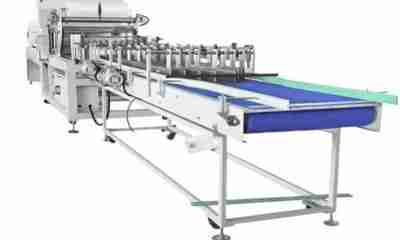
Prepared aerosol cans move from the feeding table into the liquid filling station, then valve insertion and crimping close the can, gas charging completes the pressure package, and leak test plus reject logic prepares the outfeed for packing. Buyers comparing downstream pack-out can review the PE film shrink wrapping machine after the aerosol line.
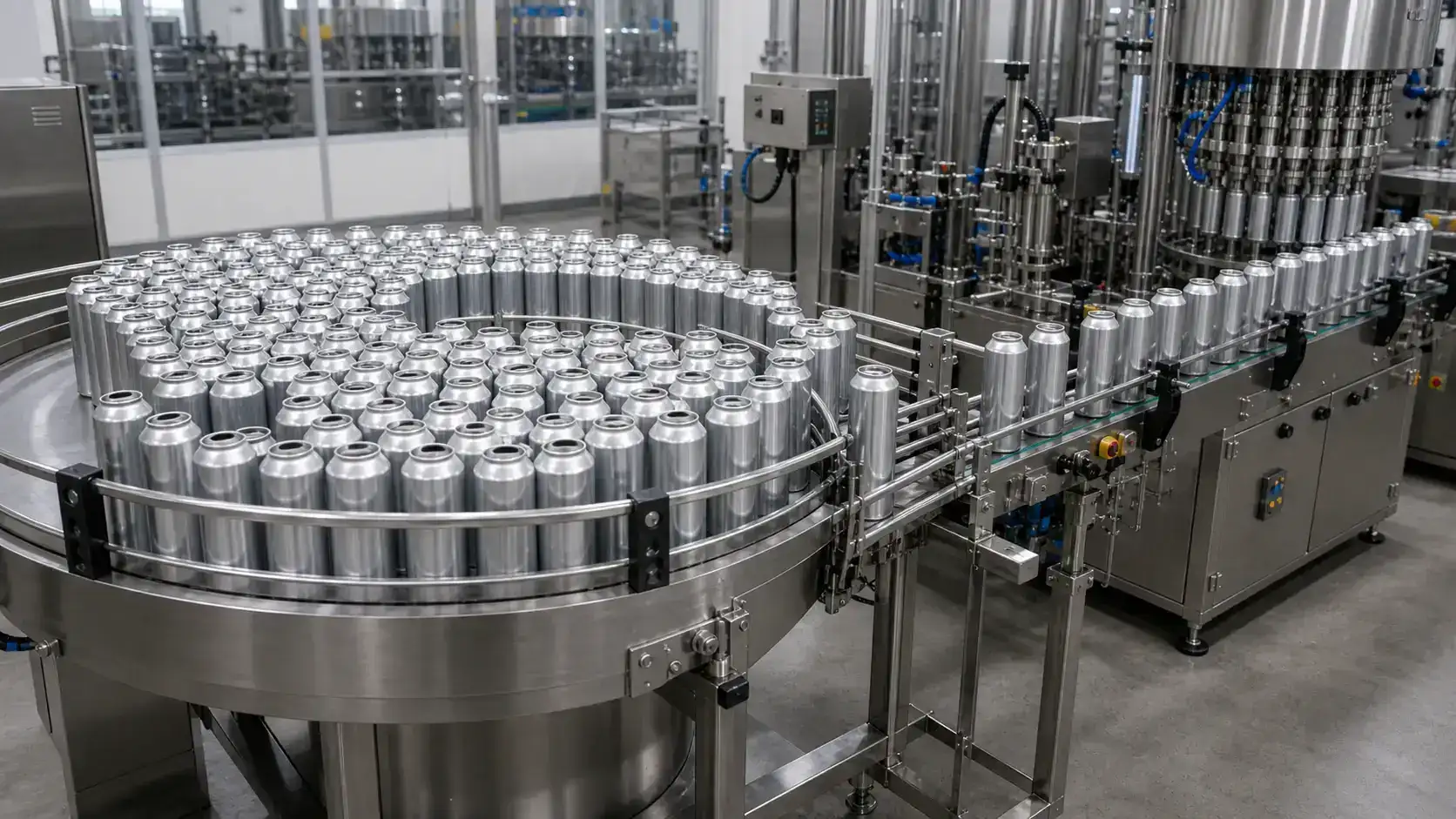
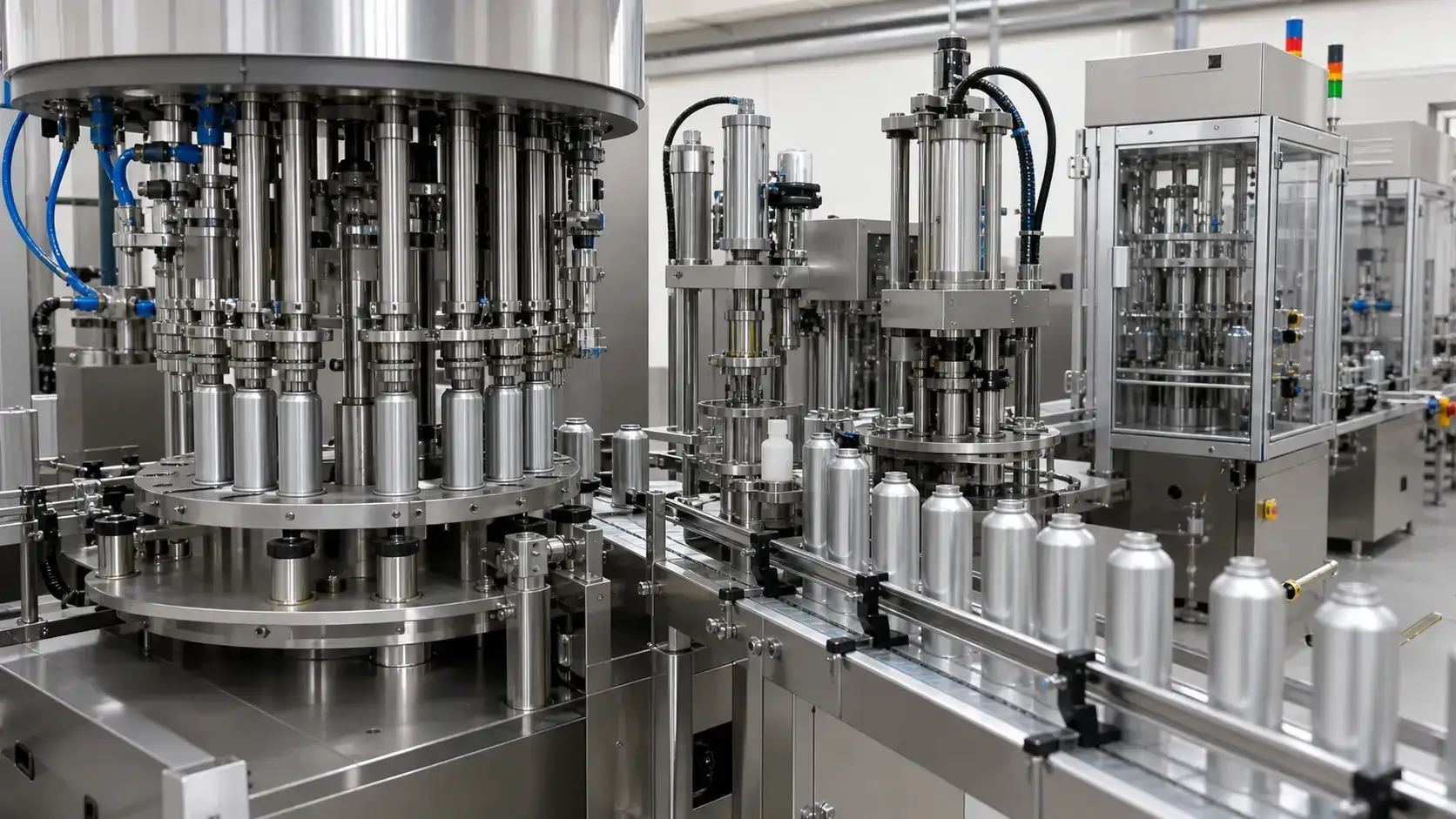
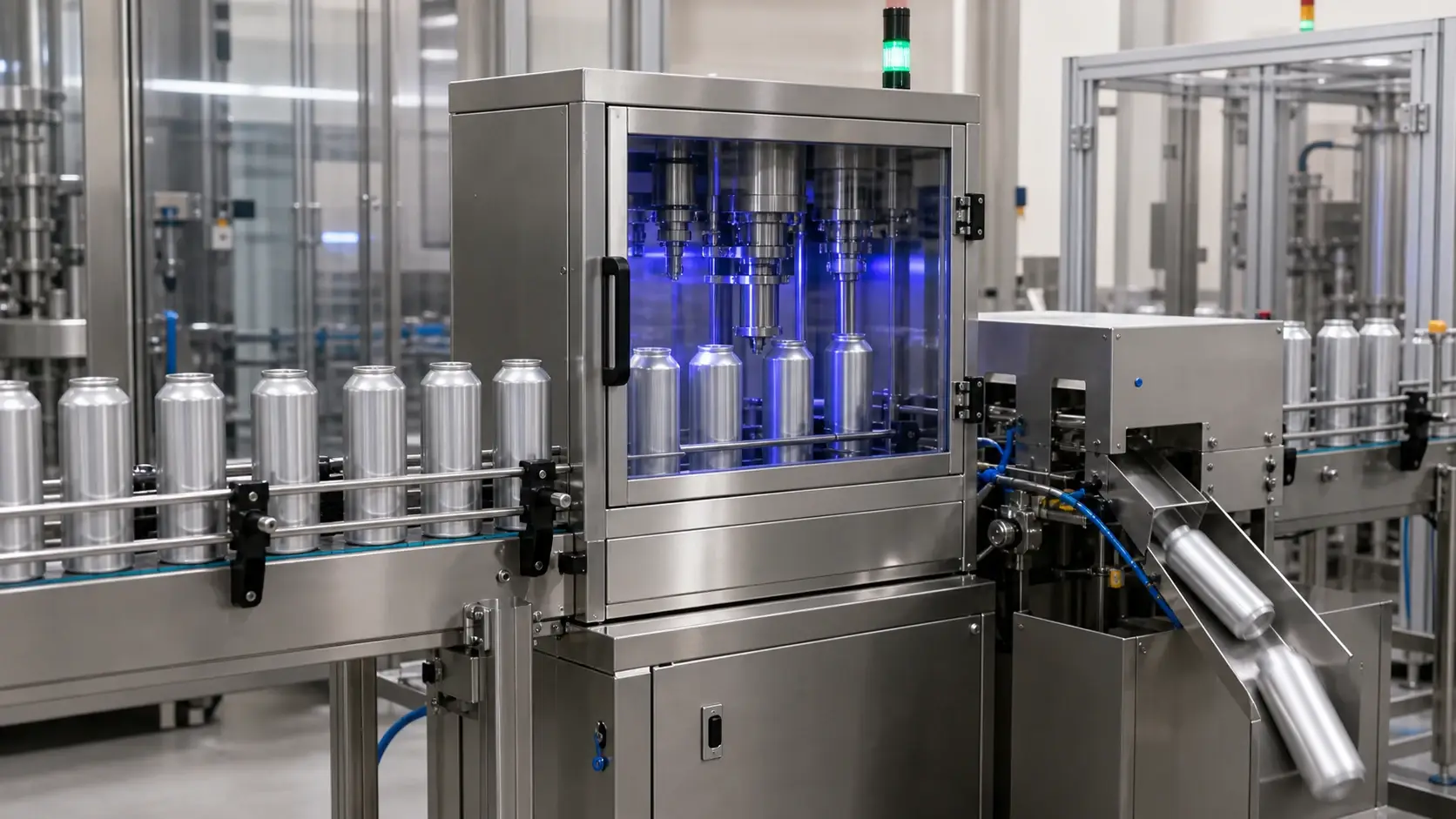
The quoted aerosol file set ties can format, valve seating, leak test, reject path, and pack-out to the actual project and not to a generic bottle line. When the line is paired with downstream wrapping or another packaging module, the acceptance record must include the aerosol package handoff as well.
Aerosol reliability depends on can feed control, valve insertion, crimping, gas charging, leak-test logic, reject handling, and the packing interface behaving as one line.
| Item | Specification |
|---|---|
| Container family | Aluminum aerosol cans for consumer, household, and industrial spray products |
| Reference output | 30–50 cpm compact lines, 60–70 cpm medium lines, and 120 / 200 cpm high-speed classes on official Chinese supplier pages |
| Can envelope | One official domestic page shows 35–70 mm can diameter and 80–300 mm can height bands; final size is RFQ-defined |
| Core process | Can feed, liquid fill, valve insertion, crimping, gas charge, leak test, outfeed |
| Utilities | Compressed air, electricity, control power, optional exhaust, and safe maintenance access |
| Quality checks | Fill stability, crimp integrity, leak rejection, and pack-out handoff |
| Packaging interface | Shrink wrapping, cartoning, palletizing, or other pack-out as required |
The layout needs can infeed, separated filling and crimp zones, gas-medium control, reject handling, downstream packing clearance, and service access around safety guarding and control cabinets.
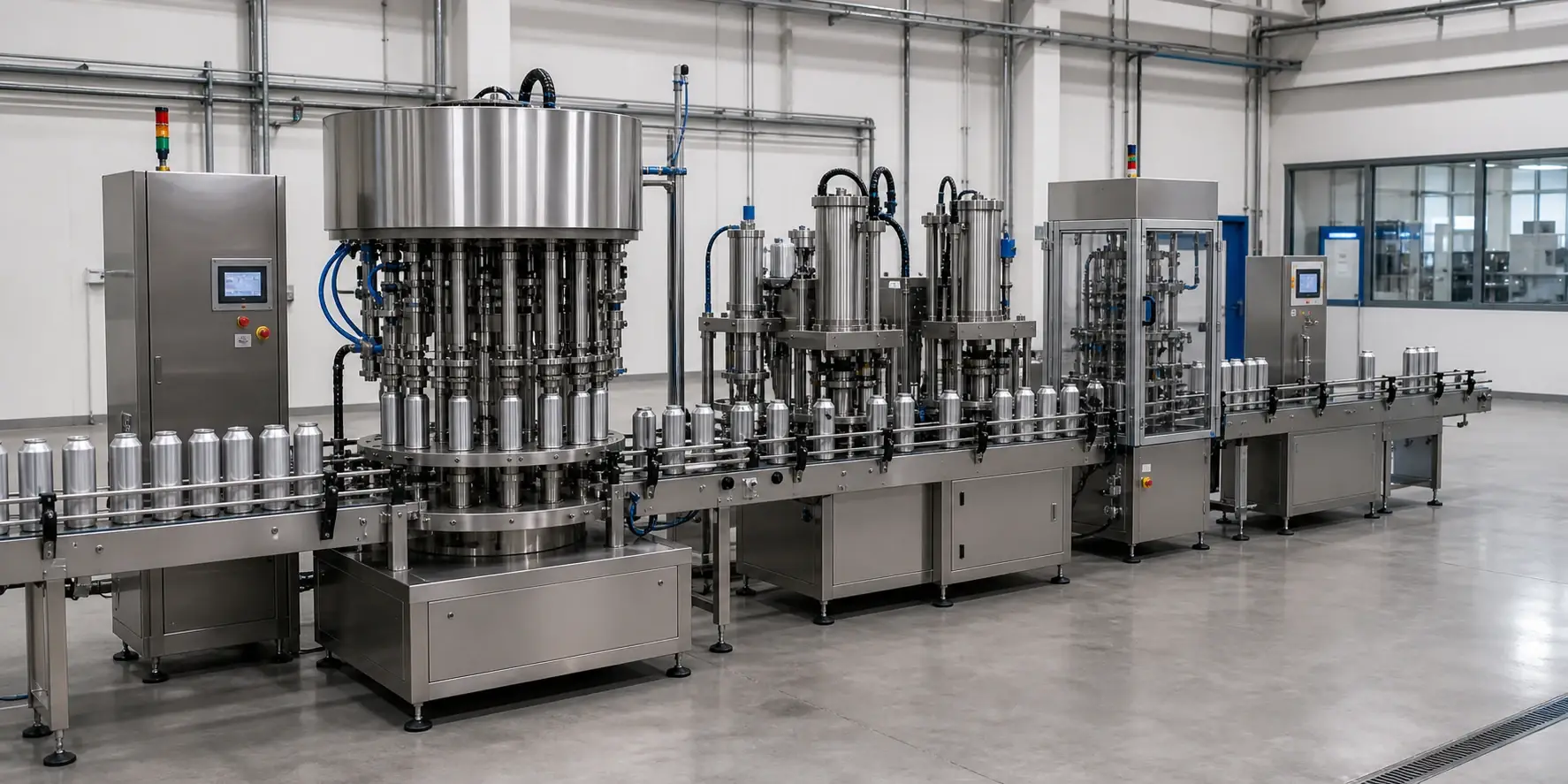
Aerosol projects should lock compressed air, explosion-proof needs, exhaust path, and operator-access rules before the machine scope is treated as final.
Gas medium, leak-test method, reject handling, and downstream pack-out safety should be mapped in quotation rather than guessed after equipment arrival.
“The turning point was freezing the can format, valve basis, seam window, gas medium, and leak-test rule before FAT. Once those checkpoints were written into the file, the aerosol line stopped behaving like a trial setup and started behaving like a production asset.”
Since 1995 · CE & ISO 9001 · 150+ countries

Complete beverage line engineering from treatment to packaging.
OEM-grade beverage lines — treatment, filling, blow molding, and packaging systems engineered for uptime, cleanability, and export commissioning.
HK: Chevalier House, 45-51 Chatham Road S.
Shanghai: Hope Business Bldg, No. 655, Fengzhou Rd.
Shenzhen: Overseas Friendship Bldg, No. 12 Yingchun Rd.
+86 (755) 8314-3479