

Flow stability
Product pump, balance tank, and tube sizing keep the UHT sterilizer aligned with the filler demand.
Ultra-high-temperature beverage processing
A UHT tube sterilizer treats beverage before filling by pumping product through tubular heat exchange, high-temperature holding, regeneration or cooling, and sterile discharge control. iBottling treats flow rate, 135-140°C class processing, 2-30s holding, CIP route, filler handoff, and discharge temperature as RFQ-defined engineering inputs rather than fixed web promises.
Since 1995 · CE & ISO 9001 · 150+ countries
Built for beverage packaging project teams
UHT economics depend on product formula, flow rate, target temperature, holding seconds, heat recovery, CIP time, sterile buffer strategy, and filling method. The buying problem is not only throughput; it is reliable sterilization without scorching, under-treatment, excess cooling load, or line stoppage at the filler.

 Bottle Sample FAT
 Label Roll Validation
 PLC/HMI Recipe Backup
 Commissioning Support Plan
The sterilizer is a controlled thermal loop, not a storage tank. Product flow, tube surface, steam load, cooling duty, sterile discharge, and CIP recovery all have to work together before the filling machine receives treated beverage.
Balance tank, product pump, temperature sensors, and valve logic stabilize incoming beverage before heat exchange.
Tubular heating, holding, regeneration, and cooling sections define the treatment curve and changeover recovery.
CIP return, sterile buffer, alarm list, and filler interlocks are specified around plant hygiene and uptime.
Flow stability
Product pump, balance tank, and tube sizing keep the UHT sterilizer aligned with the filler demand.
Holding curve
Temperature, holding seconds, and sterile discharge temperature are tied to formula and shelf-life target.
CIP recovery
CIP coverage and valve-state records reduce fouling risk, flavor carryover, and restart uncertainty.
Prepared beverage from a beverage mixing tank enters the UHT sterilizer through a balance tank and product pump. Tubular heating brings the liquid to the specified high-temperature point, the holding tube controls residence time, and regeneration or cooling prepares the beverage for hot-fill or aseptic filling. Plants comparing before-fill UHT with after-fill heat treatment can also review a tunnel pasteurizer .
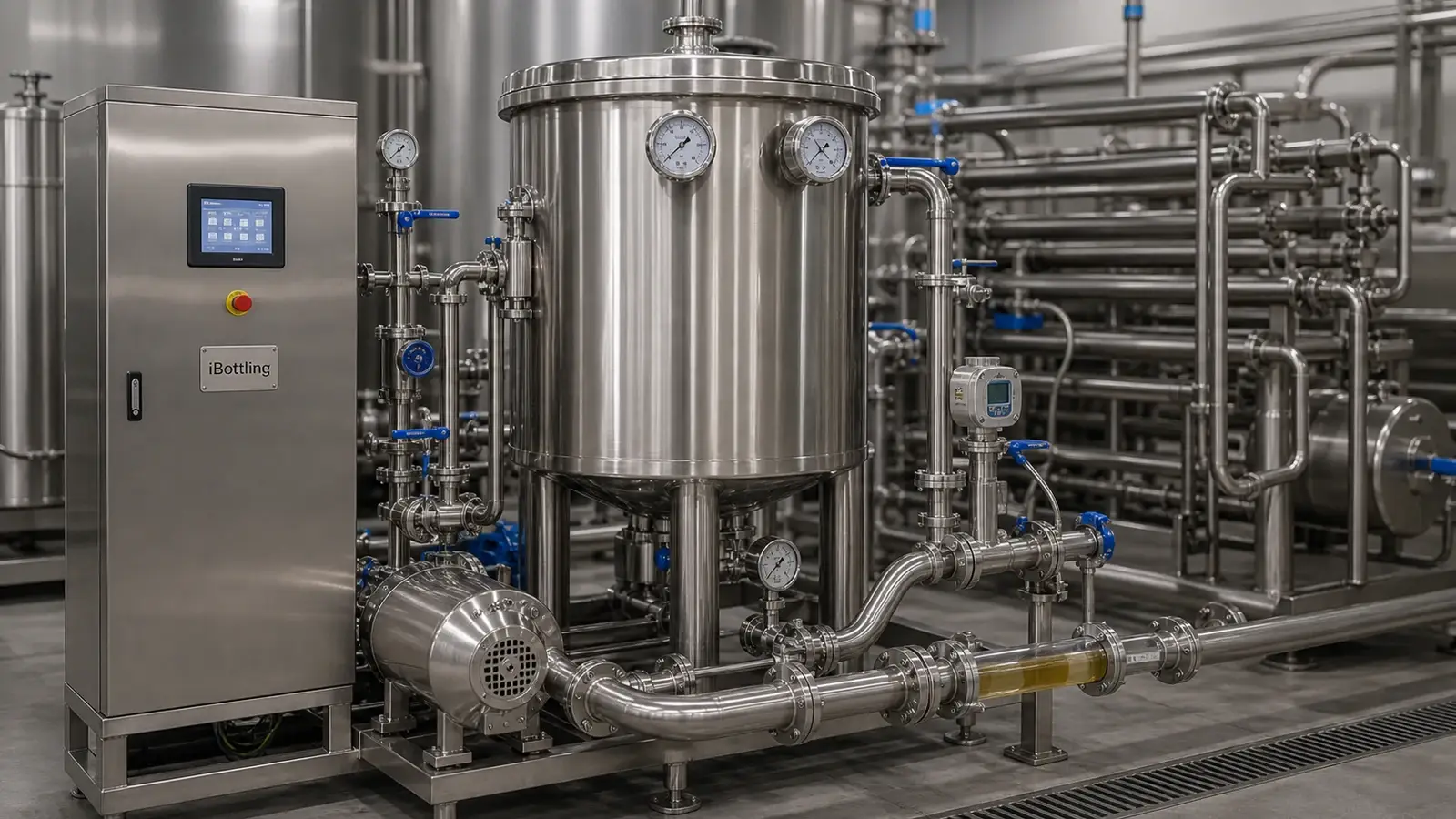
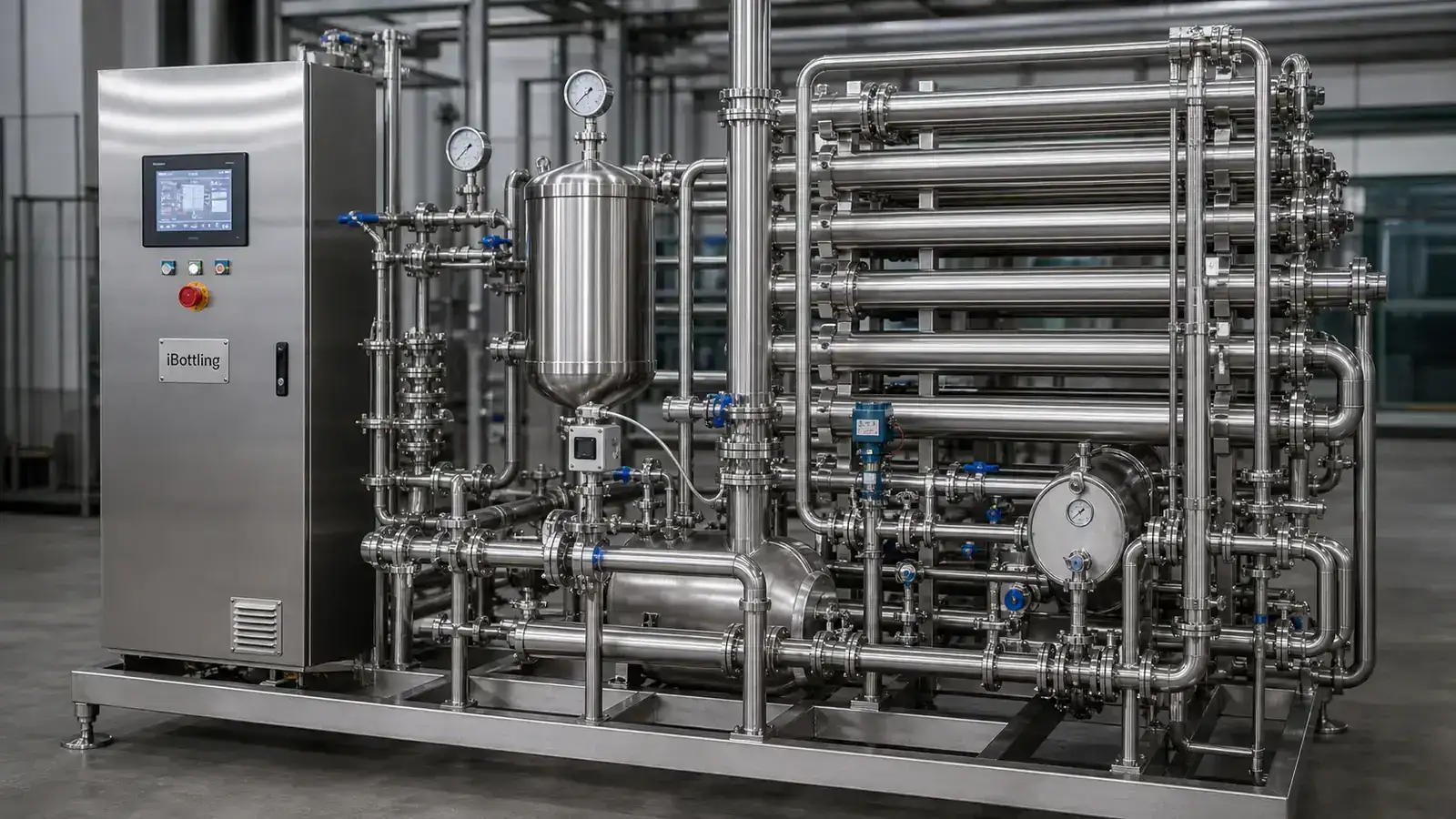
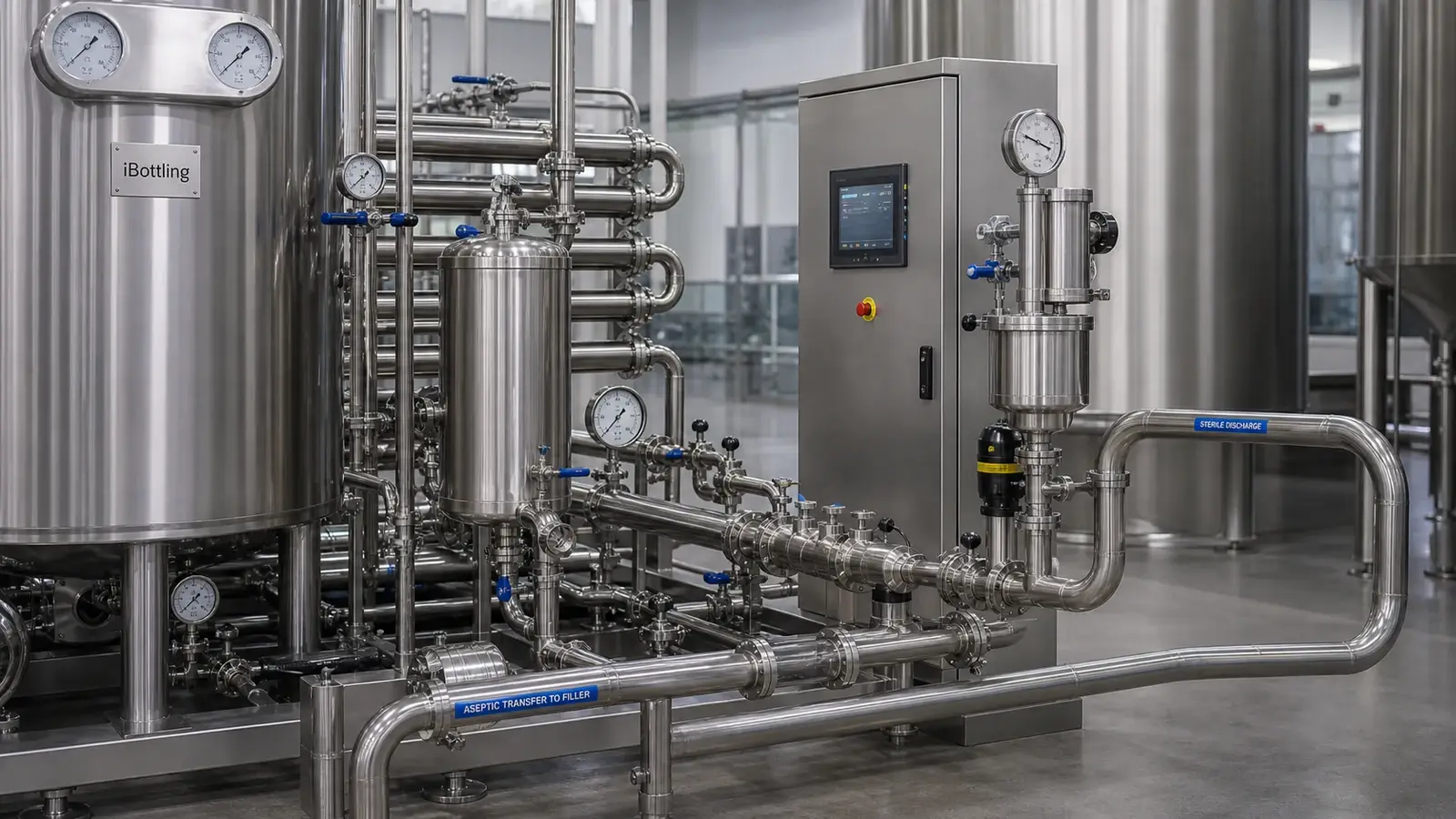
The quoted UHT sterilizer file set ties temperature curve, holding-tube basis, valve-state logic, CIP routing, utility list, and FAT acceptance records to the actual beverage and filling method, including interfaces with a beverage mixing tank , process chiller , and filling machine.
UHT reliability depends on product pump control, tube heating, holding-tube timing, valve-state logic, CIP routing, and cooling utilities behaving as one hygienic thermal-processing system.
| Item | Specification |
|---|---|
| Sterilizer type | Tubular UHT sterilizer for beverage preparation before aseptic or hot-fill packaging |
| Applicable products | Milk beverage, juice, tea, syrup, plant protein drink, and low-viscosity liquids reviewed by formula |
| Reference temperature | 135-140°C class UHT language; final temperature remains product- and shelf-life-defined |
| Holding time | Seconds-level holding such as 2-30s; final holding tube length is RFQ-defined |
| Reference flow | Project examples may be quoted from 1-20 t/h or other flow rates after formula review |
| Utilities | |
| Line interface | |
| Acceptance checks | |
| Utilities and footprint | Power, air, conveyor height, roll-loading clearance, and guard footprint confirmed on GA drawing |
The layout must reserve product-feed access, steam and chilled-water routes, CIP supply and return, sterile buffer clearance, filler handoff piping, drain slopes, service aisles, and safe access around hot surfaces and valves.
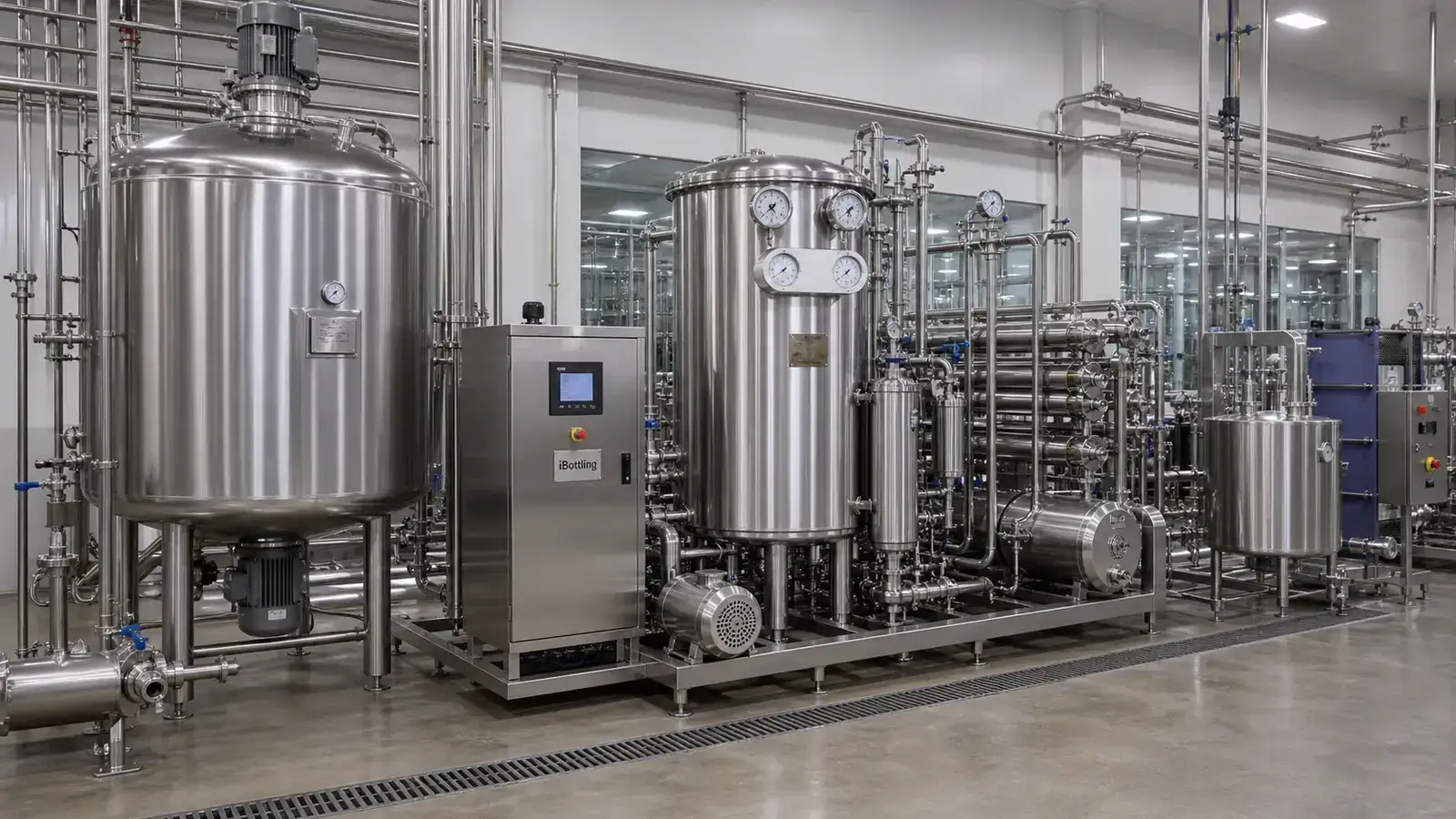
Regeneration planning, stable flow, and controlled cooling reduce excessive thermal load and help protect beverage flavor.
Accessible valves, CIP circuits, and temperature records shorten recovery after product changeover, cleaning, or filler stoppage.
Acceptance should prove the thermal process, not just the stainless skid: verify product flow, temperature chart, holding-tube residence basis, sterile discharge temperature, CIP coverage, valve-state alarms, and filler handoff after restart.
Since 1995 · CE & ISO 9001 · 150+ countries

Complete beverage line engineering from treatment to packaging.
OEM-grade beverage lines — treatment, filling, blow molding, and packaging systems engineered for uptime, cleanability, and export commissioning.
HK: Chevalier House, 45-51 Chatham Road S.
Shanghai: Hope Business Bldg, No. 655, Fengzhou Rd.
Shenzhen: Overseas Friendship Bldg, No. 12 Yingchun Rd.
+86 (755) 8314-3479


