
Turnkey Beer & Alcohol Bottling Line Solutions
From the first bag of malt to sealed, pasteurized cans or bottles, iBottling plans the whole plant as one project: brewhouse, cellar, utilities and the packaging line. Small breweries can start with a 2KL brewhouse and a 2,000 cans/h canning line, then add tanks or a glass bottling line as volume grows.

From small brewery to canning and bottling line: the 9 systems
A working brewery is more than a filler. Every project below is scoped as a set of connected systems, so that wort volume, cellar capacity, cooling load and packaging speed all match each other on day one.
- Malt handling: a double-roller mill cracks the malt to an even grist, and a screw conveyor carries it to the mash vessel.
- Brewhouse: a 2KL mash/lauter tun for mashing and wort separation, plus a 2KL kettle/whirlpool tun for boiling, hopping and trub removal, with a plate heat exchanger to cool the wort.
- Hot water: a 4KL brewing water tank held at around 80–82°C, with pump and heat exchanger for heating and heat recovery.
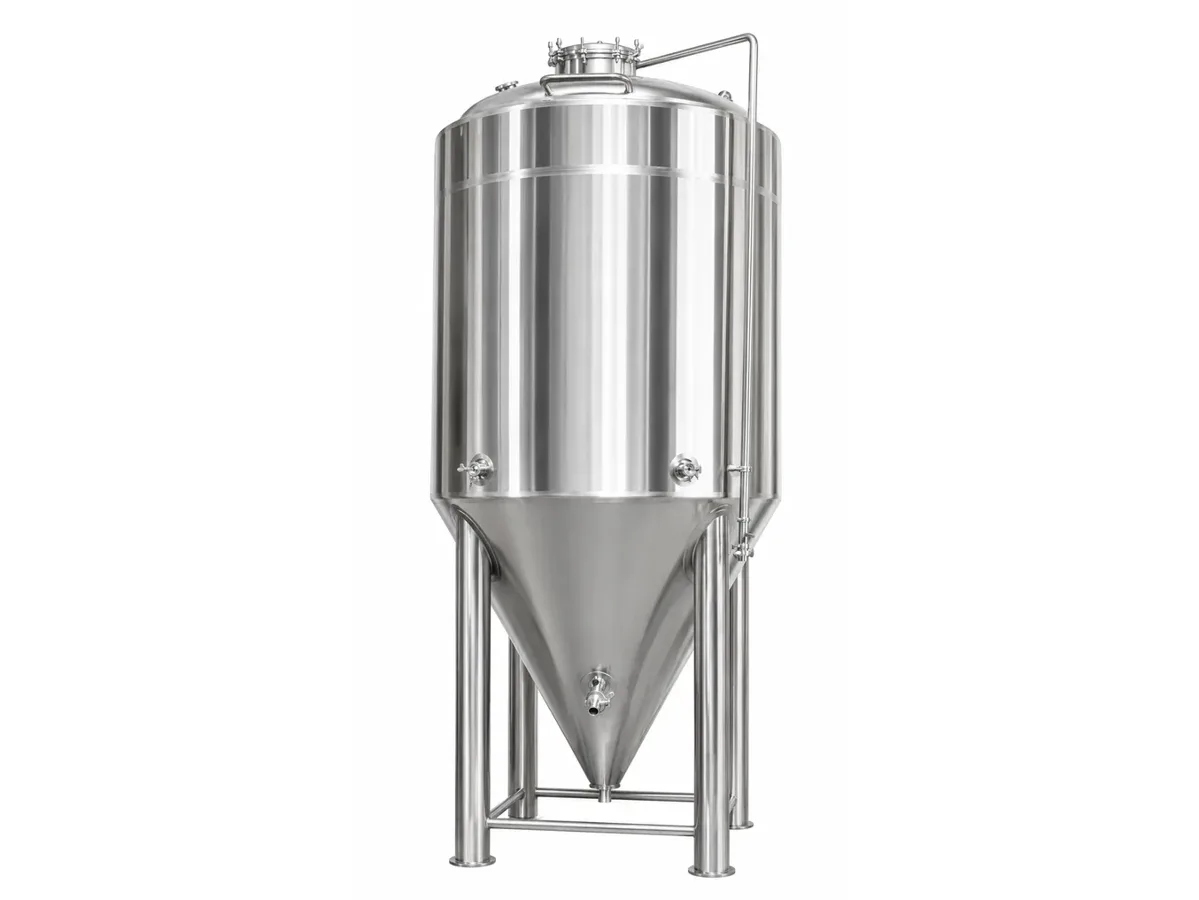
- Fermentation: four 4KL conical fermenters, a 4KL bright beer tank and a yeast dosing tank, all with glycol jackets.
- Filtration: a diatomaceous earth (DE) filter that clarifies beer on its way to the bright tank.
- CIP: a 500L three-tank skid (acid, caustic, hot water) with supply and return pumps for cleaning tanks and pipework.
- Controls: a PLC cabinet that monitors and holds temperature across the brewhouse and fermenters, with a separate power cabinet.
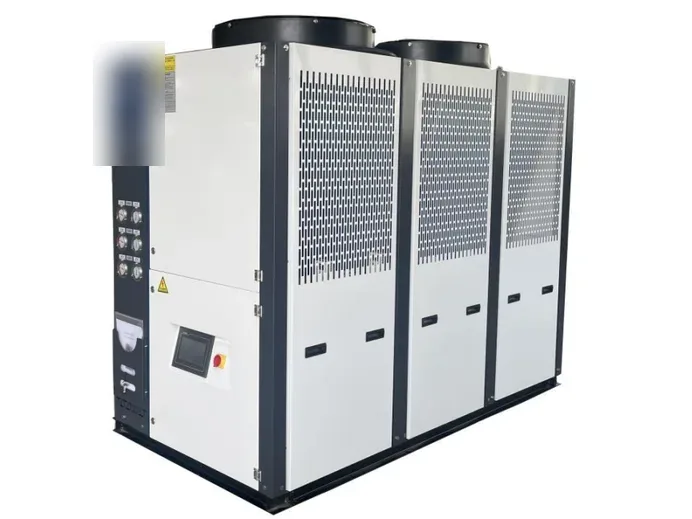
- Utilities: a 300 kg/h steam boiler for the brewhouse, and a 15HP air-cooled chiller with a 4KL glycol tank for the cold side.
- Packaging: can rinser, can filler-seamer, tunnel pasteurizer and conveyors, or a glass bottle rinser-filler-capper for bottled beer.
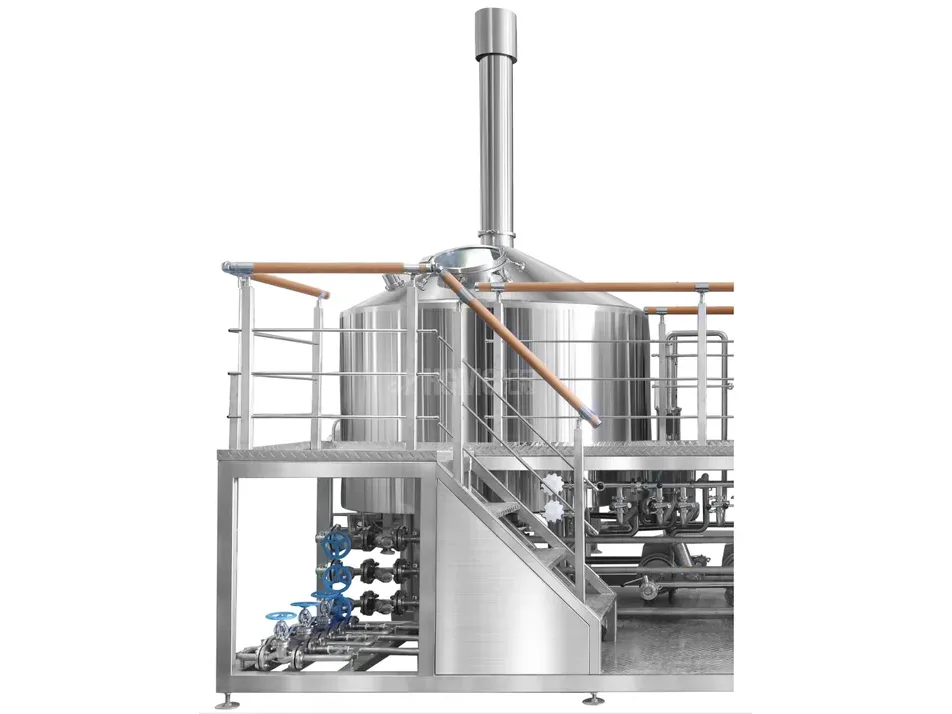
Brewhouse and cellar equipment
The brewhouse is built from SUS 304 stainless steel with insulated, jacketed vessels. The kettle/whirlpool tun is heated by steam through a dimple jacket, and its tangential inlet lets hop and protein trub settle in a cone before the wort is cooled.
In the cellar, each fermenter has its own glycol jacket, temperature probe and spray ball, so one tank can ferment warm while the next is crashing cold. Finished beer moves through the DE filter into the bright beer tank, ready for packaging.
| Item | Volume | Material | Size |
|---|---|---|---|
| Mash / lauter tun | 2 KL effective | SUS 304 | Ø1,800 / 2,000 mm, height 2,800 mm |
| Kettle / whirlpool tun | 2 KL effective | SUS 304 | Ø1,800 / 2,000 mm, height 2,800 mm |
| Hot water tank | 4 KL effective | SUS 304 | — |
| Fermentation tank (×4) | 4,000 L effective / 4,800 L total | SUS 304 | Ø1,600 / 1,800 mm, height 4,000 mm |
| Bright beer tank | 4,000 L effective | SUS 304 | — |
| Glycol water tank | 4 KL effective | SUS 304 | — |
| CIP skid (acid / caustic / hot water) | 3 × 500 L | SUS 304 | — |
Utilities: steam, glycol cooling and CIP
Three utility blocks keep the brewery running. A 300 kg/h gas-fired steam boiler heats the mash, the kettle and the hot water tank. A 15HP air-cooled chiller chills glycol in a 4KL buffer tank, and glycol pumps feed every fermenter and the bright tank.
The CIP skid recirculates caustic, acid and hot water through tanks, hoses and lines between batches, so hygiene does not depend on manual scrubbing. For more on sizing the cold side, see the beer cooling calculator.
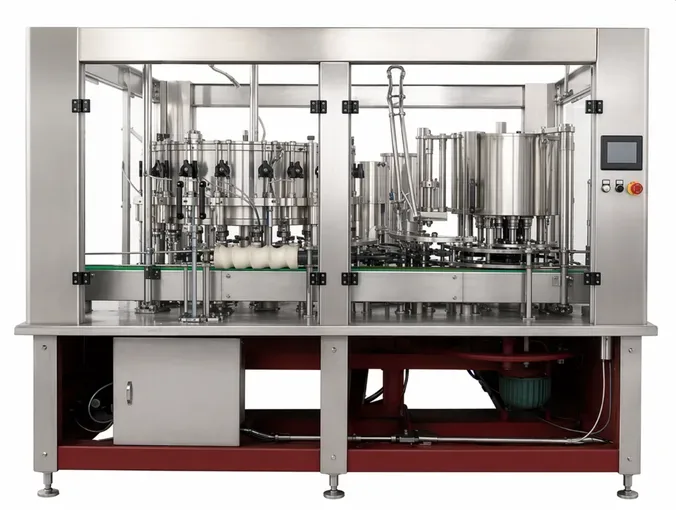
Juice / soda / beer can filling line
The packaging end of a canning plant is the same basic machine set whether you fill lager, sparkling juice or soda: empty cans are rinsed, filled under CO₂ counter-pressure, lidded and double-seamed, then pasteurized where the product needs it. That is why one juice / soda / beer can filling line can serve a brewery that also wants to run seltzer or soft drinks.
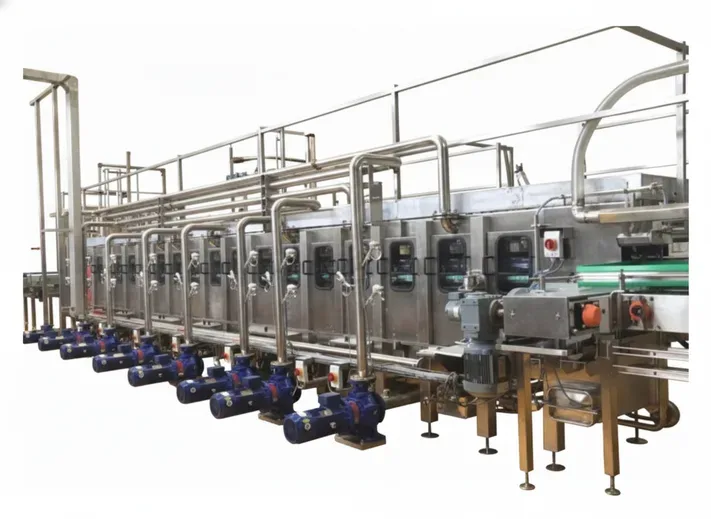
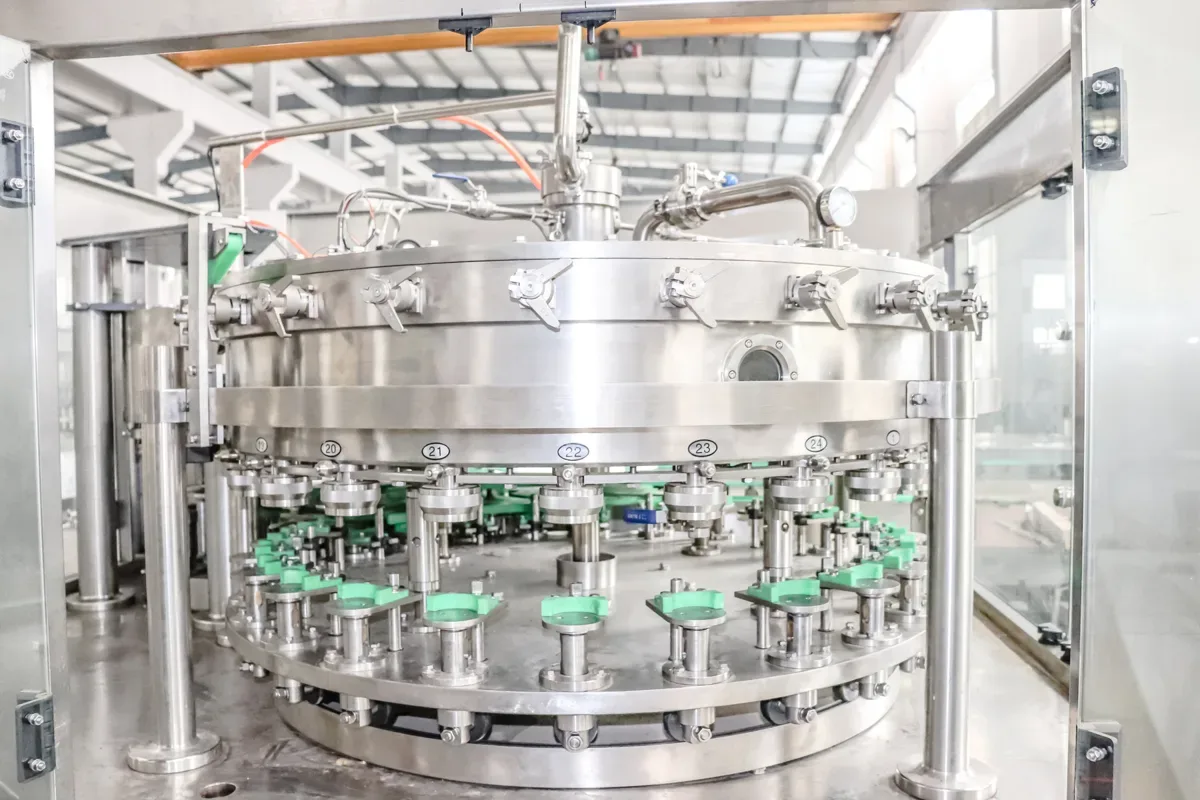
In the reference line, an inverted-can rinser cleans the empty cans with pressurized water. The rotary filler-seamer uses 12 mechanical filling valves and 2 seaming heads, and fills cold product at 0–4°C. Filled cans travel to an eight-zone tunnel pasteurizer, and an air knife at the exit blows them dry before coding and packing. Standalone machines are listed on the aluminum can filling machine page and the canning lines page.
| Parameter | Value |
|---|---|
| Can sizes | 269 ml, 330 ml and 500 ml aluminum cans |
| Rated output | 330 ml: 2,000 cans/h · 500 ml: 1,500 cans/h |
| Filling valves / seaming heads | 12 / 2 |
| Can size range | Diameter Ø50–80 mm, height 100–180 mm |
| Filling temperature | 0–4°C |
| Material | SUS 304 stainless steel |
| Machine size | 3,000 × 1,800 × 2,000 mm |
Tunnel pasteurizer for canned beer
Unfiltered and live beers, and most canned juices, need a heat step to stay stable on the shelf. The tunnel pasteurizer warms the filled cans in stages, holds them at pasteurization temperature, then cools them back down, all with water sprays. The reference unit has eight temperature zones and is set to deliver 8–30 PU.
If your beer is sterile-filtered and kept cold through distribution, you may not need it; we decide together based on your recipe and market. More detail is on the tunnel pasteurizer page.
Beer bottling lines for glass bottles
Glass bottling is available alongside, or instead of, canning. A beer bottling line uses an isobaric rinser-filler-capper: each bottle is pre-evacuated or flushed with CO₂, filled under counter-pressure to keep the carbonation in, and closed with a crown cap. The same tunnel pasteurizer type can then treat the bottles.
Returnable and one-way bottles are both possible. See the glass bottle beverage filler for the filling monoblock, and tell us your bottle drawings so change parts can be matched.

Brewery packaging automation after the filler
Brewery packaging automation is where small plants save the most labor. Conveyors link each machine with accumulation in between, so a short stop at the labeler or packer does not halt the filler.
Downstream modules can include date coding, labeling for bottles, shrink-wrapping into multipacks, carton packing and palletizing. Browse the full range under packaging and end-of-line equipment, and add only the steps your volume justifies.

Sample configuration: 2KL brewhouse with a 2,000 cans/h line
A practical starting point for a craft brewery or brewpub moving into packaged beer:
- Malt mill and screw conveyor
- 2KL brewhouse: mash/lauter tun, kettle/whirlpool tun, wort cooler and hop dosing
- 4KL hot water tank
- 4 × 4KL fermenters, 1 × 4KL bright beer tank, yeast dosing tank
- DE filter, beer pump with flow meter
- 500L three-tank CIP skid
- PLC temperature control cabinet and power cabinet
- 300 kg/h steam boiler; 15HP chiller with 4KL glycol tank
- Can rinser, can filler-seamer (2,000 cans/h at 330 ml), eight-zone tunnel pasteurizer and conveyors
Wine, spirits and other alcoholic drinks
Wine, spirits and liquor are still products, so they do not use the counter-pressure filler described above. The filling method, closure and container handling are chosen per product, and project scope also depends on alcohol content and local rules. Share your product, container and destination market and we will confirm whether the project fits.
What to send for a beer line proposal
Batch size and brews per week, beer styles, target can or bottle sizes, hourly output, whether you need pasteurization, available utilities (power, gas or steam, water) and the floor plan of your building. With these, we can lay out the brewhouse, cellar and packaging line together.
Frequently Asked Questions
Which can sizes can the can filler handle?
269 ml, 330 ml and 500 ml aluminum cans. Output is about 2,000 cans/h on 330 ml and about 1,500 cans/h on 500 ml; switching size needs the matching change parts.
Do I need a tunnel pasteurizer for canned beer?
It depends on the beer and how it is sold. Unfiltered beer, beer with live yeast, and beer shipped without cold storage usually needs one. Sterile-filtered beer kept cold may not. We review your recipe and distribution before including it.
Why does a brewery need a chiller and glycol system?
Fermentation releases heat, and lagering and cold crashing need beer near 0°C. The chiller cools a glycol-water mix in a buffer tank, and the glycol is pumped through each tank jacket so every fermenter can be held at its own temperature.
What does the CIP system clean?
Fermenters, the bright tank, transfer hoses and process piping. The skid circulates caustic, acid and hot water in sequence, and the solutions return to their tanks for reuse.
Can the same line fill glass bottles as well as cans?
Yes. A glass bottle rinser-filler-capper can be added to the same project. Cans and bottles normally run on separate fillers and share the brewhouse, cellar and, where suitable, the pasteurizer.
How does delivery and installation work?
Equipment is pre-assembled and tested at the factory, then packed for sea freight. On site, our engineers guide placement, piping and wiring, carry out water tests and the first production trials, and hand the line over once it runs at target output.
Can our team be trained before the line ships?
Yes. Your operators and maintenance staff can be trained at our factory in Jiangmen on the actual machines, covering operation, cleaning, changeovers and routine maintenance. Training continues on site during commissioning.
Can one line fill both beer and wine?
Not on the same filling station. Beer is filled cold under counter-pressure to keep its CO₂, while wine and other still drinks use a different filler and closure. Tell us your product mix and we will confirm which stations you need.
