Isobaric can filling · Double-seam closing

Aluminum Can Beverage Filling Machine 2,000–18,000 Cans/Hour

Can Beverage Filling Machine platforms cover 2,000–18,000 cans/hour with up to 36 filling valves for beer, soda and sparkling water in aluminum or tin cans.

Up to 18,000 cans/hCapacity band
Up to 36 valvesFilling heads (spec module)
Tin & pop cansContainer flexibility (icon strip)

Get a Quote

Since 1995 · CE & ISO 9001 · 150+ countries

Can Line Capability Highlights

COUNTER-PRESSURE CARBONATED FILLDOUBLE-SEAM LID CLOSINGSIZE CHANGEOVER & CIP ACCESSFAT / SAT DOCUMENTATION PACKAGESBEER · SODA · SPARKLING RTD
Rotary isobaric fill for carbonated beer, soda and sparkling waterInductive flow metering and valve manifolds.Integrated can seamer for double-seam closure after fillProject FAT documentation and overseas commissioning support
Can line total cost of ownership

Engineered for reliable can-line throughput.

The Steplead YPO series delivers flexible 2,000–18,000 cans/hour output with genuine wear parts, structured maintenance, and up to 20% lower energy consumption when larger hydraulic pumps run at moderated speeds.


Throughput band
18,000+ Cans/h
Rated up to 18,000 cans/hour within a 2,000–18,000 cans/hour operating window.
Filling stations
36Valves
Up to 36 filling heads.
Aluminum Can Beverage Filling Machine rated output equipment

Aluminum Can Beverage Filling Machine — 2,000–18,000 Cans/Hour

Throughput band
2,000–18,000 cans/hour (overview copy)
Filling valves
Up to 36 filling heads (icon strip + spec list)
Container scope
Flexible for tin can and pop can.
Satisfaction Guaranteed
2 Years Quality Warranty

Overseas Engineer Support Available
On Time Delivery Guaranteed

End-to-end canning integration.

Steplead’s YPO series is described on the source page as an industry-leading canning platform for canned beverages, covering carbonated beer, soda and sparkling water while documenting a flexible 2,000–18,000 cans/hour production band with precise nozzles, automated lidding and repeatable size changeovers.

Carbonation-ready fill

Counter-pressure concepts and carbonated SKU examples cover breweries, soft drinks and sparkling water.

Precision metering

Marketing copy highlights inductive flow meters and advanced filling valves to keep fill quantities within tight tolerances.

Sanitary servicing

The compact-design narrative calls out inclined tables, buffer tanks, valve manifolds and manually inserted CIP cups for faster wash cycles.

Operational Excellence.

UP TO 50%

Certified genuine parts can unlock up to 50% better performance versus mixed sourcing for Steplead canning equipment.

UP TO 25%

Marketing copy cites up to 25% less maintenance versus conventional equipment thanks to durable materials and simplified service access.

UP TO 20%

Energy narrative references moderated engine speeds with larger hydraulic pumps to target up to 20% lower consumption on canning trains.

The Core: Depalletize. Fill. Seam.

Imagery below uses can-specific assets from this SKU’s media set (primary can-line photo, aluminum can render, and seamer close-up) so each slot stays semantically aligned with beverage cans—not PET bottle stock art.
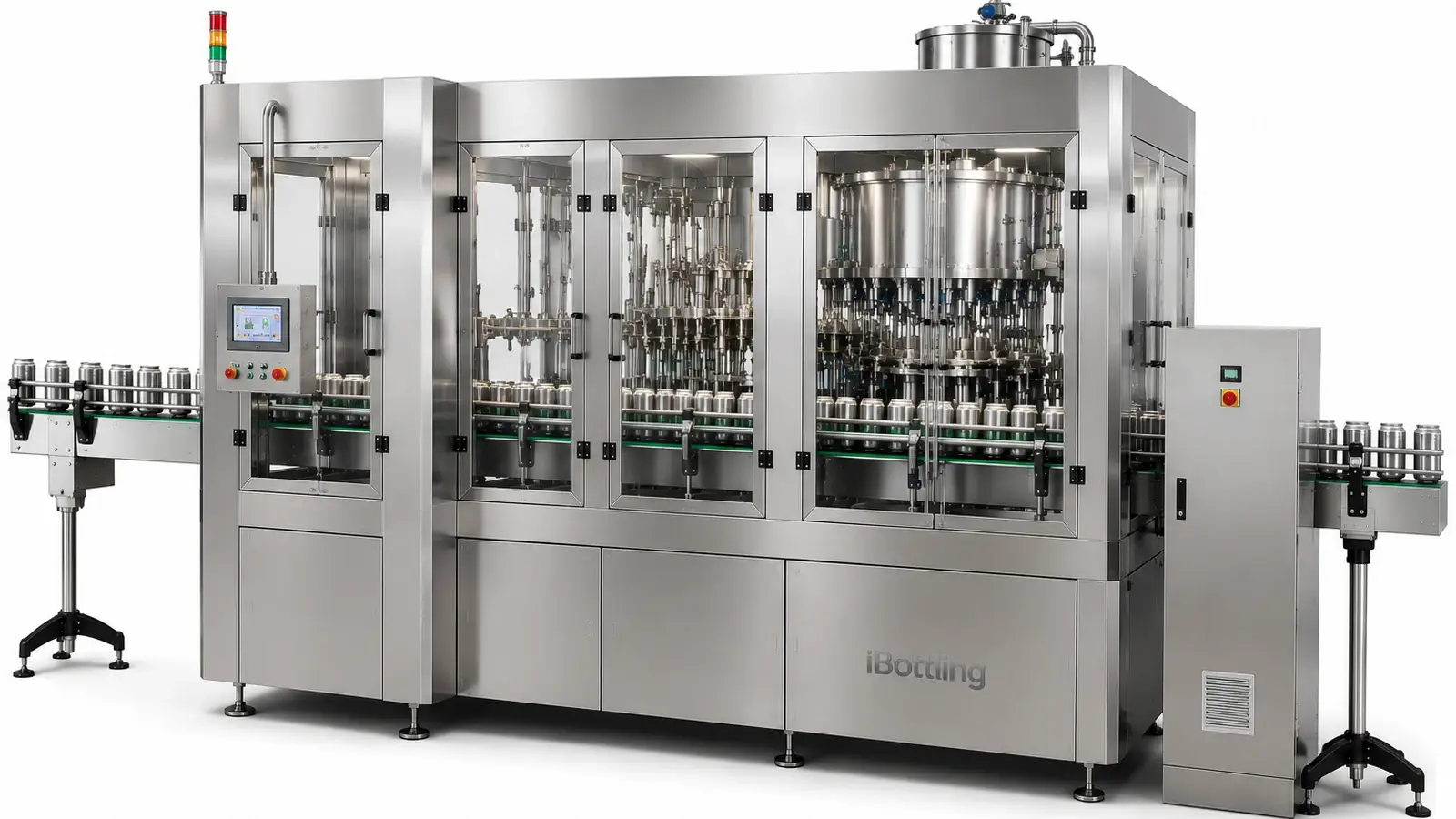
Rotary canning line with depalletized aluminum cans entering the filler

Can handling & buffering

  • Guide rails, buffer tanks and valve manifolds keep low- and high-speed can lines stable.
  • The first process column reuses the same primary can-line photo as the hero for visual continuity.
  • Pair this module with your depalletizer and air-rinse stations; mechanical scope stays RFQ-driven.
Close-up of aluminum cans under filling valves

Isobaric filling & metering

  • Marketing copy cites inductive flow meters and advanced filling valves for repeatable volumes on beer, soda and sparkling SKUs.
  • Image sourced from the inline hero column photo that sits beside the breadcrumb on the saved listing.
  • Counter-pressure settings, CO2 grades, and product temperature must be validated during SAT.
Can seamer closing lids on filled beverage cans

Double-seam seaming

  • The “Can Seamer” block describes chuck, lifter plate and roll sets forming a double seam on tinplate or aluminum ends.
  • Photography shows the seamer of the can filler.
  • Seamer timing, chuck tooling and lid chemistry remain project-specific and are confirmed per project factory acceptance.

Aluminum Can Beverage Filling Machine Specifications.

2,000–18,000 Cans/Hour

The overview documents a 2,000–18,000 cans per hour operating range.

Engineering Highlights

  • FillUp to 36 filling valves with inductive flow metering.
  • SeamDouble-seam seamer narrative covering chuck, lifter plate and roll sets for carbonated SKUs.
  • HygieneCIP cup access and inclined tabletop servicing described in the compact-design marketing block.
  • Quality systemsProject documentation can be aligned to ISO 9001:2015 quality management principles during factory acceptance.

Carbonation pressures, seam thickness targets, and electrical demand must be revalidated for every SKU mix. The ISO link explains the standard’s intent; it is not an on-page certificate claim.

Canning module specifications

The canning module specifications cover four mechanical lines with a 2,000–18,000 cans/hour operating range.

  • Throughput: 2,000–18,000 cans/hour.

  • Filling Valves: 36

  • Lid closing heads: 6 (Capping Heads).

  • Power: 7.5 kW. Dimension: 3,275 × 2,235 × 18,500 mm.

ItemSpecification
Throughput (overview)2,000–18,000 cans/hour
Filling valves36
Capping heads6
Electrical demand7,5 kW
Machine dimensions (L×W×H)3,275 × 2,235 × 18,500 mm
HS code (JSON-LD on export)8422301090

Layout collection & mechanical reference.

The layout collection covers canning machine arrangements from 10,000 cph to 2,000–3,000 cph, helping you plan depalletizer, filler, seamer and pasteurizer spacing.

REF: CAN-LINE-LAYOUT-PACK
5 gallon filling line equipment layout reference with monoblock and process flow arrangement
Carbonation & utilities

Counter-pressure fill and lower idle energy.

Energy narrative (on-page marketing)

Public copy cites moderated engine speeds with larger hydraulic pumps to target up to 20% lower energy consumption—restated here without adding new engineering numbers.

CO₂ stewardship

Carbonated SKU handling, CO₂ budgeting, and pasteurizer coupling remain line-design topics—document agreed setpoints in commissioning packages instead of inferring them from marketing tables.

Canning line walkthrough.

“The canning block finally matched our carbonation targets—fill curves, seam checks, and pasteurizer pacing were tuned together so we did not fight foaming losses after the seamer.”
Line engineering manager — Craft beer & RTD co-packer, Americas
Exported to 150+ Countries24/7 Rapid Response SupportTurnkey Engineering Services

Get a Quote for This Machine

Since 1995 · CE & ISO 9001 · 150+ countries

FAQ — aluminum can beverage filling procurement

Which throughput headline should our RFQ reference?
The canning platform is documented for a flexible 2,000–18,000 cans/hour operating range.
How do carbonated SKUs differ from still drinks on the same filler?
The YPO series is positioned for carbonated beer, soda and sparkling water, with counter-pressure concepts and foam control. Still or low-carbon SKUs may relax some utilities, but only after validation of valve maps and CO₂ budgets.
What utilities and envelope should we reserve in MEP drawings?
The checklist cites 7,5 kW electrical demand and overall dimensions of 3,275 × 2,235 × 18,500 mm . Compressed air, CO₂ supply, cooling glycol, and operator access aisles still require project-specific validation even when these baseline figures appear in bid documents.
How many lid closing stations should we expect from the “Capping Heads: 6” line?
The canning module uses six synchronized lid closing stations (Capping Heads: 6); seamer chuck counts, change parts, and spare kits are matched to your lid vendor.
Where can we download the advertised layout PDFs?
The layout collection spans 10,000 cph and 2,000–3,000 cph can layouts, helping you plan depalletizer, filler, seamer and pasteurizer spacing.
Get A Custom Quote