



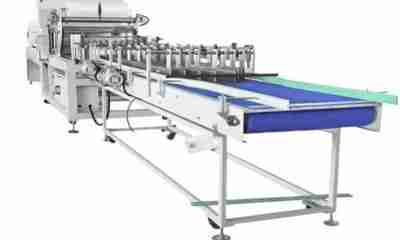
Rotary hot-melt wrap labeling systems

Rotary OPP Hot Melt Labeling Machine

Roll-fed rotary OPP wrap labeling for bottles that need glued film transfer, seam control, and stable wrap contact at production speed, with the glue event and bottle timing engineered as one packaging action.

Film registrationFilm registration
Glue-transfer controlGlue-transfer control

Get a Quote

Since 1995 · CE & ISO 9001 · 150+ countries

Built for beverage packaging project teams

FAT checklistBottle sample reviewLabel roll validationCE documentation planQuality file available
CE documentation prepared by scopeQuality files available with the project file setBottle transfer stabilityRoll-fed OPP film
Total cost of ownership

Control the cost of roll waste, wrap accuracy drift, and format-change downtime.

An OPP hot melt labeling line only performs well when roll unwind, mark registration, glue temperature, transfer timing, wrap pressure, discharge control, and bottle stability are engineered as one system. Domestic benchmark configurations publish compact units at 60-120 bottles/min and rotary platforms at 12,000-24,000 BPH, but the final guarantee is still resolved against your bottle samples, roll stock, conveyor speed, glue pattern, and inspection scope before FAT.

Output range
12,000-24,000BPH
Published domestic rotary configurations show this band; final guaranteed capacity is confirmed by bottle samples, label rolls, and line conditions.
Placement tolerance
±1mm
Published rotary benchmark data shows ±1 mm precision; the project tolerance is verified again at glue-transfer, wrap, and discharge inspection.
Rotary OPP Hot Melt Labeling Machine rated output equipment

OPP Hot Melt Labeling Machine — validated for your bottle and film set

Label / film type
OPP roll stock
Container families
Round and oval PET bottles
Control platform
Recipe PLC / HMI
Changeover basis
Film width, glue timing, roll setup
Bottle Sample FAT
Label Roll Validation
PLC/HMI Recipe Backup
Commissioning Support Plan

Built around the wrap-transfer event.

The OPP machine is built around a different event than pressure-sensitive labeling: film has to unwind cleanly, meet the glue system at the right temperature, wrap without skating, and leave a controlled seam.

Web path clarity

Roll feed, cutter timing, and glue transfer stay visible so operators can correct tracking before film waste builds.

Bottle transport stability

Guides, rotation control, and conveyor timing keep the bottle steady while overlap is formed around the body.

Operator-friendly access

Roll changes, glue checks, and sensor access stay within the operator's working zone without opening the whole line.

Wrap-Line Control Points.

Registration

Film mark detection keeps cut length and overlap centered at operating speed.

Glue transfer

Accurate placement comes from hot-melt pattern control, trigger timing, and applicator geometry.

Reel economy

Fast service access keeps roll changes, splice handling, and glue cleaning practical.

The Core: Unwind. Register. Glue. Wrap. Inspect. Discharge.

The OPP sequence is engineered as one event: roll unwind, film registration, glue transfer, bottle spacing, wrap pressure, inspection access, and discharge flow are coordinated so the film lands cleanly and the line keeps moving. Typical line partners include an upstream PET bottle blowing machine , a neighboring shrink sleeve labeler for alternate decoration, and a downstream laser coding machine .

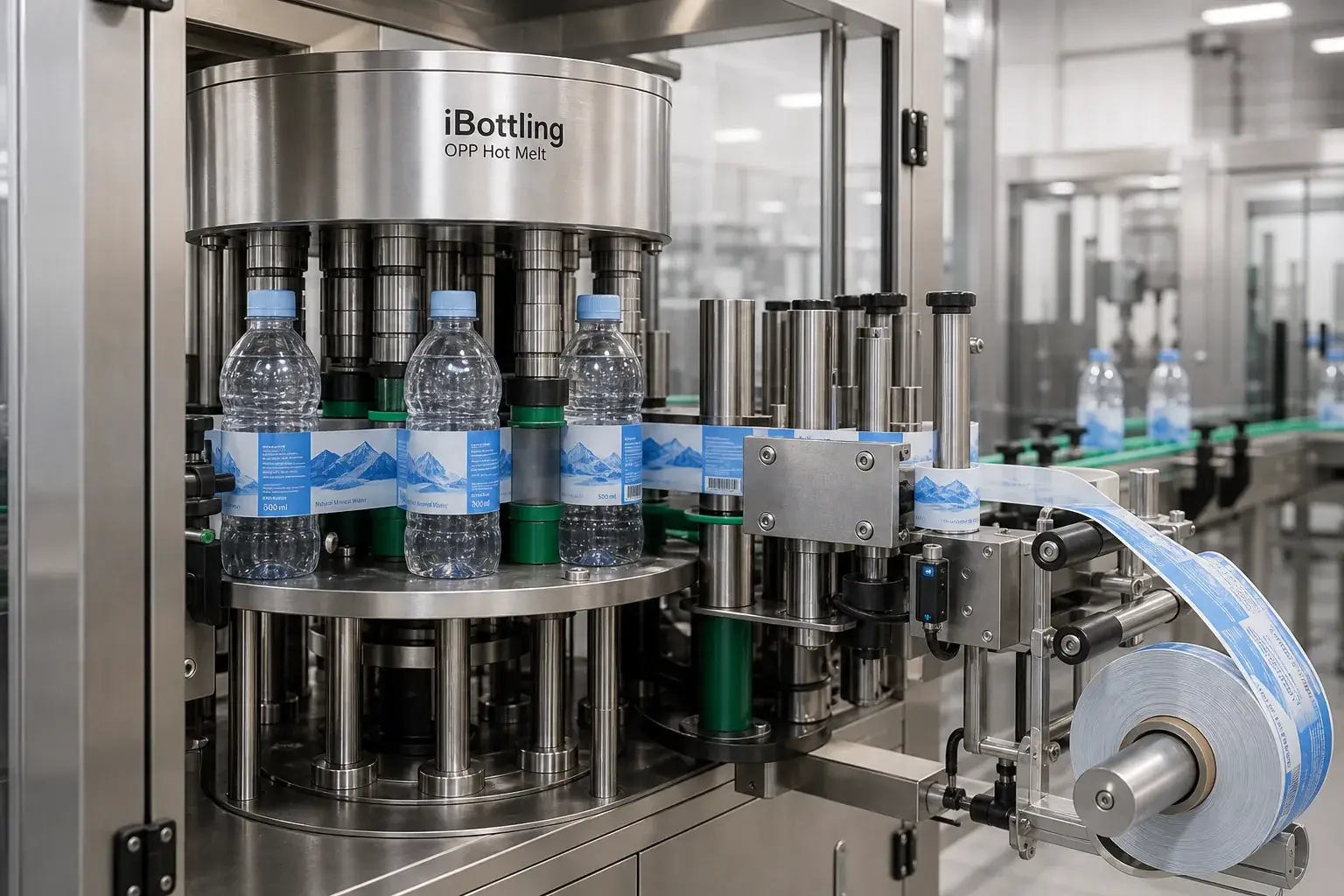
OPP roll unwind station with reel support and wrap-table entry path

Unwind and register

  • Roll payout stays stable until the registration mark reaches the cut-and-wrap zone.
  • Web guiding and cutter timing keep the film readable, square, and ready for glue transfer.
  • OPP stock is delivered cleanly so the printed face reaches the bottle without skew, web flutter, or overlap drift.
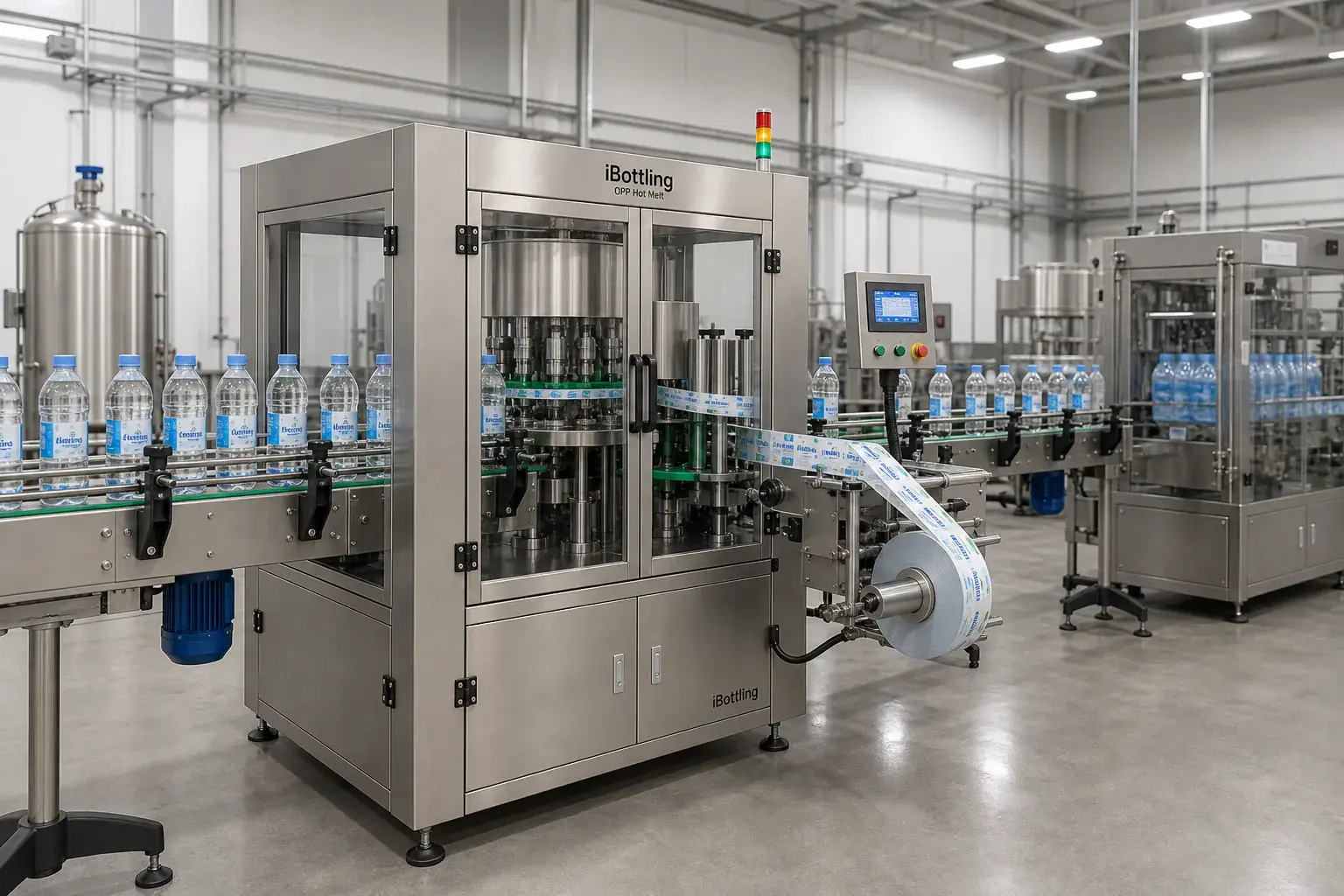
OPP hot melt wrap table showing bottle rotation, film overlap, and glue-transfer zone

Wrap application

  • Trigger timing aligns the cut film length to the bottle body and overlap target.
  • Hot-melt pattern, bottle rotation, and conveyor speed are tuned together for consistent wrap closure.
  • Film lands on the intended zone through controlled glue transfer, wrap pressure, and bottle stabilization.
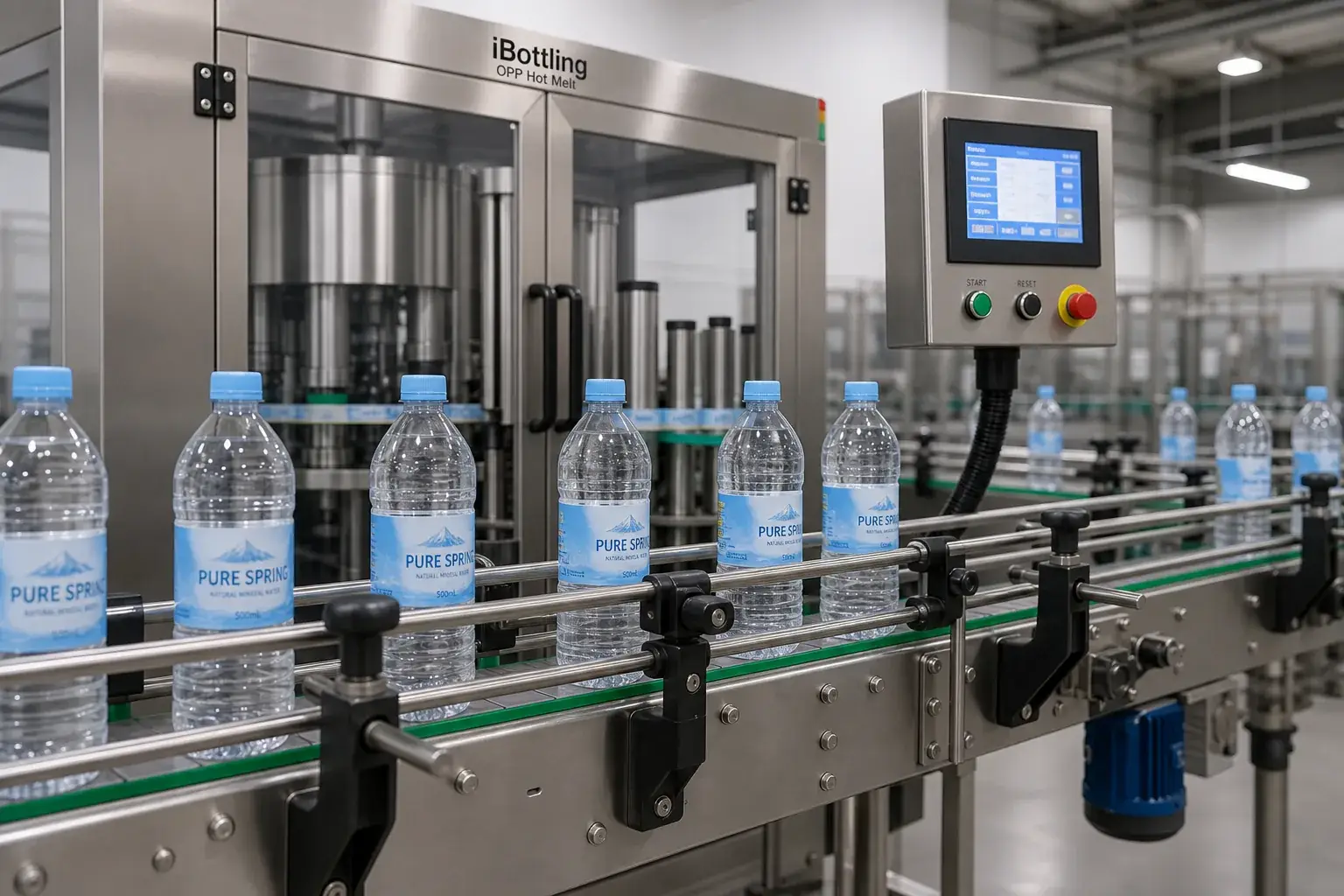
Bottle exit and inspection zone on the OPP hot melt labeling machine

Bottle exit

  • Bottle exits with visible wrap placement, overlap integrity, and enough access for inspection.
  • Inspection access stays open for quick operator checks on wrinkles, glue stringing, and scuff marks.
  • Change parts are set by bottle family, reel format, and wrap-table geometry.

Configuration Inputs.

Specification basis before quotation

Bottle sample review · roll validation · PLC/HMI recipe control · FAT checklist

Compliance & Global Standards

  • ConformityCE documentation prepared for the quoted scope
  • Quality systemQuality documentation available with the project file set
  • Machine safetyGuarding, interlocks, emergency stop logic, and access points reviewed to site standard
  • Plant environmentStainless enclosure and washdown tolerance selected for the packaging-room duty

The quoted OPP file set ties CE declarations, guarding notes, glue-temperature checks, film-roll validation, and bottle-sample acceptance records to the exact wrap application reviewed during FAT, including the downstream coding and packing interfaces used with a laser coder and a shrink wrapping machine .

Global tier-1 components

Roll-fed OPP projects rely on synchronized film, glue, and bottle timing, so the BOM names the PLC, drives, glue-heating hardware, film registers, wrap modules, and reject interfaces that keep the seam controlled.

  • Siemens PLC and HMI. Sequencing, safety, line integration. Commissioning footprint aligned to global integrators.

  • Schneider Electric Low-voltage train: inverters, motor protection, switchgear—sized to site voltage and harmonic policy.

  • SMC Label-head pneumatics, reject gate actuation, FRL assemblies, and cylinders with preventive-maintenance documentation.

  • Festo Alternate pneumatic stack where the plant standard is Festo. Same FAT/SAT pack and duty class.

ItemSpecification
Model seriesOPP hot melt wrap-labeling platform
Output rangeQuoted after sample test: bottle stability, film width, conveyor speed, inspection/reject scope, and operator access
Container rangeRound, oval, and gently profiled PET bottles; diameter/height and side-panel flatness confirmed by drawing and sample
Label dimensionsFilm width, film length, gap, backing liner, roll OD, and core size confirmed from roll data sheet
Placement toleranceGuaranteed only after FAT using production bottle samples, production label rolls, and agreed inspection method
Film handling
Bottle handling
Changeover
Utilities and footprintPower, air, conveyor height, roll-loading clearance, and guard footprint confirmed on GA drawing

Plant Integration & Layouts.

These layout references reserve glue-unit service reach, film-roll access, wrap-drum clearance, bottle stabilization length, and discharge spacing before the final GA drawing is released.

DWG REF: OPP-WRAP-PLANT-01
5 gallon filling line equipment layout reference with monoblock and process flow arrangement
Label waste & uptime

Reduce wrap waste, roll breaks, and reject loops at the OPP hot melt station.

Liner and label waste

Controlled unwind tension, glue transfer, and wrap contact reduce missed labels, skewed placement, and liner breaks.

Reel-change uptime

Roll access, web-path visibility, and saved recipes shorten recovery after roll change or bottle-family changeover.

Watch the OPP/BOPP hot-melt glue labeler playlist lead video.

Acceptance for OPP hot melt labeling should confirm seam position, glue transfer discipline, film tension recovery, bottle wrap contact, and clean restart after roll or container-family changes.
Acceptance proof basis — Acceptance proof basis — film rolls, glue-temperature control, and wrap-seam checks for OPP labeling
Exported to 150+ Countries24/7 Rapid Response SupportTurnkey Engineering Services

Get a Quote for This Machine

Since 1995 · CE & ISO 9001 · 150+ countries

OPP labeling machine for water, CSD and juice bottles

An OPP labeling machine applies roll-fed, wrap-around OPP (BOPP) film labels with hot melt glue: the film is unwound, cut to length, glued at the leading and trailing edge and wrapped around the bottle. Because labels come on a roll, the cost per label is usually lower than with pre-cut or self-adhesive labels on high-volume lines.

The OPP labeler normally follows the filler, for example a hot juice filling machine or, on pasteurized lines, the tunnel pasteurizer. After labeling, a bottle coder prints the date and batch code. For shaped containers that need individual labels, compare the adhesive sticker labeling machine.

FAQ — OPP hot melt wrap-labeling essentials

What bottle shapes can it handle?
Round, oval, and lightly contoured containers can be reviewed. Final handling depends on bottle stability, wrap position, side-panel flatness, and the required accuracy at line speed.
What label materials are supported?
The platform is built for OPP roll labels. During RFQ, roll samples are checked for width consistency, film stiffness, glue behavior, registration marks, and sensor readability.
How is changeover handled?
Changeover combines recipe selection with mechanical adjustment. Typical checks include a 3-point setup review for guide rails, side belts, and applicator height, followed by glue temperature, roll threading, sensor position, and sample bottles before production restart.
What throughput basis is used before quotation?
Quoted output is tied to bottle geometry, film width, overlap length, glue open time, and reject scope. For most beverage projects, the accepted basis is a verified bottles-per-hour band after FAT with the agreed bottle and roll set.
Can it integrate with upstream and downstream equipment?
Yes. The labeler can be integrated between filling/capping, coding, inspection, shrink wrapping, and case packing. The line layout must reserve operator access, roll-loading clearance, glue-service access, reject handling, and safe service space.
What is an OPP labeling machine used for?
An OPP labeling machine wraps roll-fed OPP/BOPP film labels around round bottles using hot melt glue. It is mainly used on water, CSD and juice lines where high volume makes roll-fed labels more economical than pre-cut labels.