Blow Molding

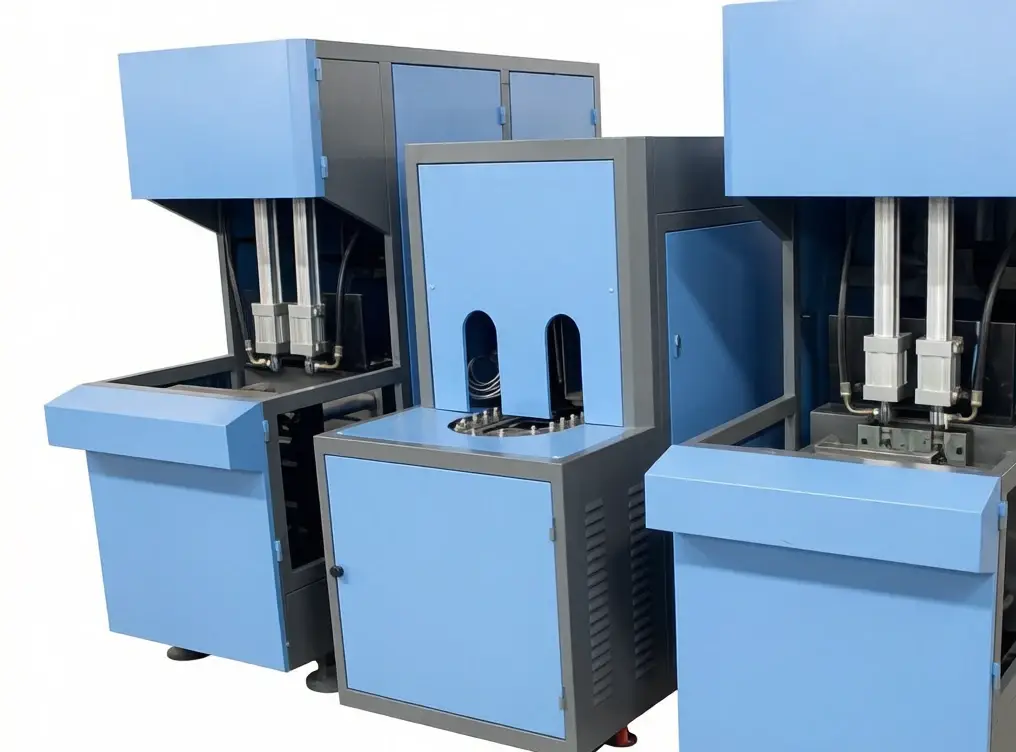
Semi-Automatic PET Stretch Blow Moulder

Cost-effective semi-automatic PET stretch blow molding machine for startup bottling plants scaling in-house bottle production. Converts heated PET preforms into finished bottles through operator-assisted indexing, blow molding, and discharge — with flexible cavity configurations, proven mold technology, and straightforward integration into existing bottling lines. Ideal scope: 600–1800 BPH RFQ-defined projects with fast changeover between bottle families.

Flexible cavity configurationsFlexible cavity configurations
Proven mold technologyProven mold technology

Get a Quote

Since 1995 · CE & ISO 9001 · 150+ countries

Built for beverage packaging project teams

FAT checklistBottle sample reviewPreform spec validationCE documentation planQuality file available
CE documentation prepared for project scopeQuality files available with the file setBottle formation stabilityPET preform processing
Total cost of ownership

Semi-Automatic Blow Molding: Lower CAPEX, Proven Bottle Quality

A semi-automatic PET stretch blow molding machine gives startups and mid-scale bottling plants a cost-effective entry into in-house bottle production. You trade cycle speed for flexibility — handling multiple bottle sizes on one machine without the full automation premium.


Output range
600–1,800BPH
Semi-automatic single or double cavity; actual output depends on bottle size, preform conditioning, and operator cycle time.
Bottle capacity
0.2–5Liters
PET bottles from small mineral water (200ml) up to 5-liter family-size containers. Exact range confirmed by preform and mold specs.
Semi-Automatic PET Blow Molding Machine rated output equipment

Semi-Automatic Blow Molding Machine — Key Specifications

Machine scope
Semi-automatic PET stretch blow molding machine; PET bottle range and cavity configuration RFQ-defined per project
Output capacity
Throughput scope RFQ-defined by cavity count, bottle geometry, and preform temperature tolerance; sample FAT verification recommended
Heating and power
Infrared quartz rotary heating oven with zone temperature control; three-phase power configuration project-dependent; high-pressure and low-pressure air system scope per RFQ
Control and changeover
PLC and HMI touchscreen interface; mold change and heating parameter switch; matching mold set range customizable per bottle family
Preform design basis and mold specification review

Cavity configuration proof and sample bottle FAT

RFQ-scoped technical basis and acceptance handoff
FAT checklist with sample review and reject criteria

Why Choose Semi-Automatic Blow Molding?

Ideal for startups, pilot lines, and boutique beverage producers who need in-house bottle production without the capital investment of a fully automatic rotary system.

Preform heating clarity

Rotary infrared oven, heating zones, and transfer path are arranged so operators can see and adjust preform temperature evenly.

Bottle formation stability

Mold clamping, stretch rod, and blow pressure timing keep the bottle wall consistent through each cycle.

Operator-friendly access

Mold changes, heater adjustments, and blow station access stay within the operator's working zone.

Key Advantages

Bottle quality

Consistent wall thickness from controlled stretch-blow pressure and even preform heating.

Mold flexibility

Quick mold swap and heating profile adjustment keep changeover practical for multiple bottle families.

CAPEX savings

Semi-automatic cycle eliminates automation premium while maintaining production output.

How Semi-Automatic Blow Molding Works

The semi-automatic blow molding cycle transforms PET preforms into finished bottles through three stages: preform heating, blow forming, and bottle discharge. Upstream preforms can come from your PET bottle blowing machine , while downstream coding and bundled discharge can connect to a laser coding machine and a shrink wrapping machine .
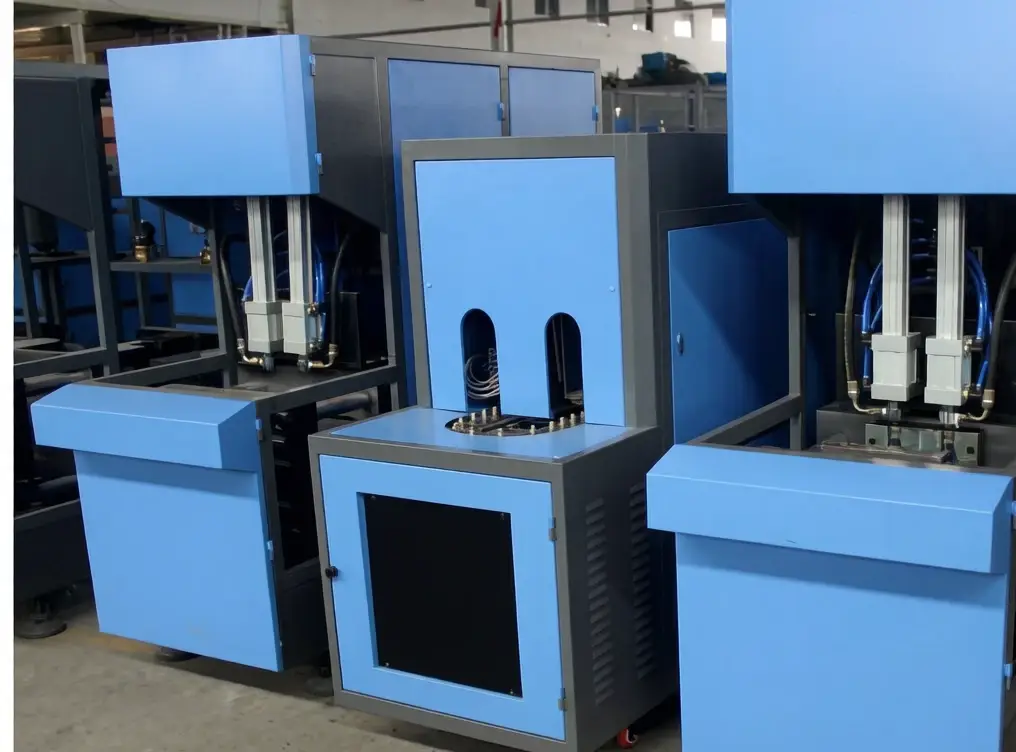
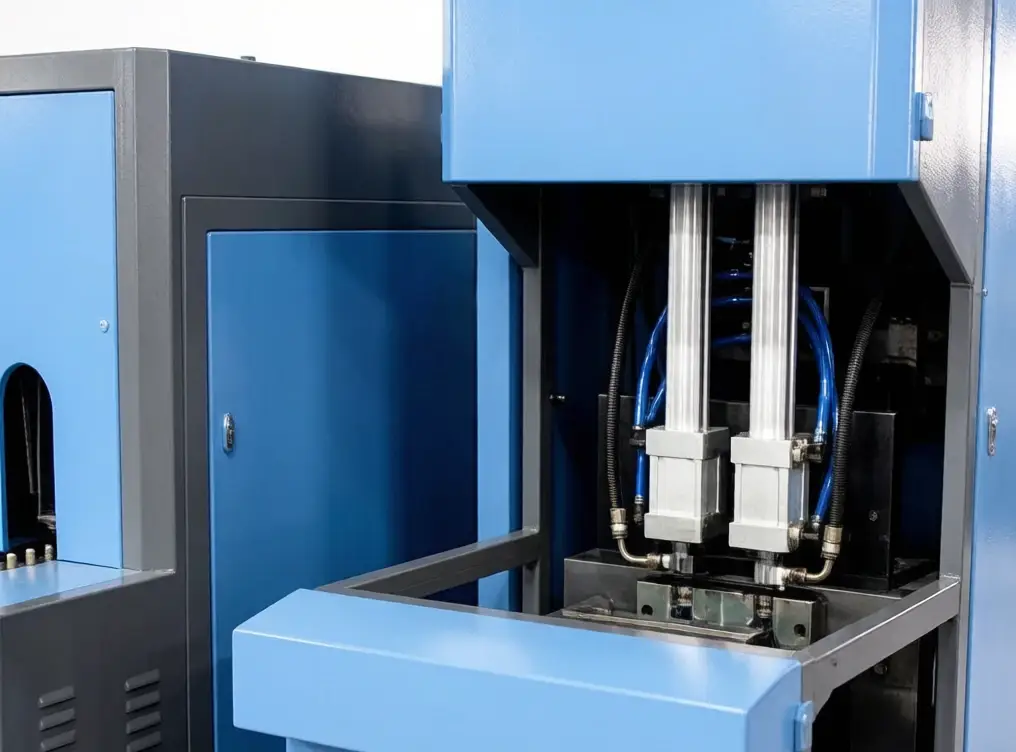
iBottling Semi-Automatic PET Stretch Blow Molding Machine preform heating and pitch alignment — industrial product view

Preform heating

  • Preforms enter the indexed chain-plate heating tunnel with zone-controlled infrared quartz lamps.
  • Temperature profile is set by preform weight and wall thickness for even heat distribution.
  • Heating cycle completes when preforms reach stretch-blow forming temperature.
iBottling Semi-Automatic PET Stretch Blow Molding Machine blow molding station — industrial product view

Stretch-blow forming

  • Heated preforms transfer to the single mold station for stretch-blow bottle forming.
  • Stretch rod extends and high-pressure blow air forms the bottle against mold cavity walls.
  • Mold cooling sets bottle geometry before the mold opens for discharge.
iBottling Semi-Automatic PET Stretch Blow Molding Machine bottle discharge and inspection — industrial product view

Bottle discharge

  • Formed bottle exits the mold for operator visual quality inspection.
  • Inspection access stays open for quick checks before routing downstream.
  • Mold configuration adapts to bottle family and cavity count requirements.

Configuration Inputs.

Specification basis before quotation

Bottle sample review · preform spec validation · PLC/HMI recipe control · FAT checklist

Compliance & Global Standards

  • ConformityCE documentation prepared for the quoted scope
  • Quality systemQuality documentation available with the project file set
  • Machine safetyGuarding, interlocks, emergency stop logic, and access points reviewed to site standard
  • Plant environmentStainless enclosure and washdown tolerance selected for the packaging-room duty

The quoted semi-automatic blow molding machine file set ties CE declarations, guarding notes, preform quality checks, and bottle-sample acceptance records to the exact mold and bottle family reviewed during FAT, alongside the line interfaces typically shared with a laser coding machine and shrink wrapping equipment. laser coding machine shrink wrapping equipment

Global tier-1 components

Blow-molding projects depend on process-repeatability discipline, so the BOM names the PLC, drives, heating elements, stretch rods, clamping hardware, and blow valves that protect bottle quality on PET preform stock.

  • Siemens PLC and HMI. Sequencing, safety, line integration. Commissioning footprint aligned to global integrators.

  • Schneider Electric Low-voltage train: inverters, motor protection, switchgear — sized to site voltage and harmonic policy.

  • SMC Blow-mold pneumatics, stretch-rod actuation, FRL assemblies, and cylinders with preventive-maintenance documentation.

  • Festo Alternate pneumatic stack where the plant standard is Festo. Same FAT/SAT pack and duty class.

ItemSpecification
Machine seriesSemi-automatic PET stretch blow molding machine
Output rangeRFQ-defined: 600-1800 BPH depending on bottle size, cavity count, and operator cycle (quotation basis)
Bottle capacity range500mlu20135L PET bottles standard. Larger containers require special mold and machine configuration.
Cavity configuration2-cavity; molds supplied per bottle family
Heating systemRotary infrared quartz lamp oven, zone-controlled temperature
High pressure air1.0–1.6 m³/min @ 30KG (specification)
Low pressure air1.0 m³/min @ 10KG (specification)
Air treatmentPrecision air filter + refrigerated cold dryer (auxiliary equipment list)
Power supply380V / 50Hz Three-phase (standard)
Mold materialcustom mold set, per bottle design; 2-4 week fabrication
ChangeoverMechanical mold swap + heating profile adjustment
2D/3D bottle drawingprovides 2D bottle drawing with quotation (quotation terms)

Layout and Integration

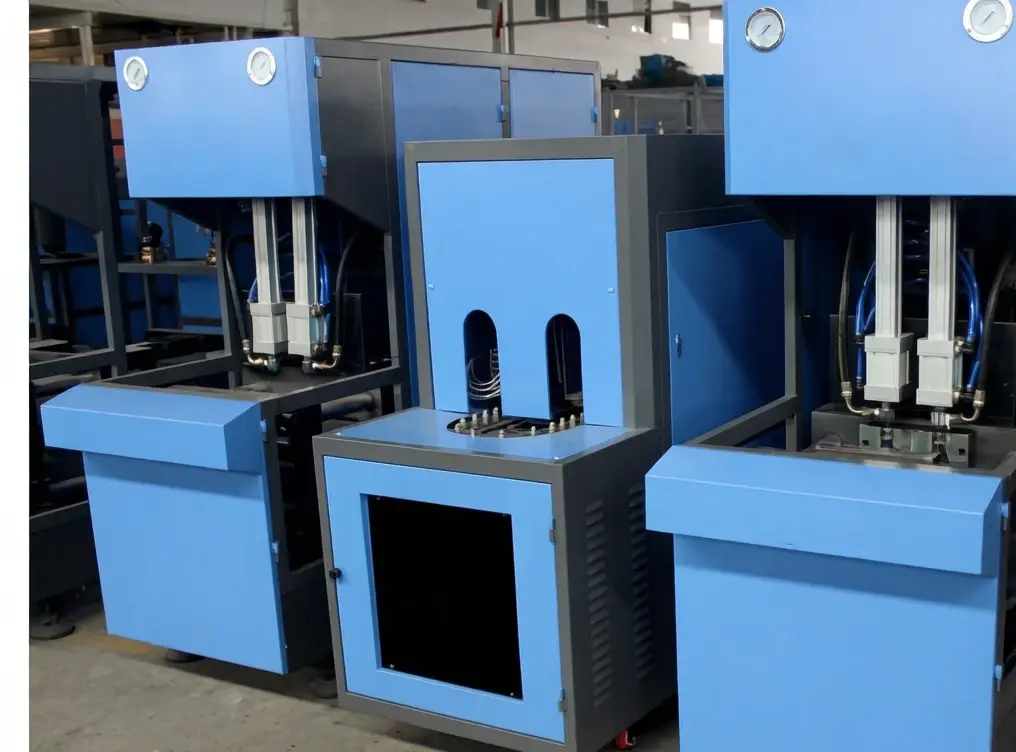
The semi-automatic blow molding machine integrates into your bottling line with compact footprint, standard utility connections, and flexible placement relative to upstream preform supply and downstream filling operations.
DWG REF: BM-SEMI-AUTO-01
5 gallon filling line equipment layout reference with monoblock and process flow arrangement
Cycle time & uptime

Reduce cycle-time variation, preform waste, and reject loops at the blow-molding station.

Preform and energy waste

Controlled heating zones, stretch-rod timing, and clamping pressure reduce cycle-time variation, wall-thickness inconsistency, and preform waste.

Mold-change uptime

Mold access, heating-profile visibility, and saved recipes shorten recovery after preform-batch change or bottle-family changeover.

Semi Auto Blow Molding Machine In Action

Application evidence: semi-automatic blow molding machines are deployed in startup bottling lines where throughput, pressure tolerance, and temperature stability determine production scope. FAT acceptance and inspection checkpoints ensure RFQ-defined output quality before discharge.
Acceptance proof basis — Application evidence basis — RFQ scope and FAT acceptance
Exported to 150+ Countries24/7 Rapid Response SupportTurnkey Engineering Services

Get a Quote for This Machine

Since 1995 · CE & ISO 9001 · 150+ countries

FAQ — Semi Automatic Blow Molding Machine

What does the semi automatic blow molding machine do?
It heats PET preforms through an indexed chain-plate oven, then the operator transfers them to the single blow mold station for stretch-blow forming. Bottles exit for inspection. The machine includes the main body, heating system, mold station, PLC/HMI controls, and guarding.
What bottle sizes and capacity can this machine produce?
Standard range: 500ml to 5L PET bottles. Output: 600-1800 BPH depending on bottle size, cavity count, and operator cycle. Larger containers require special molds — confirmed per project during RFQ.
What auxiliary equipment is required and what is optional?
Required: high-pressure air compressor (30KG), refrigerated air dryer, precision air filter, air receiver tank. Optional: mold chiller, spare-parts kit, extended warranty, on-site training, and preventive maintenance contracts.
What warranty and support does iBottling offer?
Warranty covers manufacturing defects per quotation. Installation includes machine placement, utility connections, heating setup, and test run. Typical lead time is 4-6 weeks after order confirmation. Remote technical support and on-site troubleshooting are available. Spare parts stocked for prompt shipment.
How does semi-automatic differ from fully automatic?
Semi-automatic requires an operator to transfer preforms between heating and blowing stations. Fully automatic rotary systems use continuous automated feeding. Semi-automatic offers lower capital cost and simpler maintenance, ideal for startups and multi-SKU producers.