
Packaging & End-of-Line Equipment
Automated beverage packaging systems engineered for end-of-line integration with filling and processing lines. Labeling, shrink wrapping, carton packing, palletizing, and conveyor systems configured to line speed, package format, and layout requirements. Designed for reliable end-of-line operation with configurations matched to production capacity and packaging formats. Complete packaging engineering: system selection, layout planning, conveyor design, and on-site commissioning.
Why Packaging & End-of-Line Equipment
Packaging and end-of-line equipment converts filled bottles and cans into market-ready products. iBottling packaging machinery covers labeling, wrapping, coding, carton packing, palletizing, and conveyor handling — the downstream stages that prepare finished goods for warehousing and distribution. Machine types include bottle labeling machines, shrink wrapping machines, laser coding machines, carton packing machines, palletizers, and conveyor systems — each selected based on container format, pack format, and production targets. Filling equipment (gravity, pressure, hot-fill and other fillers) is covered separately under filling machines.
Packaging Machine Types
Select the right packaging equipment for your production line. Each machine type is optimized for specific package formats, line speeds, and automation requirements.
01
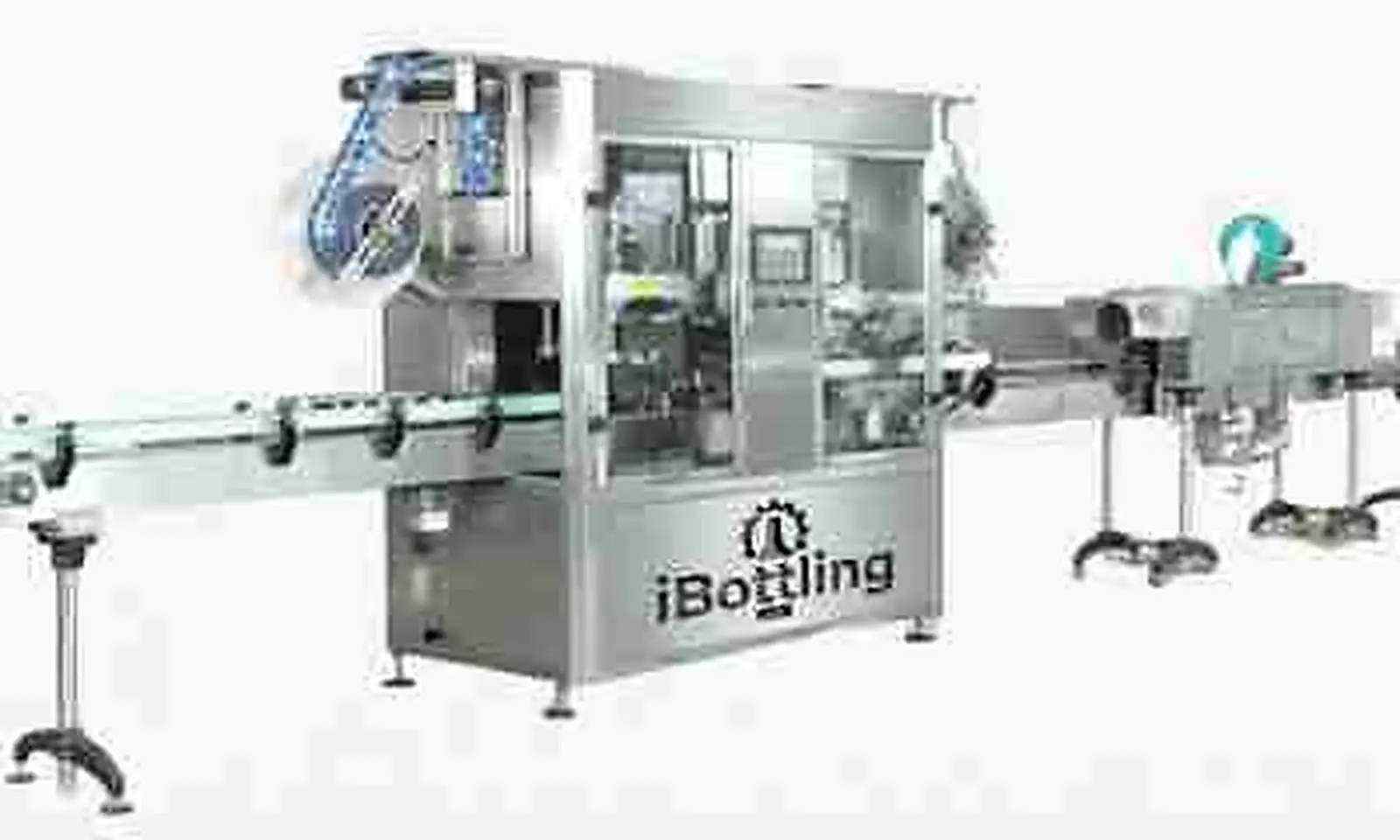
Bottle Labeling Systems
Best for: PET bottles, glass bottles, cans.
Technology: Shrink sleeve labeling, OPP hot melt roll-fed, adhesive sticker labeling. Rotary and inline configurations with servo-driven label placement.
Automation: Automatic label feed and container handling — quick changeover between label types and container formats.
Performance: Up to 36,000 containers/hr, configured according to container format and production requirements.
Integration: In-line connection to filling machine, coding system, and downstream packaging equipment for coordinated line operation.

02
Shrink Wrapping & Coding
Best for: Multipack wrapping, tray packaging, bottle and can coding.
Technology: PE film shrink wrapping with hot-air tunnel. CO2 laser date coding — batch code, expiry date, and production line marking.
Automation: Automatic film feeding, programmable shrink tunnel temperature, conveyor-speed synchronization for continuous line operation.
Performance: Up to 25 packs/min depending on pack format and production requirements.
Integration: In-line with upstream filling or labeling and downstream palletizing. Configurable for film-only or tray + film packaging formats.

03
Carton & Case Packing
Best for: Bottle and can secondary packaging into cartons and cases.
Technology: Wrap-around carton packing and RSC (regular slotted container) case packing. Automatic product collation, carton forming, hot-melt sealing, servo-driven operation.
Automation: Automatic blank erection, programmable pack patterns, quick format changeover.
Performance: Up to 25 cases/min depending on carton style and product requirements.
Integration: In-line with labeling upstream and palletizing downstream. Case configuration adjustable per production run.

04
Palletizing & Depalletizing
Best for: End-of-line palletizing of finished cartons, crates, and multipacks.
Technology: Robotic palletizing and conventional layer palletizing with programmable stacking patterns. Automatic slip sheet insertion, pallet conveying, stretch wrapping integration.
Automation: Automation level can be configured according to production requirements.
Integration: In-line with case packing. Pallet conveyor connection for downstream handling and logistics requirements.
05
Conveyor & Line Connection
Best for: Inter-machine container and pack transport, accumulation, and line balancing.
Technology: Table-top chain conveyors (bottles), air conveyors (lightweight containers), roller conveyors (cases and pallets). Variable speed drives and stainless steel construction.
Automation: Accumulation zones for line balancing between labeling, packing, and palletizing. Line control integration for coordinated production flow with upstream equipment.
Integration: Layout designed to connect filling line output through labeling, packing, and palletizing according to site requirements.
Related Filling Solutions
Packaging systems integrate with upstream filling and processing equipment. iBottling provides coordinated end-of-line solutions from labeling through to finished pallet.
01
Complete Beverage Lines
Turn-key beverage lines integrating filling, labeling, wrapping, packing, and palletizing into a coordinated production system. Single-source responsibility.
02
Labeling & Decoration
Shrink sleeve, OPP hot melt, and adhesive labeling for PET bottles, glass, and cans. Full-wrap, partial-wrap, and neck sleeve options for brand presentation.

03
Palletizing & Warehousing
Layer palletizing and stretch wrapping for finished goods. Automated pallet handling, slip sheet insertion, and warehouse-ready stack patterns.
Packaging Machine Selection Guide
Compare packaging systems side by side. Select the right configuration based on your product format, line speed, and automation requirements.
| Selection Factor | Labeling | Shrink & Coding | Carton Packing | Palletizing | Conveyor |
|---|---|---|---|---|---|
| Primary function | Bottle decoration and branding | Multipack wrapping, date coding | Secondary packaging into cartons | Pallet stacking and wrapping | Inter-machine product transport |
| Package format | Individual bottles and cans | Multipacks, trays, single bottles | Wrap-around, RSC cases, trays | Full pallets of cartons or cases | Bottles, packs, cases, pallets |
| Typical speed | Up to 36,000 containers/hr | Up to 25 packs/min | Up to 25 cases/min | Up to 60 layers/hr | Matched to line speed |
| Automation level | Full automatic (rotary/inline) | Full automatic | Full automatic | Full automatic (robotic option) | Full automatic (PLC controlled) |
| Line position | After filling, before packing | After labeling, end of line | End of line | Final line stage | Throughout entire line |
| Typical labor requirement | 1 operator per shift for monitoring and material supply (varies by line configuration and automation level) | ||||
| Layout consideration | Inline or rotary, compact footprint | Tunnel length, film storage area | Product infeed, carton magazine | Pallet conveyor, stretch wrapper | Line length, elevation changes |
| Best suited for | All beverage producers | Multipack, tray, coded products | Wholesale and retail distribution | Warehouse-ready output | All production lines |
Actual output depends on package format, line layout, and automation configuration. Contact our engineering team for project-specific recommendations.
Applications
iBottling packaging equipment handles the full range of beverage containers — from individual bottle labeling through to finished pallet stacking for distribution.
| Application | Package Format | Recommended Systems |
|---|---|---|
| PET Water Bottles | 250ml – 19L bottles | Shrink Sleeve Labeling + Shrink Wrap + Palletizer |
| CSD & Carbonated Drinks | PET bottles, cans | OPP Labeling + Carton Packing + Palletizer |
| Juice & Functional Beverages | PET, glass bottles | Adhesive Labeling + Shrink Wrap + Coding |
| Beer & Cider | Glass bottles, cans | Adhesive Labeling + Carton Packing + Palletizer |
| Dairy & Isotonic Drinks | PET, HDPE bottles | Shrink Sleeve + Shrink Wrap + Palletizer |
| Edible Oils | PET, HDPE bottles | Adhesive Labeling + Carton Packing + Palletizer |
| Energy Drinks | PET cans, aluminum cans | Shrink Sleeve Labeling + Shrink Wrap + Palletizer |
| Plant-Based Beverages | PET, carton, glass | Adhesive/Shrink Sleeve + Carton Packing + Palletizer |
| Export Packaging | All formats | Shrink Wrap + Palletizer + Pallet Securing |
Packaging Engineering & Support
Packaging engineering for complete end-of-line systems — from labeling to palletizing. iBottling provides line layout planning, conveyor routing, system selection, automation coordination, and on-site commissioning for beverage packaging lines.
Layout Planning & Conveyor Design
Equipment placement, conveyor routing, and accumulation zone planning for end-of-line packaging. Line layout designed to optimize floor space and material flow from labeling through palletizing. Conveyor specifications — table-top chain, air, or roller — configured to container type, line speed, and site conditions.
Line Layout & Material Flow
End-of-line layout design for optimized material flow from filling through to finished pallet. Line balancing between labeling, wrapping, packing, and palletizing stations. Conveyor routing, accumulation zone placement, and automation level configured to match upstream filling capacity and downstream distribution requirements.
Installation, Commissioning & Training
On-site installation supervision by iBottling engineers — equipment positioning, conveyor connection, mechanical completion check, and step-by-step commissioning. Operator training covers label changeover, format adjustment, palletizer programming, and line control operation. Post-commissioning support for production ramp-up.
Packaging Project Experience
iBottling packaging equipment is deployed in beverage production lines across markets worldwide — from regional bottled water operations to fully integrated carbonated drink production.
01
Carbonated Drink Production Line — Russia
Complete carbonated beverage production line including PET bottle blowing, rinsing, filling, capping, labeling, and shrink wrapping. The customer completed installation independently using step-by-step guidance, with the line operating at target capacity since commissioning.
02
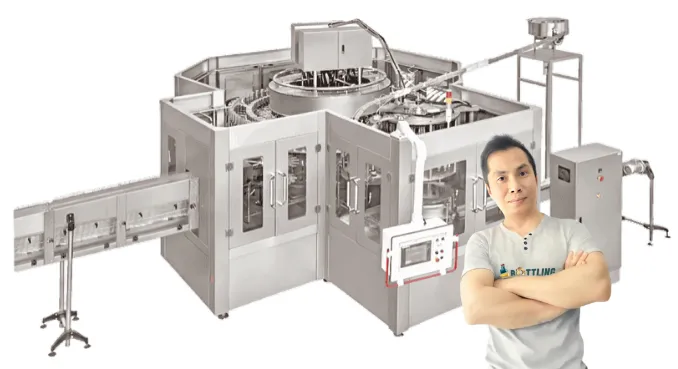
Bottled Water Production Line — Zimbabwe
Automated PET water bottling line serving the Lake Kariba region. Integrated blow molding, rinsing, filling, capping, labeling, and shrink wrapping. Designed for reliable operation with minimal on-site technical resources.
Turnkey Beverage Line Engineering
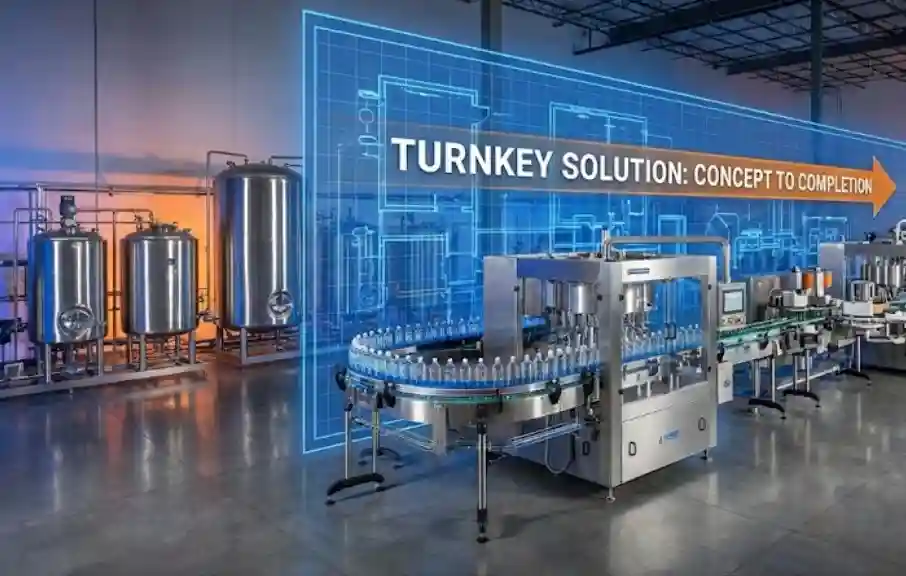
Project scope covers line layout design, equipment specification, FAT on customer containers, on-site installation supervision, and commissioning. Engineering support includes integration of water treatment, blow molding, filling, labeling, and packaging — coordinated as a single production system.
Beverage Packaging Machinery by Line Stage
Beverage packaging machinery is everything that happens after the bottle or can is filled and capped. On a complete bottling line, end-of-line equipment is arranged in a fixed order, and each stage has its own machine family. Use this guide to find the right category, then open the category page for models and specifications.
1. Conveying – moving containers between machines
Bottling conveyors link every machine on the line: air conveyors for empty PET bottles, chain and slat conveyors for full containers, and accumulation tables that buffer short stops. Conveyor layout decides whether the line runs smoothly at rated speed. See beverage conveyor systems →
2. Labeling – decoration and product information
Labelers apply shrink sleeve, OPP hot-melt roll-fed or adhesive sticker labels. The right choice depends on container shape, label material and line speed. See shrink sleeve, OPP hot-melt and adhesive sticker labeling machines.
3. Coding – batch and date marking
Laser coders mark the batch code and expiry date on every container or pack, in line with the conveyor speed. See laser coding machine →
4. Secondary packaging – shrink wrapping and multipacks
Shrink wrappers group bottles or cans into film-only or tray + film multipacks and shrink the PE film in a heat tunnel. See shrink wrapping machine → Need the film too? See PE shrink film.
5. Carton and case packing
Wrap-around and RSC case packers put bottles or cans into cartons for markets that ship in boxes. See automatic carton packing machine →
6. Palletizing – the last machine on the line
Palletizers stack packs or cartons into stable pallet loads ready for stretch wrapping and warehousing. See automatic bottle palletizer →
How to Select Beverage Packaging Equipment
- Start from the filler speed. Every downstream machine should run slightly faster than the filler, so packaging never becomes the bottleneck.
- Define your pack formats. List the bottle sizes and pack counts (for example 6, 12 or 24 bottles) you sell in each market.
- Choose film, tray or carton. Film-only packs cost least; tray + film and cartons protect better for long-distance shipping.
- Plan the layout. Floor space, line direction and accumulation zones decide the conveyor design.
- Plan for changeover. If you run several SKUs, ask for change parts and recipe settings that make format changes quick.
Packaging Automation for Water, CSD, Juice, Breweries and Craft Producers
The same end-of-line building blocks serve water, carbonated drink, juice, beer and other beverage plants. Small and craft producers often begin with labeling, coding and shrink wrapping, then add case packing and palletizing as volume grows. Large plants usually run the full sequence fully automatic, matched to a filler such as a 12,000 B/H CSD filling line.
Why Work with iBottling on End-of-Line Packaging
- Beverage equipment supplier since 1995, exporting to 150+ countries.
- CE and ISO 9001 certified factory.
- Packaging machines supplied together with complete bottling lines, so speeds, controls and conveyor heights are matched.
- Layout planning, installation and commissioning support.
Request a quote for your packaging line → Send your filler speed, container sizes and pack formats.
Frequently Asked Questions
Q1: What types of packaging machinery does iBottling offer?
iBottling supplies bottle labeling systems (shrink sleeve, OPP hot melt, adhesive), shrink wrapping and laser coding machines, carton and case packing systems, palletizing and depalletizing equipment, and conveyor systems for beverage production line integration.
Q2: How much does a packaging machine cost?
Packaging machine pricing depends on machine type, speed, automation level, and line configuration. A basic adhesive labeler represents a different investment than a full palletizing system with robotic stacking. Contact our sales team with your packaging requirements for a project-specific quotation.
Q3: How do I choose between shrink sleeve and adhesive labeling?
Shrink sleeve labeling provides 360-degree full-wrap decoration and is ideal for contoured bottles and premium branding. Adhesive (pressure-sensitive) labeling applies pre-printed labels to specific bottle areas and suits simpler shapes and high-speed lines. OPP hot melt labeling uses roll-fed film for cost-effective full-wrap labeling at high speed. Selection depends on bottle shape, brand presentation, and line speed.
Q4: What is the difference between wrap-around and RSC carton packing?
Wrap-around carton packing forms a carton blank around the product group, creating a tight-fitting package that uses less material. RSC (regular slotted container) packing places pre-formed cases over the product. Wrap-around suits single-SKU high-volume lines; RSC offers flexibility for multi-SKU operations. The choice depends on product format, distribution channel, and packaging material cost.
Q5: How many workers are needed to operate a packaging line?
A fully automatic packaging line typically requires 1-2 operators per shift for monitoring, label and film roll changes, and pallet handling. The actual number depends on automation level, number of packaging stations, and material supply logistics.
Q6: What speeds can your packaging machines achieve?
Labeling machines reach up to 36,000 containers per hour depending on label type and container format. Shrink wrapping systems process up to 25 packs per minute. Carton packing handles up to 25 cases per minute. Palletizers stack up to 60 layers per hour. Each machine is configured to match the upstream filling line speed.
Q7: Do you provide complete end-of-line packaging lines?
Yes. iBottling supplies integrated end-of-line lines that combine labeling, shrink wrapping, carton packing, palletizing, and stretch wrapping into a single coordinated system. Packaging equipment is designed for integration with upstream filling for a complete beverage production line.
Q8: Can your labeling machines handle multiple bottle sizes?
Yes. iBottling labeling machines support format changeovers within a validated container family. Shrink sleeve machines adjust tunnel height and sleeve length. Adhesive labelers adjust label head position. OPP machines change roll width and cut length. Changeover time depends on the number of format adjustments required.
Q9: What level of automation is available for palletizing?
Palletizing automation ranges from semi-automatic systems with manual pallet loading to fully automatic robotic palletizers with programmable stacking patterns, automatic slip sheet insertion, and stretch wrapping integration. The appropriate level depends on production volume and labor availability.
Q10: What are the ROI factors for automated packaging?
Key ROI factors include labor reduction from automated palletizing and carton packing, reduced label waste from precise application, increased throughput from coordinated line speed, and reduced product damage from automated handling. Payback period depends on production volume and current labor costs.
Q11: What maintenance does packaging machinery require?
Regular maintenance includes label head cleaning and calibration, shrink tunnel temperature verification, carton magazine alignment, palletizer lubrication, and conveyor chain tensioning. A preventive maintenance schedule is provided with each machine, with spare parts support for common wear components.
Q12: How long does packaging line installation take?
Installation time depends on line complexity. A single labeling machine typically requires 3-5 days for installation and commissioning. A complete end-of-line system with labeling, wrapping, packing, and palletizing may require 2-4 weeks on-site. Our team provides installation supervision and operator training.
Q13: Can packaging machines be integrated with existing filling lines?
Yes. iBottling packaging equipment is designed for integration with existing filling lines through standardized conveyor interfaces and PLC communication. Line speed synchronization, product transfer, and control integration are reviewed during project specification to ensure seamless operation.
Q14: Do you provide spare parts and technical support?
Yes. iBottling provides standard warranty coverage on all packaging equipment with extended coverage options available. After-sales support includes technical documentation, remote troubleshooting, spare parts supply for common wear components (label heads, shrink tunnel elements, palletizer grippers), and on-site service as required.
Q15: Can I expand packaging capacity later?
Capacity expansion is possible with most iBottling packaging systems. Options may include adding a second labeling station, upgrading palletizer speed, or extending conveyor length. Discuss future capacity requirements during specification so the system layout can accommodate expansion.
Q16: Can packaging equipment be integrated with an existing filling line?
Yes. iBottling packaging equipment is designed for in-line integration with existing filling machines. The engineering scope covers conveyor connection, speed synchronization, and control system coordination to match packaging output to filling line throughput.
Q17: How do I choose between semi-automatic and fully automatic packaging equipment?
The choice depends on production volume, available labor, and line speed. Semi-automatic systems are suitable for lower volumes with manual infeed and discharge. Fully automatic systems integrate in-line with conveyor and PLC control for higher throughput. iBottling can recommend the appropriate automation level based on your production requirements.
Q18: Can packaging capacity be expanded later?
Yes. Packaging lines can be designed with expansion in mind — additional labeling heads, packing lanes, or palletizing capacity can be added as production grows. iBottling layout planning can reserve space and connection points for future expansion.
Q19: What packaging considerations are important for export shipments?
Export packaging requirements depend on destination, shipping method, and climate. Key considerations include case strength, shrink wrap coverage, pallet stability, and moisture protection. iBottling can recommend packaging configurations suitable for export distribution.
Q20: What are the key factors for packaging automation ROI?
Key ROI factors include labor reduction from automatic labeling, packing, and palletizing, increased throughput from line balancing, reduced product damage from automated handling, and improved packaging consistency. ROI timeline depends on line complexity and production volume.
Q21: What is the difference between robotic and conventional palletizing?
Robotic palletizing uses articulated arm robots for flexible stacking of multiple product formats and stacking patterns on the same line — ideal for production environments with frequent format changes. Conventional layer palletizing uses mechanical layer-forming and push-on systems for stable, high-volume production of uniform pallet loads. The right choice depends on production volume, product mix, and format change frequency. iBottling supplies both technologies and can recommend based on your project requirements.
Q22: What packaging formats can your machines handle?
iBottling packaging equipment handles the full range of beverage packaging formats: PET bottles (250 ml to 19 L), glass bottles, aluminum and steel cans, cartons and cases (wrap-around and RSC), trays (cardboard and plastic), and film packs (shrink-wrapped multipacks and pallet loads). Each machine type is configured for specific format ranges — contact our team with your product format for project-specific recommendations.
Get Your Packaging Solution
Describe your packaging requirements, product format, line speed, and automation needs. Our team will recommend the right machine configuration.
