
Turnkey CSD Soda Bottling Line & Soft Drink Production Line
iBottling builds carbonated soft-drink (CSD) lines around counter-pressure filling and a carbonation unit, from 2,000 up to 36,000 BPH typical. The exact configuration is confirmed during RFQ against your recipe, container, and site.

Suitable Products
Carbonated soft drinks, soda, sparkling water, and tonic-style beverages filled cold under counter-pressure.
Container Types
PET bottles from 0.2 L to 2.5 L as standard; glass and aluminum can are supported on dedicated fillers within the same line scope.
Typical Capacity Ranges
Typical CSD lines run from 2,000 BPH up to 36,000 BPH. Size is set by your recipe, CO2 level, and container mix during RFQ.
Core Machine List
Carbonator, counter-pressure rinser-filler-capper monoblock, PET blow molder (or can depalletizer/ filler), labeling machine, packing machine, and conveyor.
A tunnel or flash pasteurizer is added only where the product requires it.

Process Flow
Syrup/BEV preparation → carbonation → counter-pressure filling → capping → labeling → packing → palletizing, with controlled CO2 dosing throughout.
Delivery is planned as five linked stages: water treatment and syrup preparation, carbonation and filling, PET blow molding, labeling, then packing and palletizing.

Utility & Layout Considerations
CO2 supply, chilled water for the filler, three-phase power, and compressed air are the key utilities. Foam control drives filler and conveyor design.

Optional Modules
CO2 recovery, cap sterilization, date coding, and shrink wrap. Added to match your market and compliance needs.
RFQ Checklist
Target capacity, container sizes, CO2 volume, recipe notes, and local utilities. Share these and we scope the line.
Carbonation & CO2 Dosing
Carbonation is set by injecting CO2 into the chilled syrup or BEV mix under controlled pressure before filling. Typical carbonated soft drinks run around 3–4 volumes of CO2; sparkling water is often dosed higher, and the exact level is set by your recipe.
A carbonation unit holds temperature and pressure steady so each bottle carries a consistent CO2 volume. Dosing is tuned during commissioning and can be adjusted per recipe.
Recommended Capacity & Example Configurations
Typical CSD lines span 2,000–36,000 BPH. A 6,000–12,000 BPH line is common for regional brands, while 18,000–36,000 BPH suits larger or multi-shift operations.
As an example, a 12,000 BPH PET CSD line typically pairs a counter-pressure monoblock with matched PET blowing, labeling, and packing systems. Exact head count and supporting equipment are confirmed during RFQ from your container and CO2 plan.
Configurations above 36,000 BPH are treated as project-review scope, not a standard catalog offering.
Capacity Matching Across Stations
Each station—blowing, filling, capping, labeling, and packing—must be balanced so the filler sets the line pace without starving or bottlenecking downstream.
We size conveyors, buffer tables, and change parts so the line runs at a stable rate. Where a single station is oversized, capital is wasted; where it is undersized, the whole line is capped. Balance is confirmed against your target output during RFQ.
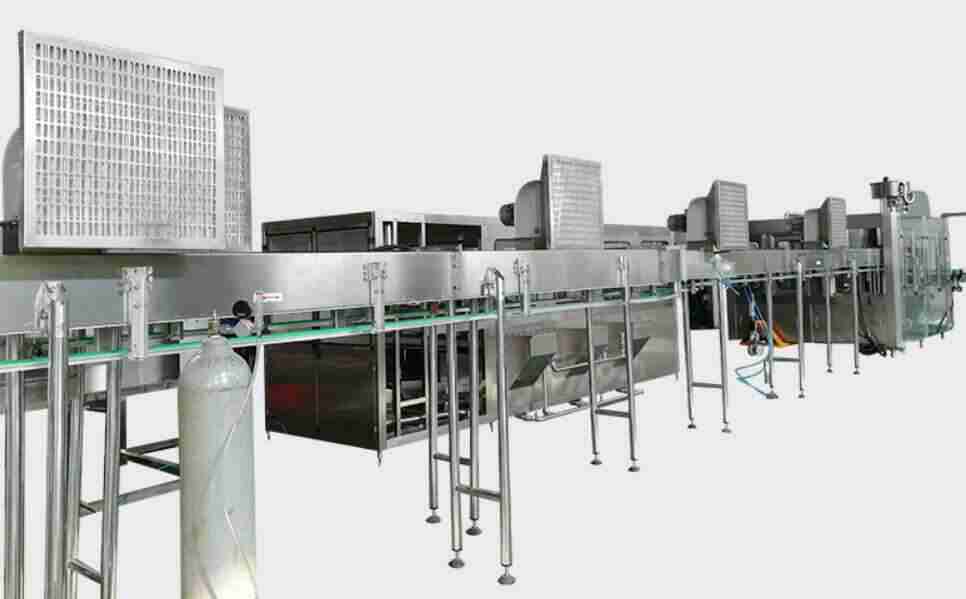
CSD Line Cost Factors
Line cost depends on capacity, container mix (PET / glass / can), carbonation level, pasteurization need, and the level of automation. Utility readiness on site—CO2 supply, chilled water, power, and compressed air—also shapes the quote.
Optional modules such as CO2 recovery, cap sterilization, date coding, and shrink wrap add to the base scope. We provide a budgetary range during RFQ; final pricing is confirmed after we review your full specification.
What's Included / Excluded in a Quotation
A typical CSD line quotation covers the specified machines, control integration, installation supervision, and commissioning support. Spare-parts kits and operator training are offered as separate line items.
Site civil works, utility connections to the machine boundary, local permits, and shipping or insurance are typically excluded and confirmed per project. We list inclusions and exclusions explicitly in each quote.
Questions to Send Before Requesting a Quotation
Share your target capacity, container sizes and material, CO2 volume, recipe notes, required shelf life, and on-site utilities (CO2, chilled water, power, compressed air).
Photos of your current layout and any local compliance constraints help us scope faster. The more specific your brief, the tighter the first quotation.
Frequently Asked Questions
Can the line fill both PET and can?
Yes—within one project scope we can specify a PET filler and a can filler sharing preparation and packing. Tell us your container mix during RFQ.
How is foam controlled?
Counter-pressure filling with controlled CO2 dosing and a filler/ conveyor design tuned to your product keeps foam and filler rejection low.
What capacity is typical?
Typical CSD lines run 2,000–36,000 BPH; the final size is confirmed from your recipe and container plan.
Is CO2 recovery available?
CO2 recovery is an optional module. We size it against your expected usage during RFQ.
How does sparkling water differ from sweetened CSD on the line?
Both use counter-pressure filling, but the recipe and hygiene load differ. Sparkling water is typically low-sugar and may need tighter microbiological control, while sweetened drinks carry syrup and a different preservative balance. The filler, carbonation, and CIP approach are set per product during RFQ.
Is pasteurization required for CSD?
Not always. Many CSD products are filled cold and stabilized by CO2 and acidity rather than heat. A tunnel or flash pasteurizer is added only where the product, container, or local requirement calls for it. We confirm the thermal step from your recipe and shelf-life target.
What drives CO2 consumption, and can it be recovered?
CO2 use scales with line speed and carbonation volume; the gas released during de-pressurization at the filler is the main recoverable stream. A CO2 recovery module captures and purifies part of it for reuse, but actual savings depend on your output and utility cost—we size and quote it during RFQ and do not guarantee a fixed return.
