

Bottled water production requires a carefully integrated set of equipment and processes to ensure efficient, high-quality packaging. One solution that streamlines this workflow is the 3-in-1 bottled water filling machine. These specialized systems combine the core functions of bottle rinsing, liquid filling, and container capping into a single, automated unit.By integrating these three critical steps, the 3-in-1 bottled water filler provides a comprehensive, space-saving solution for the entire bottling process. This helps maximize productivity, product quality, and cost-effectiveness for high-volume water bottling operations.
Bottle Rinsing System of Filling Machine
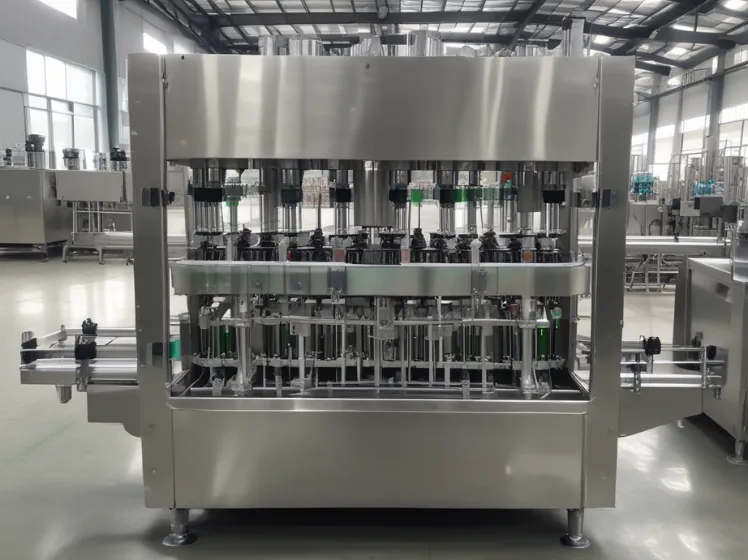
The bottle rinsing system is a critical first step in the 3-in-1 filling process, ensuring the empty containers are thoroughly cleaned before filling.
Rinsing Mechanism Working Principle
The rinsing system utilizes high-pressure water jets to spray the interior and exterior surfaces of the bottles. These rinse nozzles are arranged in a manifold configuration to provide complete coverage and dislodge any contaminants or residues. The bottles are held in place by clamps or grippers that rotate the containers 180 degrees, allowing the rinse water to reach all areas.
Rinse Water Management
The rinse water is collected after passing through the bottles and can be recycled back into the system. This helps minimize water consumption and environmental impact. Alternatively, the used rinse water may be drained, depending on the facility's water treatment capabilities. The rinse water is typically filtered and treated to maintain cleanliness and prevent the spread of contaminants.
Rinse Cycle Control
The rinsing process is automated and timed to ensure each bottle receives the necessary cleaning. Sensors and programmable logic controllers (PLCs) monitor the rinse cycle and index the bottles through the station at the optimal speed for complete cleaning. The rinse cycle duration, water pressure, and other parameters can be adjusted based on the bottle material, size, and level of contamination.
Benefits:
- Removes contaminants to maintain product quality and safety
- Reduces risk of premature spoilage or contamination
- Enables efficient, high-speed bottle preparation for filling
- Minimizes water usage through recycling and treatment
Bottle Filling System
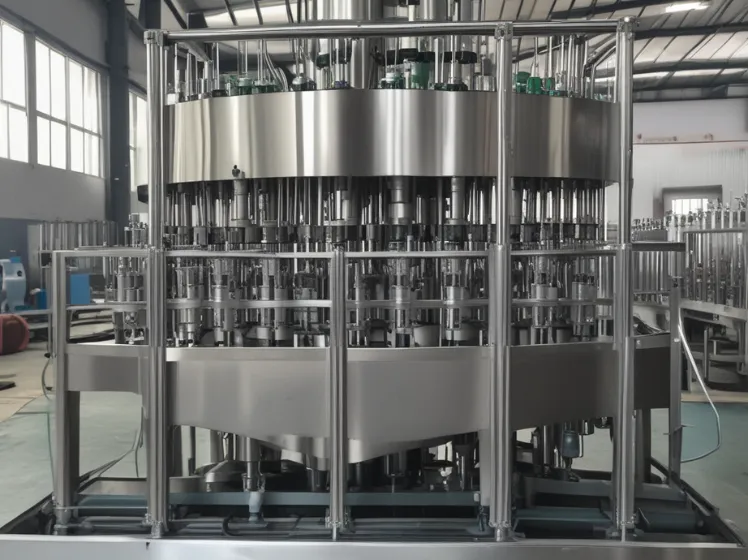
The bottle filling system is the core component of the 3-in-1 machine, responsible for accurately dispensing the purified water into the clean containers.
Filling Mechanism Working Principle
Precise filling valves or nozzles control the flow of water into each bottle. These filling elements are designed to provide a consistent, drip-free liquid stream to fill the containers to the desired level. The filling valves may utilize a piston or diaphragm mechanism to regulate the water flow, ensuring a uniform volume is delivered to each bottle.
Volumetric Filling
The filling system utilizes volumetric mechanisms, such as load cells or flow meters, to ensure an accurate, repeatable fill volume for every bottle. This helps minimize product waste and maintain consistent fill levels. The volumetric control can be further enhanced through the use of electronic flow controllers that continuously monitor and adjust the filling process.
Level Sensing
Sensors continuously monitor the liquid level inside the bottles during the filling process. These level detection systems, which may employ optical, capacitive, or ultrasonic technologies, trigger the filling valves to automatically close once the target volume is reached. This prevents overfilling and ensures a consistent fill height across all bottles.
Bottle Handling
The filled bottles are transported through the filling station using conveyor belts, rotary tables, or other material handling systems. Bottle grippers or neck guides hold the containers in place during the filling process to maintain stability and alignment.
Benefits:
- Delivers precise, consistent fill volumes
- Minimizes product waste and overflow
- Accommodates a wide range of bottle sizes and shapes
- Provides real-time monitoring and control of the filling process
Bottle Capping System

The bottle capping system is the final stage of the 3-in-1 machine, securely sealing the filled containers to protect the contents.Capping Mechanism:
Motorized capping heads apply the lids, caps, or seals to the filled bottles. The capping action is powered by pneumatic or electric actuators to provide the necessary force for a tamper-evident closure. The capping heads may feature adjustable components to accommodate different closure sizes and styles.
Cap/Seal Feeding Working Principle
An automated cap/seal dispenser feeds the closures to the capping station, ensuring a continuous supply without manual intervention. The dispenser may utilize vibratory bowls, pick-and-place mechanisms, or other automated systems to reliably deliver the caps or seals to the capping heads.
Synchronized Capping
The capping mechanism is synchronized to only operate when a filled bottle is present beneath the heads. This prevents waste of caps or seals and improves overall efficiency. Sensors or proximity switches detect the presence of a bottle, triggering the capping heads to descend and apply the closure.
Capping Quality Control
Some 3-in-1 machines incorporate additional quality control measures in the capping system, such as torque monitoring or cap presence verification. These features help ensure the proper application and sealing of the closures, maintaining product integrity and safety.
Benefits
- Provides consistent, tamper-evident sealing of bottles
- Automates the high-speed application of closures
- Minimizes closure waste through synchronized operation
- Enhances quality control through advanced monitoring and verification
Detailed Rinse Cycle Optimization of Bottle Filling Machine
Expand on the bottle rinsing system by discussing how the rinse cycle parameters can be optimized for different bottle materials, sizes, and contamination levels. This could include details on:
- Adjustable rinse water pressure and flow rate
- Customizable rinse nozzle patterns and coverage
- Automated rinse cycle duration and indexing speed
- Integration with water treatment and recycling systems
- Sensor-based monitoring and feedback control
Advanced Filling Mechanisms
Dive deeper into the various filling mechanisms and technologies used in 3-in-1 bottled water fillers, such as:
- Servo-controlled piston or diaphragm filling valves
- Electromagnetic flow meters for precise volume control
- Predictive fill level algorithms to minimize overfill
- Bottle handling systems like starwheels and neck guides
- Integrated CIP (clean-in-place) capabilities
Capping System Enhancements for Liquid Filling Machine
Expand the capping system section to cover more advanced features and quality control measures, such as:
- Automated cap/seal feeding with vision inspection
- Torque monitoring and tamper-evident seal verification
- Integrated leak testing or pressurization for seal integrity
- Serialized capping for product traceability
- Capping head maintenance and changeover procedures
Integrated Automation and Controls of Water Filling Machine
Discuss how the 3-in-1 machine's systems are integrated and automated through a centralized control system, including:
- Programmable logic controllers (PLCs) and HMI interfaces
- Sensor networks and data acquisition for process monitoring
- Automated bottle handling and synchronization
- Remote access, diagnostics, and predictive maintenance
- Industry 4.0 connectivity and data analytics capabilities
Compliance and Regulatory Considerations of Bottling Machine
Expand on the regulatory and compliance aspects of 3-in-1 bottled water filling machines, such as:
- Adherence to food-grade, sanitary, and safety standards
- Validation and documentation for regulated industries
- Operator training and maintenance procedures
- Environmental impact and sustainability features
- Certifications and third-party audits
By incorporating these additional details and technical aspects, the content can provide a more comprehensive and in-depth understanding of the working principles and advanced capabilities of modern 3-in-1 bottled water filling machines.
Data Table of Working Principles
| Parameter | Value |
|---|---|
| Bottle Rinsing Capacity | Up to 36,000 bottles/hour |
| Filling Accuracy | ±0.1% of target volume |
| Capping Speed | Up to 180 bottles/minute |
| Bottle Size Range | 0.1L to 20L |
| Electrical Requirements | 380-480V, 50/60Hz, 3-phase |
| Water Consumption | 0.2-0.6 L per bottle |
| Footprint (L x W x H) | 9m x 4m x 4m |
| Automation Level | Fully automated with PLC control |
| Operator Interface | Touchscreen HMI with data analytics |
| Compliance | Meets FDA, USDA, and ISO standards |
| Remote Monitoring | Cloud-connected for predictive maintenance |
By integrating these three core systems - rinsing, filling, and capping - the 3-in-1 bottled water filling machine provides a streamlined, efficient solution for the entire bottling process. This automation and integration helps maximize productivity, product quality, and cost-effectiveness for high-volume bottled water operations. The advanced features and precise control mechanisms ensure consistent, reliable performance to meet the demands of modern bottled water production.
Reference
- FILLING MACHINES - Tech-Long
- Design of a Flexible Automated Bottle Filling Machine
- Basic requirements for mineral water bottling equipment
- Bottled water filling and capping machine - smasia
- Design & development of a automatic bottle filling machine
- Automatic Bottle Filling System Using PLC Based Controller
- MACHINES FOR BOTTLING AND PACKAGING INDUSTRIES
- Bottle-Filling-Capping-System.pdf
- Filling Machines & Their Working Principles by lodhapharma
- Automatic Bottle Filling System Using PLC
- Water Bottling Plant | PDF



