Carbonated beverage filling machines are essential equipment in the production of fizzy drinks, ensuring a consistent and efficient filling process. Let's dive deeper into the key components that make up these sophisticated machines.
Bottle Rinsing System of Carbonated Filling Machine
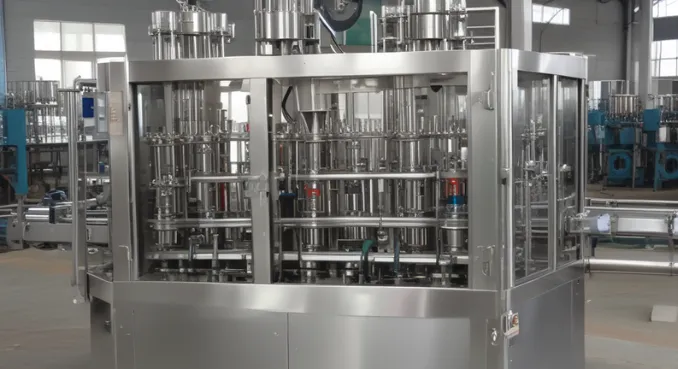
The bottle rinsing system is a critical component in the carbonated beverage filling process, responsible for thoroughly cleaning and preparing the bottles before the filling stage. This system plays a vital role in ensuring the overall hygiene and quality of the final product.
Efficient Bottle Cleaning with High-Pressure Water Jets
The bottle rinsing system typically utilizes a series of 8-12 high-pressure water jets or sprays to clean the inner and outer surfaces of the bottles. These water jets operate at pressures ranging from 20 to 30 bar (290 to 435 psi), ensuring a thorough and effective cleaning process. The high-pressure water is directed at the bottles from multiple angles, covering the entire surface area and removing any residual dirt, dust, or contaminants, ensuring the cleanliness of the bottle mouth before filling.
Multi-Stage Filtration for Impurity-Free Rinsing Water
To maintain a sterile environment, the water used for the rinsing process undergoes a comprehensive multi-stage filtration system. This typically includes a combination of sediment filters, carbon filters, and reverse osmosis (RO) membranes, effectively removing a wide range of impurities such as suspended solids, organic matter, and dissolved minerals. The filtered water is then treated with UV light or ozone to further disinfect and sterilize the liquid, ensuring it meets the stringent purity requirements for the carbonated beverage industry.
Precise Temperature Control for Effective Bottle Drying
After the rinsing stage, the bottles are subjected to a drying process using hot air. The drying system is designed to maintain precise temperature control, with air temperatures ranging from 55°C to 75°C (131°F to 167°F), critical for ensuring the freshness of the product. This temperature range is carefully selected to efficiently evaporate any residual moisture from the bottle surfaces without compromising the integrity of the containers or the carbonated beverage. The hot air is directed at the bottles using high-velocity fans or blowers, ensuring a uniform and thorough drying process.
Key Features of the Bottle Rinsing System:
- 8-12 high-pressure water jets or sprays operating at 20-30 bar (290-435 psi) for effective cleaning
- Multi-stage filtration system including sediment filters, carbon filters, and reverse osmosis (RO) membranes to ensure impurity-free rinsing water
- Hot air drying system with temperature control ranging from 55°C to 75°C (131°F to 167°F) for efficient moisture removal is crucial in maintaining the freshness and safety of bottled beverages.
- Automated control system to monitor and regulate the entire rinsing and drying process
By integrating these advanced features, the bottle rinsing system plays a crucial role in preparing the bottles for the subsequent filling and capping stages, ensuring the production of high-quality, safe, and consistent carbonated beverages. This attention to detail and commitment to cleanliness is a hallmark of the carbonated beverage industry, where maintaining the highest standards of hygiene is paramount.
Filling System - the key components

The filling system is a critical component of a carbonated beverage filling machine, responsible for accurately and consistently dispensing the fizzy liquid into the bottles. This system plays a crucial role in ensuring the quality, consistency, and efficiency of the overall production process.
Isobaric Filling Process for Optimal Carbonation Retention
Most modern carbonated beverage filling systems employ an isobaric filling method, where CO2 is injected into the empty bottle before the liquid is dispensed. This approach helps to maintain the same pressure inside the bottle as in the filling tank, typically ranging from 3 to 5 bar (43.5 to 72.5 psi). By maintaining this equilibrium, the isobaric filling method minimizes the risk of foaming and spillage, ensuring that the desired carbonation levels are preserved throughout the filling process.
Exceptional CSD Filling Valve Accuracy
The filling system is designed to achieve a high level of accuracy, with fill volumes typically within ±0.5% of the target volume. This precision is accomplished through the use of advanced flow control mechanisms, such as servo-driven piston fillers or electromagnetic flowmeters, in beverage production.
These technologies, combined with real-time monitoring and feedback systems, allow the filling system to consistently deliver the exact amount of carbonated beverage into each bottle, ensuring a uniform product quality.To illustrate the filling accuracy, consider the following data:
| Bottle Size | Target Volume | Actual Volume Range |
|---|---|---|
| 330 ml | 330 ml | 328.35 - 331.65 ml |
| 500 ml | 500 ml | 497.50 - 502.50 ml |
| 1 liter | 1000 ml | 995 - 1005 ml |
Integrated Flow Meters and Weight Sensors
To further enhance the precision of the filling process, many carbonated beverage filling systems incorporate both flow meters and weight sensors. Flow meters, such as Coriolis or ultrasonic types, continuously monitor the volumetric flow rate of the liquid, providing feedback to the control system to maintain the desired fill volume in beverage production.
Weight sensors, on the other hand, measure the mass of the filled bottles, allowing the system to cross-reference the volume and weight data to ensure the consistent and accurate dispensing of the carbonated beverage.
Key Features of the Carbonated Drink Filling Machine:
- Isobaric filling method with CO2 injection, maintaining pressure between 3-5 bar (43.5-72.5 psi), is essential for carbonated drink production to preserve carbonation and freshness.
- Fill accuracy within ±0.5% of the target volume
- Servo-driven piston fillers or electromagnetic flowmeters for precise flow control
- Integrated flow meters (Coriolis or ultrasonic) with accuracy of ±0.1% of the measured value
- Weight sensors with an accuracy of ±0.1% of the measured value
- Automated control system to regulate the entire filling process
Capping System
The capping system is a vital component of a carbonated beverage filling machine, responsible for securely sealing the filled bottles with the appropriate caps. This system plays a crucial role in ensuring the integrity, safety, and extended shelf life of the final product, making it a crucial element in the overall production process.
Accommodating a Wide Range of Cap Types
Carbonated beverage filling machines are designed to handle a diverse array of cap types, catering to the varied preferences and requirements of the industry. The capping system can accommodate a wide range of cap styles, including those used in beverage production.
| Cap Type | Material | Diameter Range | Height Range |
|---|---|---|---|
| HDPE Plastic Caps | High-Density Polyethylene | 20 mm to 38 mm | 10 mm to 18 mm |
| Crown Caps | Tin-Plated Steel | 26 mm to 29 mm | 5 mm to 7 mm |
| Aluminum Screw Caps | Aluminum Alloy | 24 mm to 33 mm | 12 mm to 20 mm |
| Pull-Ring Caps | Aluminum Alloy | 28 mm to 38 mm | 15 mm to 25 mm |
This versatility allows manufacturers to adapt their packaging to different market preferences, brand requirements, and product applications, ensuring a seamless fit with the filled bottles.
Flexible Capping Mechanism for Carbonated Soft Drink Filling Machine
The capping system utilizes a flexible design that can accommodate a range of cap sizes and shapes, including those unique to beverage production. This adaptability is achieved through the use of adjustable capping heads, which can be easily configured to handle cap diameters ranging from 20 mm to 38 mm, and cap heights from 10 mm to 25 mm. The capping mechanism also incorporates advanced sensors and control systems to ensure a precise and consistent application of the caps, regardless of the specific dimensions.
High-Speed Capping for Efficient Production
Carbonated beverage filling machines are designed to operate at high speeds to meet the demands of modern production environments. The capping system is capable of applying caps at a rate of up to 800 bottles per minute, ensuring a rapid and efficient sealing process. This high-speed capping capability is achieved through the use of servo-driven capping heads, which can precisely and consistently apply the caps with minimal downtime or interruptions.
Induction Sealing for Airtight Integrity
To further enhance the product's shelf life and integrity, carbonated beverage filling machines often incorporate induction sealing technology into the capping system. This process involves the use of an electromagnetic field to heat a thin metal foil liner within the cap, creating a hermetic seal that prevents the ingress of air or contaminants. The induction sealing process can achieve a seal strength of up to 15 N/cm², ensuring a tamper-evident and airtight closure for the filled bottles.
Key Features of the Carbonated Beverage Capping System:
- Accommodates a wide range of cap types, materials, and dimensions
- Flexible capping mechanism with adjustable heads to handle cap diameters from 20 mm to 38 mm and heights from 10 mm to 25 mm
- Capping speed of up to 800 bottles per minute
- Induction sealing technology for airtight closures with a seal strength of up to 15 N/cm²
- Automated control system to monitor and regulate the entire capping process
Bottle Handling
The bottle handling components of a carbonated beverage filling machine play a crucial role in ensuring a smooth and efficient flow of bottles throughout the various stages of the production process. These specialized mechanisms work in harmony to transport the containers, minimize the risk of jams or damage, and maintain a high level of productivity, ultimately contributing to the overall quality and consistency of the final product.
High-Capacity Bottle-Feeding Dials
The bottle-feeding dials are responsible for introducing the empty bottles into the filling machine at a consistent and controlled rate.
These dials are designed to handle up to 800 bottles per minute, ensuring a steady supply of containers for the subsequent filling and capping stages, which is crucial in high-speed drink filling machines.
The dials utilize a combination of servo-driven motors and advanced sensors to precisely control the bottle feed rate, minimizing the risk of jams or bottle collisions.
| Bottle-Feeding Dial Specifications | |
|---|---|
| Bottle Handling Capacity | Up to 800 bottles per minute |
| Bottle Diameter Range | 50 mm to 100 mm |
| Bottle Height Range | 150 mm to 350 mm |
| Positioning Accuracy | ±0.5 mm |
Secure Bottle Clamping for Stability
As the bottles move through the filling machine, they are securely gripped by specialized bottle clamps. These clamps are designed to accommodate a wide range of bottle sizes and shapes, with adjustable jaws that can firmly hold containers with diameters ranging from 50 mm to 100 mm and heights from 150 mm to 350 mm. The clamping mechanism applies a consistent and evenly distributed force to the bottles, ensuring they remain stable and upright throughout the filling and capping processes.
Gentle Bottle Transport with Lifting Cylinders
To transfer the bottles between the various stations within the filling machine, the bottle handling system utilizes a series of lifting cylinders. These hydraulic or pneumatic cylinders gently lift and lower the bottles, minimizing the risk of damage or disturbance to the carbonated liquid. The lifting cylinders are precisely synchronized with the overall machine operation, ensuring a smooth and seamless transition of the bottles between the rinsing, filling, and capping stages.
| Lifting Cylinder Specifications | |
|---|---|
| Lifting Capacity | Up to 10 kg per bottle |
| Lifting Height Range | 100 mm to 500 mm |
| Positioning Accuracy | ±1 mm |
| Lifting Speed | 50 mm/s to 300 mm/s |
Key Features of the Bottle Handling System:
- Bottle-feeding dials with a capacity of up to 800 bottles per minute
- Adjustable bottle clamps to accommodate a wide range of bottle sizes (50 mm to 100 mm diameter, 150 mm to 350 mm height)
- Lifting cylinders with a capacity of up to 10 kg per bottle and a positioning accuracy of ±1 mm
- Synchronized operation with the overall filling machine to ensure a smooth and efficient bottle transport
- Automated control system to monitor and regulate the bottle handling components
Control System
The carbonated beverage filling machine is equipped with a sophisticated control system that plays a vital role in monitoring and regulating the entire production process. This comprehensive system ensures the consistent quality of the final product, optimizes the overall efficiency of the filling operation, and provides operators with the necessary tools to make real-time adjustments as needed.
Integrated Network of Sensors and Valves
At the heart of the control system is a network of advanced sensors and valves that continuously monitor and regulate the critical parameters throughout the filling machine. These include:
| Sensor/Valve Type | Quantity | Measurement/Control Range |
|---|---|---|
| Pressure Sensors | 8-12 | 0-10 bar (0-145 psi) |
| Temperature Sensors | 6-10 | 0-100°C (32-212°F) |
| Flow Meters | 4-6 | 0-1000 L/min |
| Solenoid Valves | 10-16 | 0-10 bar (0-145 psi) |
The data collected from these sensors is continuously fed into the control system, allowing for precise monitoring and adjustment of the filling process in drink filling machines.
Programmable Logic Controllers for Automated Regulation
The control system utilizes a network of programmable logic controllers (PLCs) to automate the regulation of the filling machine's various components. These PLCs are programmed with advanced algorithms and control logic to ensure the optimal operation of the system, taking into account factors such as:
- Bottle detection and positioning
- Rinsing cycle parameters
- Filling volume and flow rates
- Capping sequence and timing
- Bottle handling and transport
The PLC-based control system allows for real-time adjustments and fine-tuning of these parameters, ensuring consistent product quality and maximizing the overall efficiency of the filling process.
Operator Interface and Data Logging
The control system is equipped with a user-friendly operator interface, typically in the form of a touchscreen display or HMI (Human-Machine Interface). This interface allows operators to monitor the current status of the filling machine, adjust settings, and troubleshoot any issues that may arise. Additionally, the control system incorporates comprehensive data logging capabilities, recording critical parameters such as pressure, temperature, flow rates, and production volumes. This data can be used for quality control, process optimization, and regulatory compliance purposes.
Key Features of the Carbonated Beverage Filling Machine Control System:
- Integrated network of 8-12 pressure sensors, 6-10 temperature sensors, and 4-6 flow meters
- 10-16 solenoid valves for precise control of various process parameters
- Programmable logic controllers (PLCs) with advanced control algorithms for automated regulation
- Operator interface with touchscreen display for real-time monitoring and adjustments
- Comprehensive data logging system for quality control, process optimization, and regulatory compliance
Stainless Steel Main Structure
The components of a carbonated beverage filling machine that come into direct contact with the fizzy liquid are constructed using high-quality stainless steel, ensuring a hygienic and durable production environment. This material choice is a critical design element that contributes to the overall integrity, longevity, and ease of maintenance of the entire filling system.
Stainless Steel Grades for Optimal Performance
The carbonated beverage filling machine industry primarily utilizes two grades of stainless steel for the components that interface with the product: 304 and 316. These grades are selected for their exceptional corrosion resistance, chemical compatibility, and suitability for food-grade applications.
| Stainless Steel Grade | Composition | Key Properties |
|---|---|---|
| 304 (18/8) | 18% Chromium, 8% Nickel | Excellent corrosion resistance, easy to clean, widely used in food processing equipment |
| 316 (18/10) | 18% Chromium, 10% Nickel, 2-3% Molybdenum | Superior corrosion resistance, especially against pitting and crevice corrosion, ideal for acidic environments |
The choice between 304 and 316 stainless steel is often based on the specific operating conditions and the level of exposure to acidic or corrosive substances within the carbonated beverage filling machine.
Hygienic and Easy-to-Clean Environment
Stainless steel is the material of choice for carbonated beverage filling machines due to its exceptional hygienic properties. The smooth, non-porous surface of stainless steel prevents the accumulation of dirt, bacteria, and other contaminants, making it easy to clean and maintain a sterile production environment. The material's resistance to corrosion and acids also allows it to withstand the frequent cleaning and sanitization processes required in the carbonated beverage industry.
Improved Durability and Longevity
In addition to its hygienic benefits, the use of stainless steel in carbonated beverage filling machines contributes to the overall durability and longevity of the equipment. Stainless steel is a highly durable material that can withstand the rigors of continuous operation, including exposure to high pressures, temperatures, and mechanical stresses. This resilience helps to minimize the need for costly repairs or replacements, ensuring a longer service life for the filling machine and reducing the total cost of ownership.
Key Benefits of Stainless Steel Construction:
- Excellent corrosion resistance, with 304 and 316 grades offering superior performance
- Hygienic and easy-to-clean surface, preventing the accumulation of contaminants
- Resistance to acids, chemicals, and frequent cleaning and sanitization processes is crucial in beverage production machinery.
- Exceptional durability and longevity, reducing the need for repairs and replacements
- Suitability for food-grade applications, ensuring compliance with industry standards
In conclusion, the key components of a carbonated beverage filling machine work together seamlessly to ensure a consistent, efficient, and hygienic filling process. From the bottle rinsing system to the control system, each element plays a crucial role in delivering high-quality, fizzy drinks to consumers. By understanding the intricacies of these machines, manufacturers can optimize their production processes and maintain a competitive edge in the dynamic carbonated beverage market.
Reference
- MECHANICAL LEVEL FILLER
- FILLING TECHNOLOGY
- ELECTRO-PNEUMATIC FILLER
- BOTTLE FILLING MACHINES FOR CARBONATED DRINKS
- FM 3000 FILLER MACHINE MAINTENANCE MANUAL
- Filling Device: PFD
- Carbonated Beverage Linear Filling Machine Market Size
- Level fillers for carbonated products
- Aseptic filling device for carbonated beverage