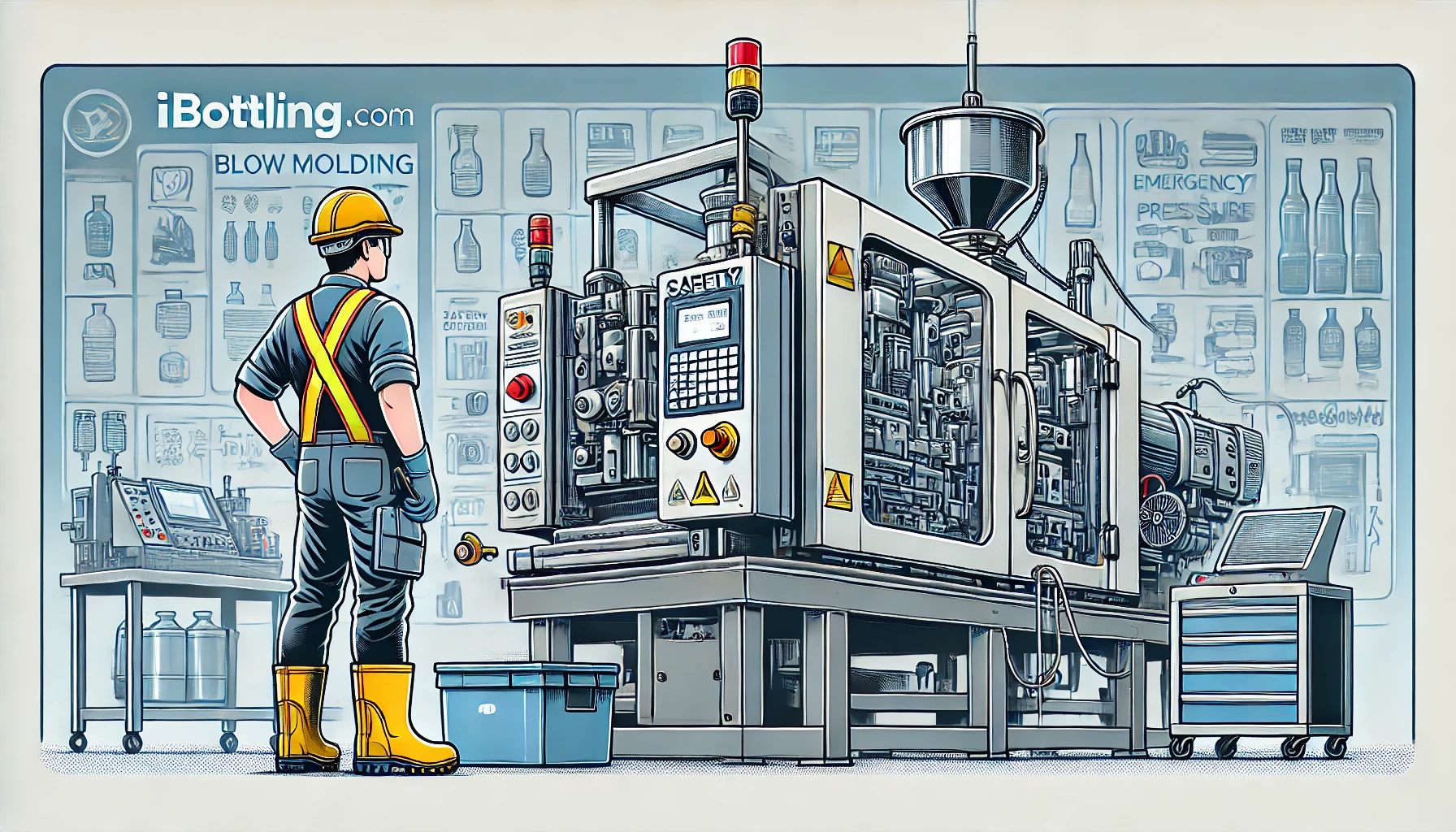
Operating a blow molding machine requires strict adherence to safety precautions to prevent accidents and ensure smooth operation. This article outlines comprehensive safety measures for operating blow molding machines, ensuring the well-being of operators and the efficiency of the production process.
1. Personal Protective Equipment (PPE)
Personal Protective Equipment (PPE) is crucial for ensuring the safety of operators. The following PPE should be worn at all times:
- Safety helmets: Protects the head from falling objects.
- Slip-proof shoes: Prevents slips and falls.
- Working clothes: Protects the body from hot plastic and machinery.
- Safety glasses: Shields the eyes from flying debris and chemicals.
- Steel-toed boots: Protects feet from heavy objects.
- Ear protection: Reduces the risk of hearing damage from loud machinery.
- Heat-resistant gloves: Protects hands from hot components.
Table 1: PPE Requirements for Blow Molding Machine Operators
| PPE Item | Purpose | Standard Compliance |
|---|---|---|
| Safety Helmets | Head protection | ANSI Z89.1 |
| Slip-proof Shoes | Prevent slips and falls | ASTM F2413 |
| Working Clothes | Body protection | OSHA 1910.132 |
| Safety Glasses | Eye protection | ANSI Z87.1 |
| Steel-toed Boots | Foot protection | ASTM F2413 |
| Ear Protection | Hearing protection | NIOSH 85 dB(A) |
| Heat-resistant Gloves | Hand protection from hot components | EN 407 |
2. Machine Installation and Environment
The installation environment of the blow molding machine plays a significant role in ensuring safety. The machine should be installed in a dry, bright, and clean location with a solid and slip-proof ground.
Key Installation Guidelines:
- Dry, bright, and clean location: Prevents electrical hazards and ensures visibility.
- Solid and slip-proof ground: Prevents the machine from shifting and operators from slipping.
- Clutter-free environment: Reduces the risk of accidents due to tripping or falling objects.
Table 2: Ideal Installation Environment Specifications
| Parameter | Requirement | Standard Compliance |
|---|---|---|
| Location | Dry, bright, clean | OSHA 1910.22 |
| Ground | Solid, slip-proof | OSHA 1910.22 |
| Clutter-free | No tools or items on machine | OSHA 1910.176 |
3. Pre-Operation Checks
Before operating the blow molding machine, thorough checks are essential to ensure all components are functioning correctly.
Pre-Operation Checklist:
- Inspect power supply: Ensure all electrical connections are secure.
- Check control system: Verify that all control panels are operational.
- Examine cooling system: Ensure the cooling system is functioning to prevent overheating.
- Verify safety guards and interlocks: Ensure all safety guards and interlocks are in place and operational.
Table 3: Pre-Operation Checklist
| Component | Check | Standard Compliance |
|---|---|---|
| Power Supply | Secure connections | OSHA 1910.303 |
| Control System | Operational control panels | OSHA 1910.212 |
| Cooling System | Functional cooling system | OSHA 1910.212 |
| Safety Guards | In place and operational | OSHA 1910.212 |
4. Safety Guards and Doors
Safety guards and doors are essential components of the blow molding machine. They prevent accidents by stopping the machine if the door is opened.
Safety Measures:
- Limit switches on safety doors: Stops the machine if the door is opened.
- Regular checks: Ensure switches are functioning before operation.
- Proper reinstallation: Do not dismantle safety doors or covers unless necessary for maintenance, and ensure they are properly reinstalled afterward.
Table 4: Safety Guards and Doors Specifications
| Safety Feature | Function | Standard Compliance |
|---|---|---|
| Limit Switches | Stops machine if door is opened | OSHA 1910.212 |
| Regular Checks | Ensure functionality | OSHA 1910.212 |
| Proper Reinstallation | Ensure safety doors are reinstalled | OSHA 1910.212 |
5. Emergency Stop Mechanisms
Emergency stop buttons are crucial for immediate shutdown in case of emergencies. They are located on the operation panel and the back of the machine.
Emergency Stop Guidelines:
- Location: Ensure emergency stop buttons are easily accessible.
- Training: Train operators on the use of emergency stop buttons.
Table 5: Emergency Stop Mechanisms
| Feature | Description | Standard Compliance |
|---|---|---|
| Location | Operation panel and back of machine | OSHA 1910.212 |
| Training | Operator training on usage | OSHA 1910.212 |
6. Overpressure Protection
Overpressure protection includes safety valves on high and low-pressure air collectors, which open automatically if the pressure is too high.
Overpressure Safety Measures:
- Safety valves: Ensure they are functional and regularly inspected.
- Regular maintenance: Check and maintain safety valves to prevent malfunction.
Table 6: Overpressure Protection Specifications
| Component | Function | Standard Compliance |
|---|---|---|
| Safety Valves | Opens if pressure is too high | OSHA 1910.212 |
| Regular Maintenance | Ensure functionality | OSHA 1910.212 |
7. Electrical Safety
Proper grounding of the machine is mandatory to prevent electrical hazards. Follow local standards for grounding and regularly examine electrical cords and air hoses.
Electrical Safety Measures:
- Proper grounding: Follow local standards to prevent electrical hazards.
- Regular examination: Inspect electrical cords and air hoses for wear and damage.
Table 7: Electrical Safety Specifications
| Safety Measure | Description | Standard Compliance |
|---|---|---|
| Proper Grounding | Follow local standards | OSHA 1910.304 |
| Regular Examination | Inspect cords and hoses | OSHA 1910.303 |
8. Hydraulic and Pneumatic Safety
Avoid hydraulic system deficiencies by regularly changing filters and avoiding overheating oil. Ensure air pressure is at atmospheric levels before maintenance.
Hydraulic and Pneumatic Safety Measures:
- Regular filter changes: Prevents system deficiencies.
- Avoid overheating: Ensures hydraulic oil does not overheat.
- Air pressure checks: Ensure air pressure is at atmospheric levels before maintenance.
Table 8: Hydraulic and Pneumatic Safety Specifications
| Safety Measure | Description | Standard Compliance |
|---|---|---|
| Regular Filter Changes | Prevent system deficiencies | OSHA 1910.212 |
| Avoid Overheating | Prevents oil overheating | OSHA 1910.212 |
| Air Pressure Checks | Ensure atmospheric levels | OSHA 1910.212 |
9. Operational Safety
Safe operation procedures are essential to prevent accidents. Operators should never reach over or under machine guards, climb between tie-bars during hydraulic pump operation, or handle hot plastic without protective gloves.
Operational Safety Guidelines:
- Safe distance: Maintain a safe distance from moving parts.
- Protective gloves: Use when handling hot plastic and heated parts.
Table 9: Operational Safety Guidelines
| Safety Measure | Description | Standard Compliance |
|---|---|---|
| Safe Distance | Maintain distance from moving parts | OSHA 1910.212 |
| Protective Gloves | Use when handling hot parts | OSHA 1910.132 |
10. Maintenance and Inspection
Regular maintenance schedules are crucial for ensuring the safe operation of the blow molding machine. This includes lubricating moving parts, checking for wear, damage, or loose connections, and following lockout/tagout procedures during maintenance.
Maintenance and Inspection Guidelines:
- Lubrication: Regularly lubricate moving parts.
- Wear and damage checks: Inspect for wear, damage, or loose connections.
- Lockout/tagout procedures: Disconnect the machine from its power source and use locks or tags to indicate the machine is not to be operated.
Table 10: Maintenance and Inspection Guidelines
| Maintenance Task | Description | Standard Compliance |
|---|---|---|
| Lubrication | Regularly lubricate moving parts | OSHA 1910.212 |
| Wear and Damage Checks | Inspect for wear and damage | OSHA 1910.212 |
| Lockout/Tagout | Follow procedures during maintenance | OSHA 1910.147 |
11. Training and Authorization
Proper training for operators is essential. Operators should receive training from qualified trainers, understand the user manual, and follow safety procedures. Only authorized personnel should operate the machine.
Training and Authorization Guidelines:
- Qualified trainers: Ensure operators receive training from qualified trainers.
- User manual: Operators should understand the user manual and safety procedures.
- Authorization: Only authorized personnel should operate the machine.
Table 11: Training and Authorization Guidelines
| Training Task | Description | Standard Compliance |
|---|---|---|
| Qualified Trainers | Ensure training from qualified trainers | OSHA 1910.212 |
| User Manual | Understand manual and safety procedures | OSHA 1910.212 |
| Authorization | Only authorized personnel operate | OSHA 1910.212 |
12. Emergency Preparedness
Knowing the location of fire extinguishers and first-aid kits, training operators on emergency procedures, and conducting regular drills are essential for emergency preparedness.
Emergency Preparedness Guidelines:
- Fire extinguishers: Know the location and use of fire extinguishers.
- First-aid kits: Ensure first-aid kits are accessible.
- Emergency procedures: Train operators on emergency procedures.
- Regular drills: Conduct regular emergency drills.
Table 12: Emergency Preparedness Guidelines
| Emergency Measure | Description | Standard Compliance |
|---|---|---|
| Fire Extinguishers | Know location and use | OSHA 1910.157 |
| First-aid Kits | Ensure accessibility | OSHA 1910.151 |
| Emergency Procedures | Train operators | OSHA 1910.38 |
| Regular Drills | Conduct emergency drills | OSHA 1910.38 |
Conclusion
Adhering to safety measures in blow molding machine operation is crucial for preventing accidents and ensuring smooth operation. By following these comprehensive guidelines, operators can create a safe and efficient workplace. For high-quality blow molding machines and further assistance, visit iBottling.com.
Citations:
- PET All Manufacturing
- LinkedIn - Ensuring Safety and Quality
- MyWay Machine
- LinkedIn - Safety Precautions
- Sinco Machinery
- Polymer Processing
- Polyshot
- WorkSafe
- Tech-Long
- NPC Injection
- Plastic Moulds
- Sky Machine
- Custom-Pak
- Sinco Machinery
- LinkedIn - Inspect Blow Molding Machine
- China Plastic Tech
- LinkedIn - Maximizing Blow Molding Machine