Abstract
Background and Objectives:
Hazard Analysis and Critical Control Point (HACCP) is a preventative quality control system that has emerged in the international food industry in recent years to ensure food safety. It effectively monitors the critical points in the food processing process to eliminate or reduce food safety and health hazards to a safe level. Water companies can also apply it to ensure safer food processing (drinking water treatment) and improve product compliance. The bottled water market in Leqing City has grown rapidly in recent years, but due to a lack of adequate safety control in the production process, the products still have many hygiene and quality problems, and the compliance rate is low. This study aims to establish a hazard analysis critical control point system in bottled water production, improve product safety control, and enhance product hygiene and quality.
Methods:
One bottled water manufacturer was selected as the application research object, which is representative and complies with the hygiene standards for the production of specified packaged water enterprises (GB19304__2003). Referring to the principles and procedures recommended by the Codex Alimentarius Commission (CAC) for the HACCP system and its application guidelines, and based on literature review and collection of raw water, process water, finished water, packaging materials, and environmental monitoring data, the production process was analyzed for hazards, critical control points were determined, preventive and corrective measures were formulated, and the HACCP distribution system system for bottled water production was established. Before and after implementing the HACCP management, the corresponding indicators of each critical control point were sampled, tested, and compared.
Results:
The critical control points for bottled water production were determined to be ozone disinfection, CIP pipeline cleaning and disinfection, bottle and cap disinfection, and filling environment. The test results of the corresponding indicators before and after implementing control for each critical control point showed a significant difference (P<0.01). After implementing HACCP management, the hygiene and quality of drinking water has met the national standards with a compliance rate of 100%.
Conclusion:
Implementing HACCP management is the most effective method for ensuring the hygiene and quality of bottled water. The established HACCP methodology can effectively control the hazards in the production process of bottled (barreled) water and can serve as a reference for related companies.
Revolutionizing Water Production: Key Achievements of HACCP Implementation in Pilot Enterprises
1. The analysis to determine critical control points
2. Implementation of monitoring, corrective, and verification systems
3. Enhanced product safety awareness and improved quality control
4. 100% compliance with national standards achieved
5. The flexibility demonstrated in the analysis of product characteristics
6. Critical issues related to HACCP implementation in China were addressed.
Keywords: HACCP, bottled drinking water, application.
1. Introduction
1.1 Overview of the bottled water industry
1.1.1 Development history of bottled water
The rise of the bottled water industry originated from mineral water. According to historical records (on written paper), the world's first bottled mineral water appeared around 1850 in France. China's natural mineral water industry started relatively late. The Qingdao Laoshan Mineral Water Factory, established by Germans in 1932, was China's only mineral water factory before the mid-1970s. It was small in scale, had low output, and was expensive. By the mid-1980s, with the gradual deepening of the reform and opening-up policy and the gradual improvement of people's living standards, mineral water production in China developed rapidly like bamboo shoots after a spring rain. The promulgation and implementation of the national standard "Drinking Natural Mineral Water" (GB8537.87) in 1987 continuously standardized and developed China's mineral water industry. By the mid-1990s, China's natural mineral water industry had reached its peak of development.
In order to better promote the development of the mineral water industry and further improve the standard and product quality, the state revised the standard to "Drinking Natural Mineral Water" (GB8537.1995) in 1995. Through several years of national inspections by the former State Bureau of Technical Supervision, the quality of mineral water has improved year by year (the pass rate was 34.5% in 1992, 55.0% in 1994, 73.0% in 1995, 76.8% in 1996, and 78.2% in 1997). After more than a decade of development, the mineral water industry has now developed into more than 1,000 companies spread across various provinces, cities, and autonomous regions in China. More than 3,000 recognized mineral water sources are throughout the country .
In the late 1990s, due to the booming mineral water market, various regions in China rushed to produce mineral water, resulting in mixed product quality and severe damage to consumer interests. It created an opportunity for purified water to take the stage. With the continuous deterioration of the human living environment and the increasing pollution of water resources, especially the discovery in recent years that by-products of halogenated hydrocarbons produced from chlorine disinfection during tap water treatment seriously disturbs human health, purified water (generally referring to reverse osmosis treated water) came into being. The manufacturing technology of purified water first appeared in the 1950s.
Industrial production of water began in the mid-1990s in China. After the first purified water production plant was built and operated in Guangdong in 1988, various types of bottled water, such as distilled water, purified water, and space water, continuously emerged in the market. With time, competition in the bottled water market became increasingly fierce. Various types of bottled water, such as "activated water," "alkaline water," "ionized water," "oxygenated water," "ecological water," "glacier water," and "life water," were introduced to the market. To end this disorderly state and regulate the market for purified water, the Chinese government issued the "Sanitary Standard for Bottled Drinking Purified Water" (GB17324-1998) in 1998. In just a few years, purified water quickly developed and was marketed nationwide. Prior to 1995, the bottled water market was dominated by mineral water. However, starting in 1996, purified water gradually occupied most of the market share of bottled water. Due to limitations in water sources and extraction, mineral water has been limited in its development in the bottled water supply industry, while purified water requires a lower quality water source and has benefited from the experience accumulated in the mineral water industry over the past decade.
As a result, bottled purified water supply system has developed rapidly and has significantly contributed to the development of China's water industry. However, during the years of rapid development of purified water, academic debates about mineral water, purified water, and distilled water have continued, focusing on the issues of health and purity. Since purified water is a type of ion-free water, some experts believe that long-term consumption of purified water can cause mineral imbalances in the body, especially in children and older adults, who should not drink it for extended periods of time. Academic debates have restricted the further rapid development of purified water. To promote the healthy development of China's drinking water industry and improve the bottled drinking water treatment and product system, China issued the "Sanitary Standard for Bottled Water" (GB19298-2003) in 2003, revising the "Sanitary Standard for Bottled Drinking Purified Water" (GB17324-2003). The "Sanitary Standard for Bottled Drinking Water" clearly stipulates that it applies to water that has been filtered, sterilized, and processed through other means and is directly drinkable when stored in a sealed container, but it does not apply to natural mineral water and bottled purified water. This standard covers all other types of bottled water besides mineral and purified water. As a result, China has established a sound product system for bottled water, laying a solid foundation for the healthy development of the water industry.
Revolutionizing Water Production: Successful Implementation of HACCP Systems in Pilot Enterprises. Achievements include improved product safety, quality control, and compliance with national standards. The flexibility demonstrated in specific analysis for each product's characteristics provides a valuable reference for other companies. The study also addresses important issues related to implementing HACCP systems in China.
1.1.2 Classification of Bottled Water Products
According to the national standard "Classification of Soft Drinks" (GB10789-1996), bottled water belongs to the category of soft drinks. It refers to water sealed in plastic bottles, glass bottles, or other containers without any additives and can be consumed directly. It includes:
1. Drinking natural mineral water: Groundwater that naturally springs or is artificially exposed without any contamination and contains a certain amount of mineral salts, trace elements, or carbon dioxide gas. Under normal circumstances, its chemical composition, flow rate, water temperature, etc., remain relatively stable within the natural fluctuation range. Carbon dioxide gas is allowed to be added.
2. Drinking purified water: Water that meets the hygiene standards for water is processed by distillation, electrodialysis, ion exchange, reverse osmosis, and other appropriate methods to remove minerals, organic substances, harmful substances, and microorganisms in the water.
3. Other water: Water processed from natural springs or deep well water that meets the hygiene standards for water and flows from underground to the surface or springs from natural water storage layers higher than the natural water level.
1.1.3 Problems with Bottled Water
The main problem with bottled water is the hygiene index, which leads to a low overall pass rate. In the second quarter of 1999, the State Administration of Quality Supervision, Inspection and Quarantine conducted a national supervision and spot check on bottled water sector purified water products, and the pass rate was only 59.4%. In 2000, a national supervision and spot check on bottled water product quality was organized, with a sampling pass rate of 85.4%. In the second quarter of 2001, the State Administration of Quality Supervision, Inspection, and Quarantine conducted a national supervision and spot check on the quality of bottled water products, with a sampling pass rate of 76.5%. In 2003, the national special inspection of water sampled the pass rate of bottled and barrelled water products at 75.3%. On May 22, 2004, the State Administration for Industry and Commerce announced the sampling results of barrelled water in 18 regions, with a sample pass rate of 78%. In 2005, the State Administration of Quality Supervision, Inspection and Quarantine published the results of national supervision and spot check on the quality of barrelled water products, with a sampling pass rate of 65.2%. The pass rate of national supervision and spot checks on bottled water products in that year was mostly between 60-80%, and the main reasons for non-compliance were excessive microbial counts, followed by excessive conductivity of purified water.
1.1.4 Development Trends of the Bottled Water Industry
In the 21st century, humanity will face the most significant threat of organic pollution in water, including volatile organic compound pesticides, disinfection by-products, estrogen or environmental hormones, and so on. Water issues have become a global problem, and the water industry will be a promising industry. For example, in 2001, Americans drank $6.5 billion worth of bottled water, an increase of 50% compared to 5 years ago! In recent years, the annual growth rate of the mineral water industry in developed countries has been over 10%, and per capita, consumption of mineral water has sharply increased. Italy, Germany, France, Belgium, and other countries per capita consumption of mineral water is over 100 liters per year, with Italy reaching as high as 150 liters per person.
In contrast, China's per capita consumption of mineral water is one of the lowest in the world, with an average annual consumption of only 2 liters per person. If other bottled water is also included, the per capita annual consumption of bottled water is estimated to be less than 5 liters, a huge gap compared to Europe. The bottled water distribution industry is still a new emerging industry in China, so there is great potential for development and a domestic market (Aspen publication).
According to beverage sales companies' predictions, bottled water will become the fastest-growing area worldwide. In the next three years, bottled water sales are expected to exceed carbonated beverages. By 2007, global consumption of bottled water will exceed 20 billion hectoliters, and by 2008, it will reach nearly 22 billion hectoliters. In 2008, per capita consumption of bottled water worldwide was expected to reach 33 liters, an increase of 8 liters on average compared to 2004.
The general principle of "healthy, safe, pure, and delicious" can be the development guideline for China's bottled water production. Based on this guideline, it is easy to predict that in the short term, the product structure of China's bottled water market will still be dominated by natural mineral water and purified water, and the water market is in an active cultivation stage. From the development trend, natural mineral water and water made from uncontaminated natural water bodies that meet the comprehensive and truly attainable standards of "healthy, safe, pure, and delicious" will progress in development. In contrast, the sales of purified water, which has no obvious advantages, will decrease. However, to meet the demand for drinking water of China's 1.3 billion population, more than relying on limited reserves of high-quality natural mineral water is needed. Therefore, there is a rare opportunity for the development of drinking water supply system.
1.2 Overview of HACCP
1.2.1 History and Development of HACCP
1.2.1.1 Concept of HACCP
HACCP (Hazard Analysis and Critical Control Point) is a science-based system that identifies specific hazards and their control measures to ensure food safety through systematic study . HACCP is a tool for assessing hazards and establishing control systems that focus on prevention rather than on inspecting finished products to ensure food safety. It is the most effective management method to date for ensuring food safety . Unlike traditional quality control methods, HACCP analyzes various factors that disturbs product safety in raw materials and each production process, identifies key points in the processing, establishes and improves monitoring procedures and standards, takes effective corrective measures, and prevents, eliminates, or reduces hazards to a level acceptable to consumer, thereby ensuring that food processors can provide safer food for consumers (recovery).
1.2.1.2 Development of HACCP overseas
HACCP was originally developed in the United States. In the 1960s, in order to ensure the absolute safety of astronauts' food during space flight, Pillsbury, the company responsible for developing space food, and the US National Aeronautics and Space Administration (NASA) and the US Army Natick Research Institute jointly proposed a new food hygiene supervision and management model, which is the embryonic form of HACCP.
In 1971, at the first National Conference on Food Protection in the United States, Pillsbury publicly proposed application of HACCP principles, which were immediately accepted by the US Food and Drug Administration (FDA). In 1973, the FDA decided to apply application of HACCP principles in the Good Manufacturing Practices (GMP) for low-acid canned food production.
In 1977, LEE, an expert in the US seafood industry, first applied HACCP to seafood products.
In 1985, the National Academy of Sciences (NAS) in the United States recognized the importance of the HACCP methodology to food production.
In 1986, the US Congress required the National Marine Fisheries Service (NMFS) to develop a mandatory inspection system for seafood products based on HACCP.
In 1991, the US Department of Agriculture's Food Safety and Inspection Service (FSIS) proposed the evaluation of HACCP. In 1992, the National Advisory Committee on Microbiological Criteria for Foods (NACMCF), composed of government agencies such as FSIS, NMFS, FDA, and Natick Research Institute, as well as experts from universities and private institutions, adopted the application of HACCP principles for food companies and increased the original three principles to seven.
In 1994, FSIS published the "General Model for Frozen Food HACCP." In 1995, the FDA published the "Processing and Importing of Seafood Safety and Health Regulations," requiring all water products produced in the United States or imported from abroad to comply with HACCP regulations from December 18, 1997.
On July 25, 1996, FSIS issued the "Final Rule on Pathogen Reduction: The Analysis and Critical Control Point (HACCP) Systems" for domestic and foreign meat and poultry industries, which took effect immediately. In 2001, the FDA issued the "HACCP for Fruit and Vegetable Juices," implementing mandatory HACCP management for the production of fruit and vegetable juices.
The Codex Alimentarius Commission (CAC) of the Food and Agriculture Organization (FAO)/World Health Organization (WHO) has always been concerned about the application and promotion of HACCP. In 1993, the CAC approved the "Guidelines for the Application of HACCP." In June 1997, the CAC revised and issued a new version of the Codex Guidelines on HACCP, which has been widely accepted and adopted internationally. According to the World Trade Organization (WTO) agreement, the Codex standards or guidelines formulated by the CAC are regarded as the criteria for measuring whether a country's food meets hygiene and safety standards.
HACCP has now entered the stage of legalization and a new development period. During this period, some international organizations and countries, such as the European Union, Canada, Australia, New Zealand, Japan, Singapore, and Thailand, have all used it as a guideline and implemented HACCP management for food companies in their respective countries. In Europe, the European Commission issued the 94/356/EEC resolution "Provisions for Self-Hygiene Checks on Fishery Products in Application of Council Directive 91/493/EEC," which explicitly stipulated that water products sold in the European market from January 1, 1995, must be produced under the HACCP methodology, otherwise the final product would be subject to comprehensive testing. Canada and Australia developed detailed plans for implementing HACCP in the early 1990s and have since widely adopted this technology. Japan has incorporated the application of HACCP principles into its food sanitation law and has adopted a recommended approach since the late 1990s for the certification of some products. Malaysia has regulations for the HACCP certification of its food companies, and South Korea and New Zealand have also developed corresponding plans for implementing HACCP.
After more than 40 years of development, the HACCP methodology has been widely applied and recognized as the global standard for producing safe food in various countries worldwide.
The earliest report on the HACCP methodology in China was in 1980. In the early 1980s, the Food Inspection Institute of the Ministry of Health conducted many HACCP research and application studies. In 1988, the concept of HACCP began to enter China. The Ministry of Health of China promoted and trained HACCP in the late 1980s and conducted pilot studies on dairy products, soy sauce, probiotics, and preserved fruits in the 1990s. The original national commodity inspection system also began to study the safety of export food engineering in 1991, and carried out HACCP pilot projects in export food enterprises, developing HACCP systems for eight export foods, including frozen pork, frozen chicken, frozen kebabs, frozen prawns, mushroom heads, canned bamboo shoots, spring rolls, and honey.
Therefore, in the early 1990s, the HACCP methodology in China began to be widely popularized and applied. The promotion and implementation of the HACCP methodology in China can be divided into three stages from 1990 to the present: the exploration and practice stage from 1990 to 1996, the implementation of the US seafood regulations from 1997 to 2000, and the stage of unified supervision and mandatory implementation starting in 2001.
Since the beginning of the 21st century, HACCP has seen rapid development in China. In 2001, the Ministry of Science and Technology of China included "Research on HACCP Implementation Guidelines for Food Enterprises" as a significant scientific research project in the 15th National Key Technologies R&D Program and conducted pilot studies on HACCP application in six major food categories, including processed meat products, dairy products, fruit and vegetable juices, beverages, and aquatic products. In March 2002, the State Administration for Market Regulation issued the "Regulations for the Management of RiskAnalysis and HACCP methodology Certification for Food Production Enterprises," which stipulated normative requirements for official HACCP verification and third-party certification. In April 2002, the General Administration of Quality Supervision, Inspection, and Quarantine issued the "Regulations for the Registration and Administration of Health Certificates for Export Food Production Enterprises," which required six categories of food production and export enterprises, including aquatic products, meat and meat products, canned foods, frozen vegetables, fruit and vegetable juices, and frozen convenience foods containing meat or aquatic products, to establish HACCP systems in accordance with the requirements of the directory of products that require review for health registration and HACCP systems. It was the first mandatory requirement for food production enterprises in China to implement HACCP systems, marking a new stage of development in the application of HACCP systems in China. In July 2002, the Ministry of Health of China issued the "Guidelines for HACCP Implementation in Food Enterprises," encouraging all types of food enterprises to voluntarily implement HACCP management. The Ministry of Health also promulgated the "Food Safety Action Plan" on August 14, 2003, which stipulated the active promotion of the analysis and critical control point methods and established action goals for this purpose. It was required that by 2006, all dairy products, fruit and vegetable juice beverages, carbonated beverages, milk-containing beverages, canned foods, low-temperature meat products, aquatic product processing enterprises (drinking water treatment), and student catering enterprises should implement HACCP management. By 2007, soy sauce, vinegar, vegetable oil, processed meat products, and other food processing enterprises (drinking water treatment), as well as catering and fast food supply enterprises and hospital nutrition meal enterprises, were required to implement HACCP management. The State Administration for Market Regulation proposed a series of inspection and quarantine industry standards, including SN/T1443.1-2004 "Requirements for Food Safety Management Systems" and SN/T1443.2-2004 "Guidelines for Food Safety Management System Audits," which were approved and published by the General Administration of Quality Supervision, Inspection, and Quarantine on June 1, 2004, and officially implemented in China on December 1, 2004. After more than a decade of development, a food safety management system model with Chinese characteristics centered on HACCP has gradually formed in China.
1.2.2 HACCP Principles
HACCP (Hazard Analysis and CCP) is a systematic and continuous method for food hygiene prevention and control, which involves analyzing and controlling various hazards throughout the entire process of food processing (drinking water treatment), transportation, and sales to ensure that food reaches a safe level. The HACCP theory is constantly developing and improving. The application of HACCP principles have been confirmed by the Codex Alimentarius Commission (CAC) and consist of the following seven basic principles:
Principle 1: Conduct a the analysis and determine the preventive measure. The analysis is the foundation of establishing a HACCP methodology. In developing a HACCP scheme, it is most important to determine all significant hazards related to food safety and take corresponding preventive measure to control them (most important tasks).
Principle 2: Determine the (CCP). CCPs refer to all steps or procedures in the production process that will critically affect the product's biological, chemical, or physical nature. By effectively controlling these steps, hazards can be prevented, eliminated, or reduced to an acceptable level.
Principle 3: Determine the limits related to each CCP. It refers to the requirements that preventive measures associated with CCP must meet, such as temperature, time, pH range, effective chlorine concentration, etc.
Principle 4: Establish monitoring procedures for CCP. It involves a series of planned observations and measurements (such as temperature, time, pH, moisture, etc.) to assess whether the CCP is within the control range. Accurate records of monitoring results (on paper) should be kept for future verification or risk assessment.
Principle 5: Establish actions. Suppose monitoring results indicate that the processing operation is out of control. In that case, appropriate actions should be taken immediately to reduce or eliminate potential hazards caused by the loss of control and restore the processing operation to a controlled state (drinking water treatment).
Principle 6: Establish verification procedures. These are used to verify that the HACCP methodology is operating correctly and effectively. It includes auditing whether the limits can control identified hazards and ensuring that the HACCP scheme is executed correctly.
Principle 7: Establish record-keeping procedures. Records are a reflection of the effectiveness of the HACCP methodology, and maintaining appropriate records under controlled conditions is critical. In practical application, record-keeping provides an effective monitoring tool for adjusting the processing operation and preventing CCP from losing control. Therefore, record-keeping is an important component of the successful implementation of the HACCP scheme.
1.2.3 Characteristics and Advantages of HACCP
1.2.3.1 Characteristics of HACCP
HACCP is a genuinely logical control and evaluation system that helps prevent foodborne illnesses, provides relatively safe and guaranteed food for health, and increases consumer satisfaction. In recent years, it has been increasingly applied and has the characteristics of simplicity and reasonableness :
1. Comprehensive: HACCP is a systematic approach that covers all aspects of food safety (from raw materials, cultivation, harvesting, and purchasing to the use of final products) and can identify all hazards that can be thought of, including those that may be anticipated.
2. Specificity: HACCP is highly targeted, primarily aimed at food safety and hygiene, in order to ensure that any potential hazards or threats to safety within the food production and distribution system are controlled.
3. Preventive: A management tool that protects food from biological, chemical, and physical hazards. It emphasizes the role of the enterprise itself in controlling the entire production process rather than relying solely on final product testing or government regulation.
4. Economical: Establishing to control food safety and hygiene reduces the cost of food safety and hygiene testing. It has higher economic and social benefits than previous food safety control systems.
5. Applicability: HACCP has been widely applied and developed in various countries worldwide.
6. Mandatory: HACCP is accepted by official organizations in different countries and used for mandatory enforcement. The Codex Alimentarius Commission of the United Nations Food and Agriculture Organization and the World Health Organization also recognize it.
7. Dynamism: The CCP in HACCP change with product and production conditions. Changes in equipment, testing instruments, and personnel can also lead to changes in the HACCP scheme.
1.2.3.2 Advantages of HACCP
The greatest advantage of the HACCP methodologyis that it is a proactive quality assurance method that is systematic, structured, rational, has multiple constraints, and is highly applicable and practical. If appropriately used, it can provide more safety and reliability and cost much less than extensive sampling inspection. Compared with traditional quality systems, the application of HACCP has the following advantages :
1. Corrective measures can be taken before problems arise, making it a proactive control.
2. Implementing control through easily monitored characteristics is easy, making it highly operable and fast.
3. Timely corrective measures can be taken whenever necessary, enabling rapid control.
4. It is cost-effective compared to relying on chemical and microbiological analysis for control.
5. Production operations are controlled by personnel directly involved in food processing and management.
6. Pay attention to CCP and take more assurance measures for each batch of products so that the factory can focus on process improvement and reduce product loss.
7. HACCP can predict potential hazards by monitoring trends in monitoring results.
8. HACCP involves employees at all levels related to product safety, ensuring full participation.
1.3 Research Content and Significance
After joining the World Trade Organization, China's tariff barriers have been lifted, and technical barriers have become the main measures for trade protection among countries. Chinese food companies urgently need to align with international conventions and import country regulations regarding quality management and food safety control.
HACCP is a preventive quality control system that has emerged in recent years in the international and domestic food industry to ensure food safety. It effectively monitors critical points in the food processing process to eliminate or reduce food safety and health hazards to a safe level. HACCP has become a pass to enter the international food market and a guarantee to occupy the domestic market. Water companies can also use HACCP to ensure safer food production and improve product qualification rates.
The pillar of the food industry in Yueqing City is Fresh water production. In recent years, the bottled Fresh water market has developed rapidly. However, due to the need for more effective safety control in the production process, the product still has many hygiene and quality problems. The product sampling pass rate between 50-70% has been low. The main reason for the failure is microbial exceeding the standard. Based on the local situation, this project selects a bottled Fresh water production enterprise that meets the "Bottled (Barrel) Fresh Water Hygiene Standard" and fully absorbs the research results of HACCP application in domestic mineral water and pure water. It establishes an analysis CCP system in the production of bottled Fresh water to improve product safety control and enhance product hygiene and quality. The established system can provide a reference for other small and medium-sized bottled Fresh water enterprises to establish and implement the HACCP methodology. Through the pilot project, the product safety awareness (increasingly aware) of enterprise managers and producers has been improved, and the product qualification rate has been improved. The advanced HACCP management system can be accepted and gradually promoted by many drinking water manufacturers, ensuring food safety to the maximum extent, improving the overall quality level of the drinking water manufacturing industry in Yueqing City, and promoting local economic development.
2. Research Methodology of HACCP in Bottled Water Production
2.1 Site Investigation and Pilot Enterprise Selection
2.1.1 Site Investigation and Selection of Pilot Enterprise
To ensure that the selected pilot enterprise is representative, several candidate enterprises were selected for on-site investigation based on a comprehensive understanding of the basic situation of dozens of bottled drinking water production enterprises in Yueqing City, including their production and operation scale, variety of production products, and GMP implementation status. After balancing various factors, a pilot enterprise with a valid hygiene permit passed OS certification, and a medium production scale was ultimately selected for the Research. The pilot enterprise selected is Tianshuitan Beverage Factory in Yueqing City, which passed QS certification in March 2005. The enterprise is located next to Shimentan in Yandang Mountain Scenic Area, Jufang Village, Dajing Town. It has an annual production of 5,000 tons of bottled drinking water, more than 40 employees, and a cumulative pass rate of product spot checks over the years is above 75%, slightly higher than the average level in the city.
2.1.2 Research in pilot enterprises
Based on the "HACCP System and Application Guidelines" recommended by the FAO/WHO Codex Alimentarius Commission and the "HACCP Implementation Guide for Food Enterprises" issued by the Ministry of Health, a HACCP methodology should be established and implemented for bottled drinking water production in conjunction with actual production practices.
2.2 Research Steps
2.2.1 Determine the prerequisite Present conditions for establishing a HACCP methodology in pilot enterprises
2.2.1.1 Pilot enterprises must have good manufacturing practices (GMP)
Good manufacturing practices (GMP) are a series of measures, methods, and technical requirements established to ensure food safety and quality throughout the production process. It requires that food production enterprises have good production equipment, reasonable production, complete quality management, and strict testing systems to ensure that the quality of the final product meets the standards. If a food enterprise wants to establish a HACCP methodology, it must be based on implementing GMP effectively. Sufficient and effective GMP can simplify the HACCP scheme and ensure the integrity of the plan and the safety of processed products. Therefore, before establishing and implementing a HACCP methodology, the pilot enterprise must meet the GMP requirements through on-site investigations. We require that the location and buildings of the pilot enterprise, production process flow, water treatment technology, workshop layout and equipment arrangement, cleanliness of the packaging area, and ventilation, exhaust, and water supply and drainage facilities should all meet the basic requirements of "Hygienic Standard for Bottled Drinking Water Production Enterprises" (GB19304-2003) and "General Hygienic Standard for Food Enterprises" (GB14881-94).
2.21.2 Sanitation Standard Operating Procedures (SSOP) must be established
Sanitation Standard Operating Procedures (SSOP) are the sanitary operation regulations that help food production enterprises achieve the overall goals of GMP in the production process. It includes specific objectives related to food hygiene processing, the processing plant environment's cleanliness, and activities that meet these objectives. It is the operating standard that food enterprises should comply with to ensure food hygiene and quality during the food processing process. Establishing, maintaining, and implementing good SSOP is a prerequisite and foundation for implementing the HACCP scheme. Enterprises should develop and implement sanitation standard operating procedures or similar documents.
Currently, the content of SSOP generally follows the eight aspects of food contact surface water safety or production of safe ice in accordance with the United States FDA. These include the hygiene and cleanliness of food contact surfaces (including equipment, gloves, chemicals and other items), preventing contamination from unsanitary objects to food packaging and other surfaces in contact with food, and cross-contamination of raw products. Additionally, it covers the hygiene maintenance of restrooms, disinfection facilities, and toilet facilities, preventing contaminants such as lubricants, fuels, insecticides, cleaning agents, disinfectants, refrigerants, and other chemical, physical, or biological pollutants from mixing with food, food packaging materials, and food contact surfaces. The SSOP also requires the labeling, aquifer storage transfer, and use of toxic compounds to be standardized and the control of employee personal hygiene, as these hygiene conditions may cause microbial contamination of food, food packaging materials, and food contact surfaces. It also requires the elimination of rodents and insects from the factory. The HACCP methodology should be established based on strict compliance with current GMP and acceptable SSOPs.
2.2.2 Establishing the 12 Steps of the HACCP methodology
2.2.2.1 Formation of the HACCP Working Group
Successfully applying HACCP requires comprehensive responsibility and commitment from management and staff. According to specific research projects, it requires the application of multidisciplinary knowledge. Therefore, the ideal HACCP team should be composed of personnel from various disciplines and departments, such as production management, quality control, sanitation control, equipment maintenance, and laboratory personnel. The HACCP working group is responsible for writing SSOP texts, developing HACCP plans, modifying and validating HACCP plans, supervising the implementation of HACCP plans, and training all personnel, among other important tasks.
2.2.2.2 Product Description
Different products and production methods have different hazards and preventive control measures. Describing the product facilitates the analysis and the determination of CCPs. The product description includes the product name, ingredients, processing methods, packaging, shelf life, storage conditions, and sales methods, among other details.
2.2.2.3 Intended Use
Food safety assurance levels differ for different uses and consumer. Therefore, it is necessary to determine the intended use of the product.
2.2.2.4 Making Production Process Flow Chart
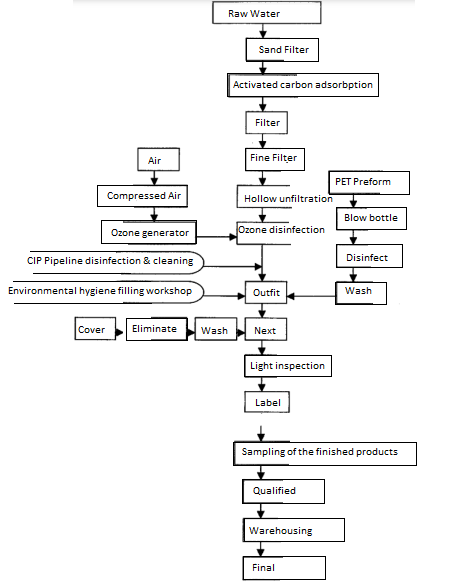
We will deeply observe the entire production process, from the entry of raw materials to the exit of finished products, by visiting and discussing with the company's production management personnel and technical staff at each stage of the enterprise and by carefully understanding the production process as well as the management of infrastructure, equipment, tools, and personnel. Based on this, we will draw the production process flow chart, verified on-site in 2.2.25.
2.2.2.5 Conducting Hazard Analysis (Principle One)
The analysis is identifying potential hazards and analyzing their risks based on the various risks that may occur and the potential severity of harm that may result, then determining the corresponding control measures. Based on the analysis of samples collected from the production environment, processing personnel, packaging materials, and products during the production process, potential hazards in the production process will be identified and their potential risks are analyzed. On this basis, control measures for identified hazards will be determined. Companies should conduct a detailed analysis based on the hazards and control methods for the food they handle and the characteristics of their production process. 128 potential hazards can be identified, including:
1. Biological hazards such as foodborne pathogens, foodborne viruses, and foodborne parasites.
2. Chemical hazards include natural toxins, chemical substances (detergents, disinfectants, etc.), physical residues (pesticides, veterinary drugs, heavy metals, etc.), unapproved food additives, and radioactive residues.
3. Physical hazards such as metal, stone, etc.
After identifying the hazards, a hazard assesdrinkingsment will be conducted to complete the analysis.
2.2.2.6 Determining Critical Control Points (Principle Two)
CCPs are points, steps, or processes that can control food safety hazards and prevent, eliminate, or reduce them to an acceptable level. They are different from Control Points (CPs).
Control Points: Many points can be defined as control points during processing. Control points need to focus on all quality issues, including hygiene indicators, sensory indicators (such as color and flavor), and physicochemical indicators (such as protein and fat content).
CCPs: They only focus on food safety, namely controlling biological, chemical, and physical hazards in food to assure human consumption safety. Not all control points are CCPs, but CCPs are definitely control points.
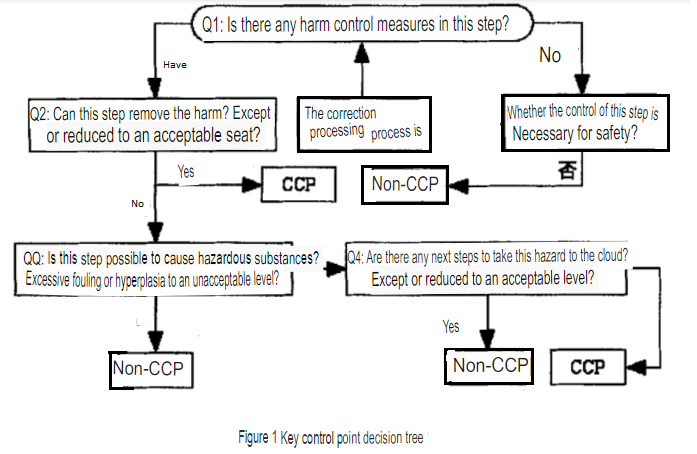
For each significant hazard identified during the Risk analysis, one or more CCPs must be identified for control. Based on the Risk analysis, CCPs will be determined following the "decision tree for CCPs determination" recommended by CAC (see Figure 1, answer the questions in order).
2.2.2.8 Establishing Critical Limits for Each CCP (Principle Three)
CThe limits are the standards each preventive measure associated with a CCPs must meet. The established limits should be reasonable, appropriate, applicable, and highly operational. Corrective measures must be taken if they are too strict, even if the operation does not affect food safety. If they are too lenient, unsafe food will be produced. Effective limits for each CCPs should be determined through experimental Research.
2.2.2.9 Establishing a Monitoring System for Each CCPs (Principle Four)
Monitoring CCPs involves implementing a planned, continuous observation and measurement process to assess whether a CCPs is under control and make accurate verification records. The purpose of monitoring is to track the processing operation and identify and address trends that may deviate from limits in a timely manner. A monitoring plan includes four components: monitoring objects, monitoring methods, monitoring frequency, and monitoring personnel.
2.2.2.10 Corrective Actions for Deviation from Critical Limits at CCPs (Principle 5)
The actions refer to the procedures or actions that should be taken when monitoring results indicate a deviation from or non-compliance with limits to ensure product safety. The actions should be determined in advance in the HACCP scheme whenever possible. Generally, the actions include two steps:
Step 1: Correct or eliminate the causes of deviation from the CL and reprocess controls.
Step 2: Identify the products produced during the deviation and decide how to handle them. The corrective action taken should be recorded when determining the handling of the product.
2.2.2.11 Establishment of Verification Procedures (Principle 6)
Verification procedures determine whether the HACCP methodology is operating according to the HACCP scheme and whether the HACCP scheme needs to be modified, reconfirmed, and implemented using methods, procedures, or testing and review tools. "Trust but verify" is the core of the verification principle. Verification should include the following elements:
1. Confirm that the HACCP team has confirmed all elements of the HACCP scheme ( Risk analysis, CCP determination, CL determination, monitoring procedures, actions, record keeping) based on expert opinions, safety-related data, and internal production experience before executing the HACCP scheme.
2. Verify CCPs to ensure that the control procedures applied are operating within the appropriate range and functioning correctly to control food safety.
Activities for verifying CCPs include reviewing CCP records, targeted sampling and testing, calibration of monitoring equipment, and microbiological (chemical) testing of final products.
3. System verification verifies the effective operation of the HACCP scheme, which can be achieved through internal audit verification, enforcement agency verification, etc.
2.2.2.12 Establishment of Document Record-Keeping System (Principle 7)
Accurate record-keeping is an important part of a successful HACCP scheme. Records can provide information on how limits are being met and appropriate actions are taken when limits are deviated from. The HACCP methodology has four types of records: HACCP scheme and supporting documents for plan development, records of CCP monitoring, records of corrective actions, and records of verification activities.
In addition to the records mentioned above, there can be some additional records, such as employee training records, assay records, equipment calibration and confirmation certificates, etc.
2.3 Experimental Materials and Methods
2.3.1 Experimental Reagents and Equipment
2.3.1.1 Reagents
- Nutrient agar medium
- Lactose bile fermentation tube
- Eosin methylene blue agar plate
- Lactose fermentation tube
- EC broth
- Phosphate buffer solution
- 0.85% sterile saline
- 75% ethanol
- Gram staining solution
2.3.1.2 Equipment
- Clean bench
- Automatic electric pressure steam sterilizer
- Water bath electric constant temperature incubator
- Blast constant temperature drying oven
- Electric constant temperature water bath
- Electronic balance
- Colony counter
- Refrigerator
- Electric furnace
- pH meter
2.3.2 Sampling
Throughout the entire research process, sampling of various CCPs such as process water, finished water, filling workshop air, and packaging materials (bottles, bottle caps) was carried out in accordance with the principles of random sampling and aseptic operation methods.
2.3.3 Testing Methods
The determination of total bacterial counts and coliforms in process water and finished water of each CCPs followed the standard of GB/T 4789.21-2003 "Microbiological Examination of Food Hygiene - Examination of Frozen Drinks and Beverages." The determination of total bacterial counts in the filling workshop air according to GB/T 16294-1996 "Testing Method for Settling Bacteria in Pharmaceutical Industry Clean Room (Area)." Determining total bacterial counts in bottles and bottle caps was conducted per the method of GB/T 18204.2-2000 "Microbiological Examination of Tea Utensils in Public Places - Determination of Total Bacterial Counts."
2.4 Data Collection and Processing
2.4.1 Collect data on relevant laws, implementation guidelines, training materials, and other aspects of implementing HACCP management.
2.4.2 Collect information on the production process of water.
2.4.3 Collect hygiene standards and regulations for the production of bottled water.
2.4.4 Collect data on the full-item testing of raw water in pilot enterprises in the past few years and quality inspection reports on previous products.
2.4.5 Collect and record various testing data and experimental results, and conduct statistical analysis after data collation.
2.5 Quality Control
2.5.1 Conduct a comprehensive review of domestic and foreign literature, design surveys based on practical situations, and strictly adhere to the design during the research process. The collection of previous data should be complete and detailed. The regulations, norms, and standards collected should be guaranteed to be official documents published by the authorities and the latest versions.
2.5.2 Based on the principles of meeting basic GMP standards, having representativeness, being proactive in participating in project research, conducting on-site investigations of several candidate companies, and finally determining the pilot company.
2.5.3 Provide HACCP-related knowledge training and assessments for personnel involved in establishing and implementing the HACCP methodology.
2.5.4 Conducting on-site sampling, following standard operating procedures, registering the sample number, and quickly returning it to the laboratory for testing.
2.5.5 The laboratory has obtained a provincial metrology certification certificate. The inspectors strictly follow the relevant national standards for operations, carefully check the original data, and ensure the accuracy and reliability of the experimental results.
3. Establishment and analysis of the HACCP methodology in bottled drinking water production
3.1 Establish a HACCP working group
Set up a HACCP working group consisting of researchers and relevant personnel from the factory, including management, quality control, and inspection personnel, to clarify the responsibilities and tasks of the group. Researchers provide multiple HACCP knowledge, relevant hygiene regulations, and standards training to the responsible person of the factory, quality control, inspection, and operation personnel. The HACCP working group proposes a HACCP work plan based on the "HACCP System and Its Application Guidelines" and the Ministry of Health's "Implementation Guide for Food Enterprise HACCP," combination with the actual production of bottled water.
3.2 Describe the product and determine the expected use
To help identify potential hazards in the production process of bottledwater and ensure a comprehensive product description, the following is provided:
Product name: Bottled water refers to water processed through filtration, sterilization, and other techniques and is sealed in a container for direct consumption.
Raw materials and ingredients: The raw material is shallow sand-filtered surface water that meets the hygiene standards for domestic water set by the Ministry of Health. It does not contain any additives.
Processing method: Filtration, adsorption, and ozone disinfection. The water is ready to drink upon opening.
Storage, transportation, and sales conditions: Room temperature.
Shelf life: One year.
Packaging method: PET plastic bottles for one-time use.
Important product characteristics: Nitrite ion concentration of 0.005mg/L, oxygen consumption of less than 20mg/L, residual chlorine concentration of 0.005mg/L, total colony count of less than 50cfu/mL, and fecal coliforms of less than 3MPN/100mL. No pathogenic bacteria should be detected.
Intended use: Suitable for consumption by all groups of people.
3.3 Drawing and Confirming the Process Flow Chart
Based on observations and investigations of the production process at the enterprise site, a process flow chart for bottled water (see Figure 2) has been drawn, which includes all steps from raw materials to finished products being put on the market. The process flow chart will be compared with the operating process to ensure accuracy and completeness. If necessary, appropriate adjustments can be made to the process flow chart.
3.3.1 Sand filtration
Due to the interception, sedimentation, and especially coagulation effects of the sand layer, quartz sand filtration can form a filtering membrane that prevents physical impurities such as microorganisms and fine soil particles in the raw water.
3.3.2 Activated carbon adsorption
Also known as carbon filtration, it adsorbs small-molecule organic compounds in water and removes pigments and odors.
3.3.3 Coarse filtration (pore size 20um) and fine filtration (pore size 1-10um) mainly remove suspended particles and large-diameter microorganisms to prevent contamination and blockage of the hollow fiber ultrafiltration membrane.
3.3.4 Hollow fiber ultrafiltration membrane, pore size 0.001-0.1um, filters large-molecule organic compounds and microorganisms in water.
3.3.5 Ozone disinfection
The ozone generator uses high-voltage discharge to prepare ozone. Under normal conditions, reasonable control of water flow rate and ozone flow can achieve the purpose of sterilization.
3.3.6 CIP pipeline disinfection and cleaning
CIP (cleaning in place) refers to removing impurities and microorganisms in sealed equipment and pipelines through circulation washing of cleaning, disinfectant, and water without disassembling the equipment to achieve the purpose of cleaning and disinfection.
3.3.7 Filling and capping
Filling and capping are both fully automated in the filling workshop. The filling workshop is airtight and is a class 10,000 purification workshop, and UV disinfection lamps are installed in the workshop.
3.3.8 Bottle and cap disinfection and cleaning
Plastic bottles are made by high-temperature blow molding of PET bottle preforms and are used immediately after blow molding. The caps are generally custom-made. Therefore, both need to be soaked in disinfectant for a certain time and then the bottles are flushed with ozone water for 30 seconds in the automatic bottle washing machine and then used for filling. The caps are directly rinsed with ozone water for 30 seconds and then put into the capping machine.
3.4 Hazard analysis
Based on the process flow diagram, assess the potential hazards that may arise from the materials used in the production process, equipment used in each step of product processing, cleaning and disinfecting agents, final products, and storage and sales methods. Evaluate the likelihood and severity of each hazard to determine the critical factors affecting the safety of the final product and incorporate them into the HACCP scheme. The hazard analysis of each major step in the bottled water production process is as follows (see Table 1):
3.4.1 Raw Water
The raw water used in production is shallow surface water from the downstream 20-meter riverbank 7-8 meters underground in the Dangshan Scenic Area Shimentan. The water intake point is within the scope of the first-level water source protection area. Before being put into production, it has been tested by an authoritative department and meets the sanitary standards for water quality established by the Ministry of Health. The water quality of the raw water is monitored regularly, including two water quality analyses during the wet and dry seasons each year. The general chemical and toxicological indicators are far below the national limits. The water source is not chemically treated (such as with chlorine gas or bleach) before being used as raw water for processing, so chemical hazards are basically non-existent. Although there are potential biological and physical hazards, the likelihood of their occurrence is minimal. These hazards can be eliminated through sand, coarse, fine, ultrafiltration, and ozone sterilization in the subsequent production process; therefore, this step is not a CCPs.
3.4.2 Sand filtration, activated carbon adsorption, coarse, fine filtration, and ultrafiltration are mainly used to remove suspended particles and some microorganisms. However, all of these steps are conducted in enclosed equipment. Hence, the likelihood of external contamination is very low, and there is no significant hazard, making these steps not CCPs.
3.4.3 Ozone Disinfection
If ozone sterilization is not thorough, there will be many residual microorganisms, and excessive ozone concentration can produce odors and sediment. These hazards cannot be eliminated in the subsequent steps, so the hazards associated with this step are significant, making it a CCPs.
3.4.4 CIP Pipeline Disinfection and Cleaning
Microorganisms in the pipeline can survive and even breed during extended production shutdowns or contamination. After ozone disinfection, water is transported from the oxidation tower to the filling and finished product without any further sterilization steps to eliminate these hazards. Therefore, the microbial hazards in this pipeline are significant, making this step a CCPs.
3.4.5 Disinfection and Cleaning of Bottles and Caps
The main hazard of this step is microbial residue, which cannot be eliminated in subsequent steps. Therefore, the microbial residue is a significant risk in this step. Additionally, this step has a chemical hazard, namely the residual disinfectant. However, this is not a significant hazard and can be addressed in the Sanitation Standard Operating Procedures (SSOP). Therefore, this step becomes a CCPs due to the microbial hazard.
3.4.6 Filling Environment
Filling and capping are completed in a sealed filling workshop, where the hazards are microbial contamination and dust pollution. However, the possibility of dust pollution is slight, so the primary hazard is microbial contamination, which is significant. Therefore, this step becomes a CCPs.
3.4.7 Light Inspection
Light inspection's main task is removing foreign matter in bottled water. Due to the many previous steps, the possibility of foreign matter residue is small; therefore, it is not a significant hazard. Moreover, the hazard of foreign matter residue can also be addressed in the Sanitation Standard Operating Procedures (SSOP). Therefore, this step is not a CCPs.
3.4.8 Aseptic Operations of Employees
If the disinfection of employees' hands, boots, clothes, and hats is not thorough enough, it can cause secondary pollution of the filling workshop, bottles, and caps. The hazard in this step is microbial contamination, but this significant hazard can be addressed in the Sanitation Standard Operating Procedures (SSOP). Therefore, this step is not a CCPs.

3.5 Establishing a HACCP Plan II
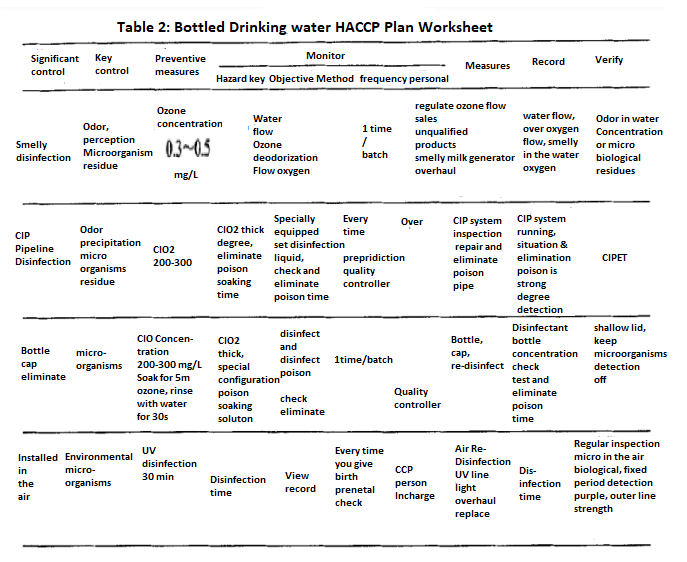
Based on the hazard analysis, following the principles and approach of determining CCPs in the "decision tree for identifying CCPs," relevant literature and information were consulted to determine the CCPs and critical control limits for the production of bottled water. At the same time, a HACCP scheme was established by establishing a monitoring system for limits, corrective measures, verification procedures, and written record-keeping on paper systems (see Table 2), which was then implemented in the production of bottled water.
3.5.1 CCP1 – Ozone Disinfection
According to the hazard analysis, ozone disinfection is the most critical and important process in the entire production of bottled water, and is the first CCP. Ozone has a critical concentration for water disinfection, above which all microorganisms in the water can be killed, whereas, below this concentration, microorganisms can survive, which poses significant hazards. The critical value of ozone concentration in water is generally between 0.3-0.4 mg/L. However, the concentration of ozone in production should be reasonable. Otherwise, it will fail to improve sterilization efficiency and produce odors and precipitation. Because the half-life of ozone in water is short, only 19 minutes , the ozone concentration in the water leaving the ozone mixing tower should generally be maintained at 0.3-0.5 mg/L for the best sterilization effect . In contrast, the residual ozone concentration in the water during filling should be kept above 0.3 mg/L to ensure continued sterilization effectiveness. Therefore, this step's critical control limit for ozone concentration is set at 0.3-0.5 mg/L.
The flow rate of ozone and water should be monitored to monitor whether the ozone concentration in this step meets the critical control limit. Based on the different solubility of ozone in water at different temperatures, the relationship between water flow rate, ozone flow rate, and ozone concentration in water should be calculated. The water treatment plant operator adjusts the ozone flow rate according to the water flow rate to maintain the ozone concentration in water at 0.3-0.5 mg/L. This monitoring is conducted at a frequency of once per batch. The effectiveness of this monitoring system is verified by detecting the ozone concentration in water or residual microorganisms. If the critical limit is exceeded, corrective measures should be taken, such as adjusting the ozone flow rate, destroying unqualified products, or repairing the ozone generator. The operator should record the operation status of the ozone generator and the detection of water flow rate, ozone flow rate, and ozone concentration in water.
3.5.2 CCP2 - CIP Pipeline Disinfection and Cleaning
Bottled water is essentially free of impurities and contaminants throughout the entire production process; the purpose of CCP2 is to disinfect equipment and pipelines for residual microorganisms. Based on the hazard analysis results, in-situ cleaning and disinfection of the water supply system and pipelines from the oxidation tower to the filling room after sterilization are identified as the second key control point, with significant harm being residual microorganisms. Generally, chlorine dioxide disinfectant is preferred for CIP pipeline disinfection and cleaning, as it is recognized as the ideal fourth-generation disinfectant internationally . It is classified by the World Health Organization (WHO) and the Food and Agriculture Organization of the United Nations (FAO) as a Class A broad-spectrum, efficient, and safe disinfectant . The enterprise uses a chlorine dioxide disinfectant produced by Shanghai Zhonglian Disinfection Engineering Co., Ltd, a stable chlorine dioxide disinfectant. According to the instructions for the use of chlorine dioxide disinfectant, the concentration used for disinfection of food processing equipment should be 200mg/L, soaking for 10 minutes, followed by rinsing with clean water. However, as the disinfection target is the inner surface of closed pipelines, and in consideration of the effectiveness of disinfection, the key limit value for this step is set at a chlorine dioxide concentration of 200-300 mg/L and a disinfection soaking time of 30 minutes.
To monitor the key limit value of this step, the quality control officer should supervise the entire dilution and preparation of the disinfectant and monitor whether the pipeline disinfection personnel strictly follow the instructions for use, as well as monitor the chlorine dioxide concentration and disinfection soaking time. The quality control officer can detect the chlorine dioxide concentration through the visual colorimetric method, and records should be kept on the detection of disinfectant concentration and the CIP system's operation status. CIP needs to be carried out before each production run. After completion, the quality control personnel should evaluate the effectiveness of the disinfection and cleaning, mainly relying on the detection results of residual microorganisms in the flushing water after the pipeline behind the CIP . Through evaluation, the effectiveness of the monitoring system for this key limit value can be verified. Corrective measures should be taken immediately if any deviations are found, including overhauling, discharging, re-disinfecting, and cleaning the pipelines until the requirements are met.
3.5.3 CCP3 Bottle and Cap Disinfection and Cleaning
Although plastic bottles are made by blow molding, PET bottle preforms at high temperatures and is blown and used immediately; secondary contamination is possible during handling and storage. Caps are usually custom-made and are inevitably contaminated during transportation and storage. Therefore, the bottle and cap must be immersed in disinfectant for a certain time to ensure sterility before filling and capping. Only in this way can the finished product be filled into the bottle without being contaminated by residual microorganisms in the packaging. Bottle and cap disinfection and cleaning is the only process to kill the microorganisms inside the bottle and cap. According to the hazard analysis results, bottle and cap disinfection and cleaning are identified as the third CCPs, and the significant hazard is microbial contamination.
Similarly, stable chlorine dioxide is used as the disinfectant, and a dedicated person is responsible for preparing the disinfectant concentration and monitoring the disinfection time. The chlorine dioxide concentration is generally 200ppm, and the exposure time is 5 to 10 minutes. Based on a comprehensive consideration of disinfection effectiveness and production steps, the critical limit of this step is set to a chlorine dioxide concentration of 200 to 300mg/L, a disinfection soak time of 5 minutes, and an ozone water rinse time of 30 seconds. To monitor the critical limit of this step, the quality control officer should supervise the entire dilution and preparation process of the disinfectant, ensure that the disinfection personnel operates strictly according to the instructions, and monitor the chlorine dioxide concentration and disinfection time, with monitoring conducted once per batch. The quality control officer can detect the chlorine dioxide concentration through visual colorimetric analysis, and the disinfectant concentration and disinfection soak time should be recorded. The effectiveness of the monitoring system for the critical limit can be verified by testing for residual microorganisms in the bottle and cap. If any deviation is found, the bottle and cap disinfection and cleaning should be immediately redone.
3.5.4 CCP4 Filling Environment
The filling environment directly impacts the product's quality, including the air quality and the walls and floors of the workshop. The filling workshop of this enterprise is a fully enclosed clean room with a level of 10,000, and the filling area meets a level of 100. The cleanliness of the workshop meets the requirements of the "Hygiene Standards for Production of Bottled Water." Filling and capping are both fully automated in the filling workshop. Physical hazards, such as the workshop's airborne dust, are nonexistent. However, residual microorganisms in the air that settle after purification may still enter the finished product and cause contamination. Therefore, microorganisms in the air of the filling workshop are a significant hazard of this step. Microorganisms on the walls and floors of the workshop do not directly contaminate the product, are not significant hazards, and can be controlled by regular cleaning and disinfection. According to the hazard analysis results, the filling environment is identified as the fourth CCPs, and the significant hazard is microbial contamination in the air. A 30-watt ultraviolet sterilization lamp is installed in the workshop for every 10 square meters of floor area to control microbial contamination in the air. According to the disinfection technical specifications of the Ministry of Health, the critical limit of this step is set to turning on the ultraviolet lamp for 30 minutes to disinfect the air before each production run.
To monitor the critical limit of this step, the CCP responsible person is in charge of monitoring the UV disinfection time of the filling room before each production to ensure that it is greater than 30 minutes and to keep a record. To verify the effectiveness of monitoring this process, the records of the disinfection time should be reviewed, the residual microorganisms in the air of the filling room should be regularly tested, and the irradiation intensity of the UV lamp should be checked periodically. If the air microorganisms in the workshop exceed the relevant standards or the UV intensity is less than 70 μW/cm², corrective measures should be taken to re-disinfect the workshop air and inspect and replace the UV disinfection lamp to ensure the sterilization effect of UV.
4. Operation and application effectiveness of the ⅡAccP system in bottled water production
To evaluate the operation and application effectiveness of the ⅡAccP system in bottled water production, it is necessary to validate the enterprise's HACCP methodology. The validation process includes confirmation, verification of CCPs (record review and targeted sampling), and validation of the HACCP methodology (audit and sampling of final products). Targeted sampling of CCPs and sampling of final products provide objective data for evaluating the operation and application effectiveness of the HACCP methodology.
4.1 Confirmation
Confirmation is the activity of obtaining evidence that the elements of the HACCP scheme are operating effectively. Confirmation is a necessary component of verification and must be supported by sufficient evidence. Confirmation must be obtained before the plan is implemented to ensure that every potential hazard that may affect the product is controlled after the effective implementation of the HACCP scheme. The confirmation activities include the following four aspects: the confirmation content, the method of confirmation, the personnel involved in the confirmation, and the frequency of confirmation.
4.1.1 Confirmation Content (What to Confirm)
The content to be confirmed is the various components of the HACCP scheme, from hazard analysis to the verification of CCP and conducting a scientific and technical review of the data and related evidence of each component.
4.1.2 Confirmation Method (How to Confirm)
The confirmation method uses scientific principles and data, expert opinions, and production observation and testing to recognize each step of the HACCP scheme technically.
4.1.3 Confirmation Personnel (Who Will Confirm)
Confirmation is a highly technical task and, therefore, should be carried out by personnel in the HACCP working group who have received training or have extensive experience and a high level of expertise.
4.1.4 Confirmation Frequency (When to Confirm)
After the HACCP scheme is designated and before implementation, the initial confirmation should be conducted to ensure that the HACCP scheme is scientifically effective when there are changes in raw materials, product, and processing equipment and processes, validation data and original data do not match, new hazards or control measures arise, or new production observations raise questions. The HACCP scheme must be reconfirmed. After changes or re-drafting of the HACCP scheme, it should be reconfirmed.
4.2 Verification of Critical Control Points
4.2.1 Inspection of Critical Control Points Records
The quality control personnel shall review the monitoring records and corrective action records of the four CCPs once a week to ensure that the record items are complete, the monitoring frequency meets the requirements, the monitoring objects meet the critical limit requirements, and the corrective measures are in place, to ensure that all CCPs are under control. Verification records for CCPs should be kept, and each executing department is responsible for archiving .
4.2.2 Targeted Sampling Results
To obtain objective data to evaluate the operation and application effects of the HACCP methodology, targeted monitoring of relevant indicators at each production stage before and after the implementation of HACCP management in the company is necessary to demonstrate the monitoring effect of CCPs. Microbial testing is the main indicator. Although it takes longer and is unsuitable for daily monitoring, it can directly evaluate the effectiveness of controlling hazards through ozone flow rate, disinfectant concentration, and disinfection time. Therefore, it is essential to use it as a means of verifying the HACCP scheme. One month before implementing HACCP management, the public health personnel responsible for sampling in the HACCP working group collected samples from each production stage per the relevant sampling standards at a rate of once per day and five times per week and sent them to the laboratory strict testing.
In the past quality inspection reports of the company's products, the majority of the unqualified items in bottled water exceeded the total bacterial count, and there were no unqualified pathogenic bacteria, mold, or yeast. Therefore, these items were not involved in the monitoring indicators.
Next, the entire process of producing water in the company is managed by HACCP, and the HACCP working group is responsible for implementing and supervising the HACCP scheme and the company's management personnel. In contrast, the quality control personnel are responsible for monitoring the CCPs. All employees are mobilized to actively participate in the implementation of the HACCP quality system, clarify the division of labor, and implement their responsibilities.
After two months of implementing the HACCP quality management system, the public health personnel responsible for sampling in the working group collected samples from each production stage in accordance with the relevant sampling standards at a rate of once per day and five times per week and sent them to the laboratory for testing.
The monitoring results of microbial indicators before and after the implementation of HACCP at each production stage are shown in Table 3. There was a significant difference in the total bacterial count of ozone-treated water, filling water, bottles, caps, and filling room air before and after the implementation of HACCP (the variance was not uniform, and the t-test for two small samples was used, with P < 0.01 for all). Effective measures were taken at each critical control points. After running the monitoring system and making corrections according to the HACCP scheme worksheet, the microbial levels in the above-mentioned production stages were effectively reduced or eliminated, improving bottled water's safety.

4.3 Verification of HACCP methodology
4.3.1 Personnel for Verification
As the HACCP methodology for bottled water is still in the initial application stage, after implementing the HACCP management system for three months, the HACCP working group verified the enterprise. In general, if an enterprise needs to obtain a HACCP verification certificate, it must pass the official verification of the local entry-exit inspection and quarantine institution or other food hygiene management institutions. If a HACCP certification certificate is obtained, a third-party certification organization approved by the State Administration for Market Regulation must be entrusted to verify the enterprise's HACCP management system .
4.3.2 Audit of HACCP Quality Management System
4.3.2.1 On-site observation
The on-site observation includes checking the accuracy of the product description and production process diagram, whether the key control points are monitored according to the requirements of the HACCP scheme, whether the key control points are operated within the specified limits, and whether the records are completed at the required frequency and correctness.
4.3.2.2 Record review
The review of record review includes whether the monitoring activities are carried out at the key control points specified in the HACCP plan, whether the monitoring activities are carried out at the frequency specified in the HACCP plan, whether actions are taken when the monitoring deviates from the critical limit, and whether the equipment is maintained and repaired following the HACCP plan.
4.3.2.3 Audit Personnel and Frequency
In addition to external personnel auditing the quality system, it is usually completed by personnel within the enterprise who are not responsible for monitoring activities but understand quality management. The audit frequency is based on ensuring the continuous implementation of the HACCP plan, generally once every six months. If significant fluctuations in the process or product and more issues are found, the audit frequency should be relatively increased.
4.3.3 Sampling and Testing of Final Products
After implementing the HACCP management system for three months, the HACCP working group randomly sampled 10 batches of bottled water for periodic testing. The results showed that the microbiological and various physicochemical indicators all met the hygiene standards for bottled (barreled) water (GB19298-2003). The total number of colonies was between 0-10 cfu/mL, which was far below the standard requirement of a total colony count of <50 cfu/mL.
Through the verification of the HACCP methodology of the enterprise, the results showed that the enterprise's quality management system was operating normally. A comprehensive and reasonable risk analysis, was conducted on all potential significant hazards in the production of bottled water, and four key control points were identified. Based on this, a feasible HACCP plan was formulated, implemented, and strictly adhered to, and various record files proved that the HACCP methodology was operating well and the product sampling pass rate was 100%.
5. Conclusions and Discussion
5.1 Conclusions
5.11 Based on the hazard analysis of the general production process of water, four key control points were determined through a study conducted in a pilot enterprise. The key limits, monitoring, corrective action, verification, and record-keeping systems for each key control point were established. A HACCP (Hazard Analysis and Critical Control Points) work plan was developed and implemented. The four key control points are ozone disinfection, CIP pipeline disinfection, bottle and cap disinfection, and filling environment.
5.1.2 After taking corrective measures on the key control points, the microbiological counts of each production stage were reduced to an acceptable level. The total colony counts of water after ozone sterilization, filling water, bottles, caps, and air in the filling room showed significant differences before and after implementing the HACCP management system (P<0.01). The established HACCP methodology effectively controlled the hazards in the production process of bottledwater. Other producers of packaged water (e.g., in barrels) can refer to this study for establishing a HACCP methodology.
5.1.3 Through establishing, implementing, and improving the HACCP methodology, the awareness of product safety among managers and producers was raised, and the quality control system was improved to ensure the hygiene and quality of the products. After implementing HACCP management, the water produced by the enterprise met 100% of the national standards for hygiene and quality. Therefore, establishing and implementing a HACCP methodology on top of sound regulations and systems is the best way to ensure the hygiene and quality of water.
5.2 Discussion
5.2.1 The Importance of the HACCP methodology in Bottled Water Enterprises
China's food safety faces many problems. Firstly, the awareness of food safety among producers, sellers, consumer, and society still needs to be stronger due to economic and cultural factors. Secondly, the regulatory efforts need to be proportionate to the requirements for food safety. It is not because the government is inactive but because most of the food industry consists of small and medium-sized enterprises. Although these enterprises do not generate large profits, production value, or taxes, they support numerous business owners and workers and cannot be easily shut down. However, food safety issues often arise from the products of these enterprises, making the focus and difficulty of food safety work on small and medium-sized enterprises. Thirdly, the market operates irregularly, where quality is not necessarily proportional to price. It is the root cause of poor food quality. Fourthly, due to the limitations of the economic development level, most small and medium-sized food enterprises are in the primary stage of hygiene and quality safety management. The enterprises have outdated production technology (including production conditions, production facilities, and production processes), poor management, and their hygiene standards do not meet the requirements.
Domestic food enterprises or regulatory management departments currently focus on inspecting the final product to judge food safety and quality. Although this method can directly reflect the sanitary and safety status of the product, there are problems such as high inspection costs, long cycle times, and a large burden on enterprises. Moreover, because the inspection results are lagging, the irregular behavior that harms product hygiene and safety during the production process cannot be timely corrected, and the unqualified products cannot be promptly processed. As a result, many manpower and financial resources are wasted. Additionally, there is a lack of understanding of prevention, control, and management of raw materials, auxiliary materials, semi-finished products, direct contact with food, and factors affecting food safety and hygiene during food processing. Thus, it isn't easy to ensure food safety and hygiene quality. Traditional food sampling and final inspection have certain limitations. However, the HACCP methodology provides a scientific method for controlling food hazards, emphasizing prevention and control of hazards that affect food safety during the production process, preventing problems before they occur, and reducing the risk of food safety hazards to a minimum or acceptable level. This system avoids many shortcomings of relying solely on inspection for control. Once the HACCP methodology is established, the main quality assurance efforts will focus on critical control points. It will solve problems during the process and avoid endless finished product inspections, ensuring higher safety at lower costs. By implementing the HACCP methodology, food enterprises can truly understand the concept of food safety, update the quality control awareness of food production enterprises, improve the quality control level of food enterprises, and improve product quality. Therefore, promoting and applying the HACCP methodology in China is significant.
In daily life, bottled water has become essential for people to quench their thirst and travel. As a water product for direct consumption by all groups, even a trace amount of harmful substances in bottled water can harm human health. Therefore, national health standards have imposed strict requirements on it, including raw materials, sensory indicators, physical and chemical indicators, microbiological indicators, hygiene requirements for production and processing, packaging labeling, storage, transportation, etc. A complete water treatment system can remove most of the impurities in the raw water.
5.2.2 Feasibility of Applying the HACCP methodology in Bottled Water Enterprises
Before 2003, most of our city's bottled water and purified water processing enterprises were small businesses. Some were even family-style workshops with poor hygiene conditions, outdated production equipment, and manual filling. The "low, small, scattered, and disorderly" situation was common. However, since the launch of the mandatory certification for beverage quality and safety (QS certification) in the second half of 2003, the access threshold to the water market has been greatly raised. Manufacturers must have hardware equipment such as a product quality inspection laboratory, a fully automatic filling production line, and a purified filling workshop to meet the certification standards. Small enterprises with small scale, weak technical strength, poor product quality, and no funds for renovation have been eliminated.
As the second batch of food products to implement QS certification, bottled water must be inspected, qualified, and affixed with the QS logo before leaving the factory for sale after July 1, 2005. More than a year before the deadline, our city invested in upgrading and expanding, and 36 water companies have obtained the "food quality and safety market access mandatory certification" certificate. Currently, there are still nine companies that have not yet passed the on-site audit but have preliminarily met the conditions. In addition, nearly 40 "almost eliminated" companies still need to improve their production conditions actively.
The QS certification currently implemented in China is based on national laws and regulations and combines the basic requirements of the ISO 9000 family standard and strong ACcP. However, it is mainly a simplified version of the ISO 9000 family standard. It does not highlight the characteristics of food production and safety control, such as hazard analysis and critical control points, which need further research and improvement. QS certification only ensures enterprises have qualified food production capabilities in the "pre-event" stage. There is a lack of effective means of supervision for the key "during-event" monitoring of the food production process. Only by ensuring the quality of the production process can the goal of fundamental food safety supervision be achieved. Therefore, it is necessary to quickly promote and implement the internationally recognized, most effective, and economical food safety system - HACCP in water production enterprises.
The HACCP methodology is a preventive management system for ensuring food safety in food production enterprises. Using the HACCP methodology food safety control measures are implemented in the design stage of the production and operation process, which shifts the focus of food safety assurance from the traditional low-efficiency inspection of finished products to the control of raw material quality and process. As a means of self-management for food enterprises, it can ensure product quality and improve market competitiveness. The QS certification is mandatory, while the domestic ACcP certification for water is currently recommended, but the two are not conflicting. QS certification has laid a good foundation for promoting and implementing HACCP. Enterprises certified by QS basically meet the "Production and Hygiene Standards for Sterilized Packaged Water Enterprises," and the HACCP methodology established on this basis is a relatively complete safety and quality assurance system that can operate well and achieve excellent results. Therefore, promoting and implementing the HACCP methodology in certified water production enterprises is necessary.
In addition, domestic food regulatory agencies have begun researching the application of HACCP management in some mineral water and purified water production enterprises. The results have shown that promoting the implementation of the HACCP methodology in mineral water and purified water production enterprises can ensure the health and quality of the products and bring significant economic benefits. As there is not much research on applying HACCP in bottled water production, the research results and experience of applying HACCP management in mineral water and purified water production enterprises can be used as a reference to promote the implementation of the HACCP methodology in bottled water production enterprises.
From the above discussion, it can be seen that China has conducted in-depth research on the principles and methods of HACCP, accumulated successful experience, and promulgated regulations for food enterprises to implement HACCP management. Many bottled water production enterprises already have the basic conditions for establishing and implementing the HACCP methodology. Therefore, vigorously promoting HACCP management in bottled water production enterprises in China is feasible.
5.2.3 Principles and Flexibility of HACCP methodology Application in Bottled Water Enterprises
The HACCP management system has been widely used domestically and internationally as a convenient, rational, and highly interdisciplinary food safety quality control system. As a management methodology, the HACCP methodology has many commonalities in different food production fields, such as the general principles of HACCP and the general process of establishing and implementing the HACCP methodology. Therefore, in guiding bottled water production enterprises to establish and effectively implement the HACCP methodology, the seven principles recognized internationally in the "HACCP methodology and Application Guidelines" and the guiding principles in the Ministry of Health's "Implementation Guidelines for HACCP in Food Enterprises" should be followed completely.
However, unlike general quality management systems, the HACCP methodology is a specific control system with ample practical application flexibility. This flexibility is reflected in the differences in critical control points and critical control limits for different food industries, food enterprises, and production configurations. Even for the same product, its hazards and control measures can differ due to differences in production conditions. Therefore, specific product analysis is necessary during establishing and implementing the HACCP methodology, emphasizing practicality and operability, and no unified blueprint can be applied.
The flexibility of the HACCP methodology also means keeping abreast of the latest technological developments, encouraging the adoption of new methods and inventions, and continuously improving processes and equipment. For example, HACCP requires recognizing and controlling hazards that are not yet known and constantly vigilant for possible new hazards, which must be promptly added to the relevant control points in the HACCP methodology. This flexibility also demonstrates the high technicality of HACCP. Hazard analysis, establishing limits, adopting monitoring methods, etc., all require scientific testing, analysis, verification, or demonstration, and some even involve high-tech research.
When applying foreign HACCP systems to China, due to the significant differences in food processing methods, raw material production, and supervision and enforcement with foreign countries, directly copying foreign models may lead to problems and may not effectively control food safety and hygiene. Therefore, food production enterprises cannot directly use foreign HACCP models but must combine China's national conditions and consumption characteristics, base themselves on the reality of their own enterprises, analyze specific hazards, find effective control measures, and avoid blindly copying others' models.
More than 90% of the food enterprises in our country are small and medium-sized enterprises. Due to the limitations of the level of economic development, most small and medium-sized food enterprises are still in the early stage of hygiene and quality safety management. Therefore, small and medium-sized enterprises, especially small or micro-enterprises, can refer to the "Strategy and Guideline for Implementing HACCP Systems in Small or Less Developed Enterprises" developed by the WHO expert group according to their own equipment, management level, and product characteristics, and fully utilize the flexibility of the specific analysis of HACCP. Gradually implement the system. The HACCP methodology is a simple and feasible control system applicable to various food enterprises. Any complete HACCP methodology should be able to adapt to the development and changes of equipment, technical, and management levels. When a part of the production changes, the HACCP methodology should also make corresponding adjustments, which is precisely the flexibility of the HACCP methodology.
While large enterprises need to conduct a large number of microbiological tests and more extensive physical and chemical monitoring during the implementation of HACCP, small and medium-sized enterprises generally do not have the financial and technical resources for this. However, they can establish a relatively successful HACCP methodology by routine microbiological and physical, and chemical testing or monitoring of temperature, humidity, and pH value, maximizing the control of food pollution and ensuring food safety.
When applying the HACCP methodology to bottled (barrel) water enterprises, attention should be paid to the principle and flexibility, and the two should be organically combined. The broad sense of water includes: water treatment natural mineral water, purified water, and natural water. The first three have national health standards, and the last one uses local standards in Zhejiang Province. Since these four waters are all standardized packaged water for direct consumption, the general process of HACCP establishment and implementation and the common hazards and control measures in the production process of water should be basically the same. The general principles that are widely applicable to these water enterprises in establishing and implementing HACCP systems can be mutually referenced and executed. However, these four types of water should belong to the same type of four products due to differences in raw materials, components, and processing technology. Therefore, flexibility should be exercised when applying the HACCP methodology, and a successful HACCP methodology that adapts to the characteristics of each product should be established based on specific situations. For example, the HACCP methodology established in this study is based on surface water for bottled water, applicable to bottled (barrel) water enterprises and bottled natural water using groundwater as raw water. Suppose it is a bottled (barrel) purified water enterprise, in addition to the difference in raw water. In that case, it is necessary to add ion exchange, reverse osmosis, or distillation as crucial control points due to different production process requirements to ensure that the conductivity of the finished water meets national standards. Natural mineral water is underground mineral water containing a certain amount of mineral salts with special properties.
5.2.4 Timeliness and Cost-effectiveness of HACCP methodology in Bottled Water Enterprises
The biggest characteristic of the HACCP methodology is its timeliness and cost-effectiveness . The HACCP methodology focuses on critical control points and uses easily monitored characteristics such as temperature, time, and pH to prevent, eliminate, or reduce significant hazards to an acceptable level. It reflects the timeliness of the HACCP management system because there is no time for time-consuming analytical testing on the production line, and most of the monitoring procedures for critical control points need to be completed quickly. Physical and chemical tests are often better than microbiological tests since they are simple and easy to use and can usually indicate the control of food microorganisms. All indicators that need to be monitored in the system should be obtained through simple and rapid testing methods, such as temperature changes, humidity changes, pH values, etc. The temperature and time of sterilization are the limits of the sterilization process. However, many enterprises often ignore this characteristic when establishing the HACCP methodology and set up many control measures that are not easy to observe or correct on-site as critical control measures. The limits set are often difficult to measure in a short period, completely disregarding the system's timeliness .
In this study, the monitoring indicators of the four critical control points in the HACCP methodology of bottled water can be obtained using simple and rapid methods, such as ozone flow rate, water flow rate, ozone concentration, disinfectant concentration, and disinfection time. The setting of limits for control points is easy to monitor and can be measured quickly in a short time. If there are any deviations, they can be corrected immediately, fully demonstrating the timeliness of the HACCP management system.
In establishing and implementing the HACCP methodology, food production enterprises need to invest personnel and various resources in hazard identification and analysis, HACCP plan development, and effective implementation of the entire HACCP methodology. These necessary resource inputs are inevitable in the initial application of the system. Still, it does not mean that the cost of quality control will ultimately increase significantly, even beyond the company's ability to bear. The cost of the daily operation of the HACCP methodology is much lower than that of relying on a large number of random inspections of the final products to obtain meaningful and representative information. The HACCP methodology mainly focuses on various control points in the entire production process and can take various preventive and corrective measures in a timely manner. It not only reduces the cost of product testing by avoiding many endless inspections but also effectively prevents huge losses caused by unqualified products due to batch production hygiene quality, greatly reduces the unqualified rate of products, and improves the reliability and reliability of production efficiency of products . The system provided by HACCP for controlling food hazards through proactive prevention can economically guarantee food safety compared to the traditional quality control method of passive sampling and final inspection of food products. Enterprises can greatly reduce production costs and various expenses after implementing HACCP.
1. By implementing early quality control of finished products, the potential for product returns is reduced, greatly reducing the need for products to be returned or destroyed, thus reducing unnecessary waste of raw materials during the production process . For example, after implementing the HACCP methodology in 300 meat production factories in the United States, the presence of Salmonella decreased by 40% in beef, 25% in pork, and 50% in chicken, resulting in clear economic benefits . At the same time, for companies, improving product compliance rates also increase their market competitiveness, obtaining more market opportunities while reducing legal and insurance expenditures .
2. After implementing HACCP, food hygiene supervision shifted from supervising finished products to monitoring production conditions and processing procedures. It can also be implemented within the enterprise to reduce the input of manpower from supervisory departments, optimize the allocation and rational utilization of human resources, and improve production efficiency.
3. Difficulties in collecting and testing large samples are resolved, reducing the expensive repetition of final product testing.
It reduces the fines and rectification costs incurred after sample inspections by supervisory management departments and the medical and litigation costs incurred by consumer from consuming unsafe food.
Bottled water enterprises in our city are still small and medium-sized. Therefore, they can obtain HACCP application models and verification procedures from this study and effectively utilize past food characteristic data and foodborne disease data to avoid unnecessary duplication of labor and waste of resources, thereby saving a certain amount of funds and establishing the most economical, simple, and effective HACCP methodology.
5.2.5 Limitations of the Use of the HACCP methodology in bottled water enterprises
1. One major problem facing the HACCP methodology is that it is only a system for determining and controlling food safety hazards. Its application rarely considers reducing consumer risks associated with final products . The shortcomings of HACCP are mainly reflected in the fact that it is not results-oriented, making it difficult to assess its direct benefits to enterprises and products . There are limitations to the over-reliance on HACCP implementation to replace final product inspection. There is widespread controversy over whether the implementation of HACCP can replace final product inspection at the international level. Many experts believe that using HACCP to control product safety is more reliable and resource-saving than using traditional final product inspection methods, so they suggest that final product inspection can be replaced. However, because of doubts that HACCP has not been reasonably and fully implemented, some producers or purchasers of certain products in the international food trade do not agree to waive final product inspection due to HACCP management. The Yuki-ura milk Staphylococcus aureus poisoning incident at Snow Brand Milk Products Co., Ltd. in Japan is a case in point.
The company's implementation of HACCP is extremely low. For example, the implementation of HACCP requires strict hygiene regulations such as daily washing of the production line and weekly sterilization of water treatment plant. However, when the police questioned Osaka factory employees, they stated that "they have not been following the rules for the past few years." Therefore, effective implementation of HACCP is necessary, and any lax operating procedures will only render HACCP ineffective or paralyzed. HACCP implementation cannot completely replace product inspection. Product inspection can verify the implementation of HACCP to a certain extent and should be appropriately retained as a supervision method before the product goes on the market. HACCP is not a zero-risk system, and zero-risk food does not exist. Risks always accompany food, and only through effective HACCP management can the use of existing scientific and economical means minimize the risk of food safety hazards and control risks within an acceptable or bearable range.
In the application process of the HACCP methodology, there are other limitations, such as insufficient training and education for non-professional food handlers, especially food service personnel, and different experts' determination of critical control points. It is difficult to notice the need for training and promotion of HACCP to the general public. The lack of correct understanding of HACCP by these personnel may lead to the failure of the HACCP methodology. The effectiveness of the HACCP methodology must be based on the premise that food processors, food regulatory personnel, and the public accept this concept. Any ineffective application of the system will harm the product's final safety. Moreover, experts have different opinions on whether a given step is a critical control points and how to monitor it best. It has to some extent, affected some people's confidence in HACCP.
In addition, HACCP is not an isolated system. It must be established on the basis of good manufacturing practices (GMP), sanitary standard operating procedures (SSOP), personnel training, equipment maintenance, and product recall plans. Without the support of these basic plans, the implementation of HACCP will become empty words. Currently, most of our city's bottled water production enterprises are small and medium-sized enterprises. Their basic plans are still relatively weak, which has limited the promotion and implementation of HACCP. The application of HACCP in bottled water enterprises is still limited to the product's production process. To overcome this limitation, the application scope of HACCP should be extended to cover the entire food chain from raw material production, processing, product storage, sales, and consumption. Only then can control the food quality and safety process be achieved.
Conclusion
Through this study, HACCP systems were established and implemented in the selected pilot enterprises, and the successful experiences of the pilot enterprises were summarized, providing a reference for other water companies to establish and implement HACCP systems. The main achievements of this study are:
1. The general process of finished drinking water supply production was understood through research in the pilot enterprises. Based on the hazard analysis of the production process, critical control points were determined, and the key control point's limits, monitoring systems, corrective systems, verification systems, and record-keeping systems were established and implemented for the HACCP methodology.
2. Through establishing, implementing, and improving the HACCP methodology, the awareness of product safety of managers and producers was enhanced, the quality control system was improved, and the hygiene quality of products was fully guaranteed. After implementing HACCP management, the qualification rate of products was improved, and 100% compliance with national standards was achieved.
3. Based on the summary of establishing and implementing the HACCP methodology in the pilot enterprises, flexibility was demonstrated. Specific analysis was conducted for each product's characteristics to provide reference opinions for other similar water products in our city.
4. The importance, feasibility, principles, flexibility, timeliness, economy, limitations, and other issues related to the implementation of HACCP systems in bottled water production enterprises in China were discussed.
Looking to take your fireworks displays to the next level? Look no further than PyroEquip. As a top-tier fireworks company, PyroEquip specializes in crafting unforgettable pyrotechnic experiences for any occasion. From weddings to concerts to sporting events, PyroEquip's expert team can design and execute stunning displays that will leave your guests in awe. Don't settle for a lackluster fireworks show – join PyroEquip today and ignite the sky like never before. Contact us to learn more about how we can help elevate your next event.
References
Application of hazard analysis and critical control points concept for rural bottled drinking water production process. https://www.tandfonline.com/doi/abs/10.1080/1573062X.2022.2121734
Application of HACCP to drinking water supply. https://www.sciencedirect.com/science/article/pii/0956713594900744
Application of HACCP for distribution system protection. https://books.google.com/books?
Application of meta-analysis technique to assess effectiveness of HACCP-based FSM systems in Chinese SLDBs. https://www.sciencedirect.com/science/article/pii/S0956713518304663
Improving sachet water quality–does H azard A nalysis and C ritical C ontrol Points apply? https://onlinelibrary.wiley.com/doi/abs/10.1111/wej.12049
Application of modelling in HACCP plan development. https://www.sciencedirect.com/science/article/pii/0168160595001438
The role of HACCP method in determining drinking water quality. https://iopscience.iop.org/article/10.1088/1755-1315/506/1/012031/meta
Water quality assessments through the application of cause and effect diagrams in conjunction with haccp and risk assessment for “roua apusenilor” spring water bottling process. https://landreclamationjournal.usamv.ro/pdf/2021/Art24.pdf
Implementation of HACCP to large scale production line of Greek ouzo and brandy: a case study. https://www.sciencedirect.com/science/article/pii/S0956713599000535
Designing food safety standards in beef jerky production process with the application of hazard analysis critical control point (HACCP). https://www.emerald.com/insight/content/
Meta Description
Learn how HACCP systems can guarantee safe and high-quality bottled drinking water production. Enhance your product safety awareness and elevate your production standards with the main achievements of this study.
Excerpt
Discover how HACCP systems enhance product safety, improve quality control, and guarantee the hygiene of bottled drinking water. Learn how to implement critical control points, monitoring, corrective, verification, and record-keeping systems for HACCP.