
The beverage industry is a multi-billion dollar industry that requires a lot of equipment in order to produce the beverages. In this blog post, we will look at different types of beverage equipment used in beverage industry.
This information can help you keep your plant running smoothly and efficiently!

The term "beverage machinery equipment" refers to machines used to make a variety of beverages. To process many different drinks, a production line usually includes numerous pieces of equipment used in beverage industry, such as water treatment equipment, bottle washing machines, filler machines, sealing machines, sterilization equipment, CIP in-site cleaning devices, filtration equipment, packaging machines, and so on. This diverse array of beverages machinery ensures efficient and hygienic production of various beverages to meet consumer demands.
01.
Development history of beverage equipment
Development History of Beverage Equipment used in beverage industry
The beverages industry, particularly in China, has experienced significant growth and transformation over the past few decades. This evolution has been closely tied to the development of beverage production equipment, which has played a crucial role in shaping the industry's capabilities and output. Let's delve deeper into the history and progression of beverage equipment used in the beverage industry.
Early Beginnings of Beverage Equipment and China's Emergence
The beverages industry in China emerged as a result of economic reforms and opening up policies. A significant milestone was reached in 1982 when beverages were designated as a national planned management product.Key statistics:
- Year of designation: 1982
- Initial beverage output: 400,000 tons
| Year | Milestone | Output |
|---|---|---|
| 1982 | National designation | 400,000 tons |
| 2002 | Rapid growth period | Significant increase |
| 2022 | Mature industry | Massive output |
Global Pioneers in Beverage Equipment used in beverage industry
The development of beverage production equipment has been a global effort, with several countries contributing significant innovations:
a) United States:
- 1890: Invention of the glass bottle filling machine
- Definition: A machine designed to accurately fill glass bottles with liquid beverages, ensuring consistent volume and reducing spillage.
b) Germany:
- Early 20th century: Production of manual filling machines and capping machines
- These machines laid the foundation for automated beverage production processes.
c) Other significant contributors:
- Italy
- Sweden
- Japan (late entrant but rapid advancement)
Key Technological Advancements of Beverage Equipment
The beverages industry has seen several crucial technological developments in equipment used in beverage industry:
a) Crown cap closing technology:
- Introduced by Ferdinand Schumacher in 1912
- Formula: Pressure (P) = Force (F) / Area (A)
This formula is crucial in determining the proper sealing pressure for crown caps.
b) Mixing and sealing mechanisms:
- Developed as integral parts of the production processes
- These advancements improved product consistency and shelf life.
c) Aseptic cold filling methods:
- Origin: United Kingdom
- Expansion: Exported to the United States and European countries
- Primary application: Juice industry
- Recent development: Expanded into dairy and other beverage markets
Evolution of Beverage Production Processes of Beverage Equipment
The advancement in beverage equipment used in beverage industry has led to more sophisticated production processes:
- Water treatment
- Sterilization
- Bottling
- Filling
- Sealing
- Packaging
Each of these processes has seen significant improvements in efficiency and quality control due to technological advancements in beverage equipment.
Impact on the Beverage Industry
The development of beverage equipment has had far-reaching effects:
- Increased production capacity
- Improved product quality and consistency
- Enhanced food safety standards
- Diversification of beverage types
- Economic growth in the sector
Benefits to consumers of Beverage Equipment
• Greater variety of beverages
• Improved product safety
• More consistent taste and quality
• Longer shelf life of products
Conclusion of Beverage Equipment
The development history of beverage equipment is a testament to the industry's growth and innovation. From the early days of manual operations to the current era of highly automated and sophisticated beverages machinery, beverage production equipment has continuously evolved to meet the changing demands of consumers and the industry.
02.
The development trend of beverage equipment used in beverage industry
The Development Trend of Beverage Equipment
High-speed, High-quality, High-precision, and Large-scale Development of beverage equipment
- Carbonated beverage filling equipment: Up to 2000 cans per minute
- Non-carbonated beverage equipment: Up to 1500 cans per minute
Table 1: Filling Machine Capacities by Manufacturer
| Manufacturer | Filling Valve Heads | Beverage Type |
|---|---|---|
| H﹠K | 165 | Carbonated |
| SEN | 144 | Carbonated |
| KRONES | 178 | Carbonated |
| Various | 50-100 | Non-carbonated |
b) High-precision Control:
c) Quality Assurance:
Sublist of quality control measures:
2. Multi-functional and Multi-purpose of beverage equipment
b) Packaging Formats:
3. Mechatronics Integration of beverage equipment
Mechatronics represents a crucial trend in the development of beverage machinery and equipment, essential for modern plant layouts in the beverage industry. This integration involves:
b) Advanced Control Systems:
| Aspect | Benefit |
|---|---|
| Efficiency | Increased production speed and reduced downtime |
| Quality | Consistent product quality through precise control |
| Flexibility | Easy adaptation to different beverage types |
| Cost | Reduced labor costs and improved resource utilization |
4. Impact on Production Cost and Quality of beverage equipment
Formula for Overall Equipment Effectiveness (OEE):
5. Future Outlook of beverage equipment
Beverage Production Line Layout Optimizer
Optimize your beverage equipment layout for maximum efficiency
We value your feedback! Please send your comments to aquamo@gmail.com
03.
Beverage equipment used in beverage industry
Different beverage production processes in the beverages industry require various beverage production equipment. The plant layout of beverage industry facilities is designed to accommodate a wide range of production processes and beverage equipments needed for different beverages types. Here are a few general and commonly used production equipment in the beverage production process:
1. Water treatment equipment
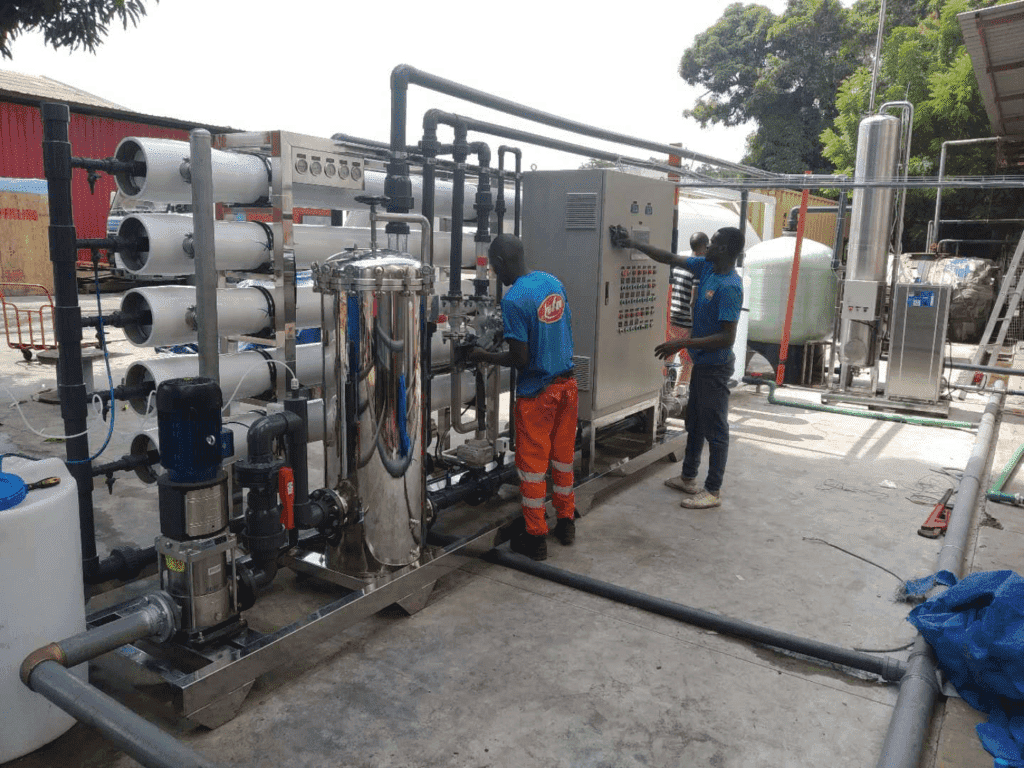
Water treatment is a critical process in beverage production, as the quality of water directly impacts the final product. In the beverage industry, specialized equipment for beverage production is used to ensure that water meets the stringent standards required for various beverages. Let's delve deeper into the types of water treatment equipment used in the beverage industry and their significance in the beverage production process.
Overview of Water Treatment in Beverage Production
Definition: Water treatment in the beverage industry refers to the process of purifying water to meet specific quality standards for use in beverage manufacturing.
Importance:
| Parameter | Typical Range | Importance |
|---|---|---|
| pH | 6.5 - 8.5 | Affects taste and chemical reactions |
| TDS | <500 mg/L | Influences flavor and clarity |
| Hardness | <100 mg/L as CaCO₃ | Prevents scale formation in equipment |
| Chlorine | <0.1 mg/L | Avoids off-flavors in beverages |
Types of Water Treatment Equipment
(A) Filtration Systems
Formula for SDI calculation:
(b) Activated Carbon Filter
Key benefits:
Sublist of contaminants removed:
(c) Sand Core Rod Filter
(d) Microporous Filter
Key advantages:
Table 2: Comparison of Filtration Methods
| Filter Type | Particle Size Removed | Typical Applications |
|---|---|---|
| Sand and Gravel | >10 microns | Pre-filtration |
| Activated Carbon | >0.5 microns | Taste and odor improvement |
| Sand Core Rod | >1 micron | Small-scale production |
| Microporous | >0.01 microns | Fine filtration, sterilization |
Integration of Water Treatment Equipment in Beverage Production
b) Equipment Longevity:
d) Sustainability:
Future Trends in Water Treatment for Beverage Industry
b) Nanotechnology in Filtration:
Formula for Water Usage Efficiency:
(B) Water Softening Beverages Equipment in Beverage Production
a) Ion Exchanger
Operation principle:
Formula for ion exchange reaction:
| Resin Type | Primary Function | Common Applications |
|---|---|---|
| Cation Exchange | Removes positively charged ions | Water softening |
| Anion Exchange | Removes negatively charged ions | Dealkalization |
| Mixed Bed | Removes both cations and anions | Final polishing |
Benefits of ion exchangers in beverage production:
b) Electrodialysis
Applications in the beverage industry:
Key components of electrodialysis equipment:
Operating principle:
Formula for electrodialysis efficiency:
Table 2: Comparison of Ion Exchanger and Electrodialysis in Beverage Production
| Aspect | Ion Exchanger | Electrodialysis |
|---|---|---|
| Process Type | Chemical | Electrochemical |
| Energy Consumption | Lower | Higher |
| Chemical Usage | Requires regeneration chemicals | Minimal chemical use |
| Selectivity | Less selective | Highly selective |
| Scalability | Easily scalable | Modular design |
Advantages of electrodialysis in beverage production:
Sublist of applications in beverage industry:
Integration of Water Softening Equipment in Beverage Production Process
b) Quality Control:
c) Equipment Efficiency:
d) Product Formulation:
Future Trends in Water Softening for Beverage Industry
b) Hybrid Systems:
Formula for Water Softening Efficiency:
(C) Reverse Osmosis Equipment for Beverage Manufacturing
Definition: Reverse osmosis is a water purification process that uses a semipermeable membrane to remove ions, molecules, and larger particles from drinking water.
- Applications of Reverse Osmosis in Beverage Industry
Reverse osmosis equipment finds widespread use in various beverage production processes:
Table 1: Applications of RO in Beverage Manufacturing
| Application | Purpose | Examples |
|---|---|---|
| Water Purification | Remove contaminants | Bottled water, soft drinks |
| Concentration | Increase solids content | Fruit juices, coffee extracts |
| Desalination | Remove excess minerals | Brewing water, ingredient water |
| Wastewater Treatment | Recycle process water | Sustainable beverage production |
Sublist of specific uses in beverage production:
• Softening water for brewing and distilling
- Advantages of Reverse Osmosis Equipment in Beverage Manufacturing
RO technology offers numerous benefits in beverage production:
b) Low Chemical Usage:
• No need for acid and alkali regeneration
c) Efficient Water Usage:
e) Versatility:
Formula for RO System Recovery Rate:
- Key Components of Reverse Osmosis Equipment
Two essential components in RO facilities for beverage production are:
Table 2: Typical RO Membrane Characteristics
| Parameter | Value |
|---|---|
| Pore Size | 0.0001 micron |
| Operating Pressure | 200-1000 psi |
| Salt Rejection Rate | Up to 99.7% |
| Flow Rate | 0.05-0.5 gpm/ft² |
- Reverse Osmosis Separation Process in Beverage Machinery
The RO process in beverage production involves:
b) Factors Affecting Separation Efficiency:
Formula for Salt Rejection in RO:
- Optimizing Reverse Osmosis for Beverage Production
b) System Design:
d) Monitoring and Control:
- Future Trends in Reverse Osmosis for Beverage Industry
Emerging developments in RO technology for beverage production include:
b) Energy Efficiency:
c) Smart RO Systems:
d) Hybrid Systems:
Conclusion
(D) Ultrafilter in Beverage Production
Ultrafiltration (UF) technology has rapidly developed in the beverage industry equipment sector, becoming an integral part of the beverage manufacturing process. This advanced filtration method offers significant benefits in water treatment and beverage production.
Definition: Ultrafiltration is a pressure-driven membrane separation process that removes suspended solids, bacteria, viruses, and high molecular weight compounds from liquids.
- Types of Ultrafiltration Membrane Equipment in Beverage Industry
Ultrafiltration membrane equipment comes in various forms for industrial applications:
Table 1: Types of UF Membrane Configurations
| Configuration | Advantages | Common Applications |
|---|---|---|
| Flat Plate | Easy to clean, low fouling | Small-scale production |
| Tube | High turbidity tolerance | Fruit juice clarification |
| Spiral Plate | Compact, high surface area | Large-scale water treatment |
| Hollow Fibre | High packing density, self-supporting | Beverage water purification |
- Hollow Fibre Ultrafiltration Membrane
Hollow fibre UF membranes represent the most advanced form of ultrafiltration technology in beverage process equipment.
Key features:
Formula for Membrane Flux:
Advantages of hollow fibre configuration:
Sublist of hollow fibre characteristics:
Table 2: Typical Hollow Fibre UF Membrane Specifications
| Parameter | Value |
|---|---|
| Inner Diameter | ~200 μm |
| Pore Size | 0.01 - 0.1 μm |
| MWCO Range | 1,000 - 500,000 Daltons |
| Operating Pressure | 0.5 - 5 bar |
- Applications of Ultrafiltration in Beverage Production
UF technology finds various applications in the beverage industry:
a) Water Treatment:
b) Beverage Clarification:
c) Concentration:
d) Wastewater Treatment:
- Advantages of Ultrafiltration in Beverage Manufacturing
UF offers several benefits in beverage production:
Formula for UF Rejection Rate:
- Optimization of Ultrafiltration in Beverage Processes
To enhance UF performance in beverage production:
b) Process Parameters:
c) Pretreatment:
d) Cleaning and Maintenance:
- Future Trends in Ultrafiltration for Beverage Industry
Emerging developments in UF technology for beverage production include:
b) Hybrid Systems:
c) Smart UF Systems:
d) Sustainable UF Processes:
Ultrafiltration technology, particularly hollow fibre UF membranes, has become an essential component in modern beverage production equipment. Its ability to efficiently remove contaminants while preserving valuable components makes it invaluable in ensuring beverage quality and safety.
Water Treatment Equipment Selector for Beverage Industry
We value your feedback! Please send your comments or suggestions to aquamo@gmail.com
2. Sterilization equipment
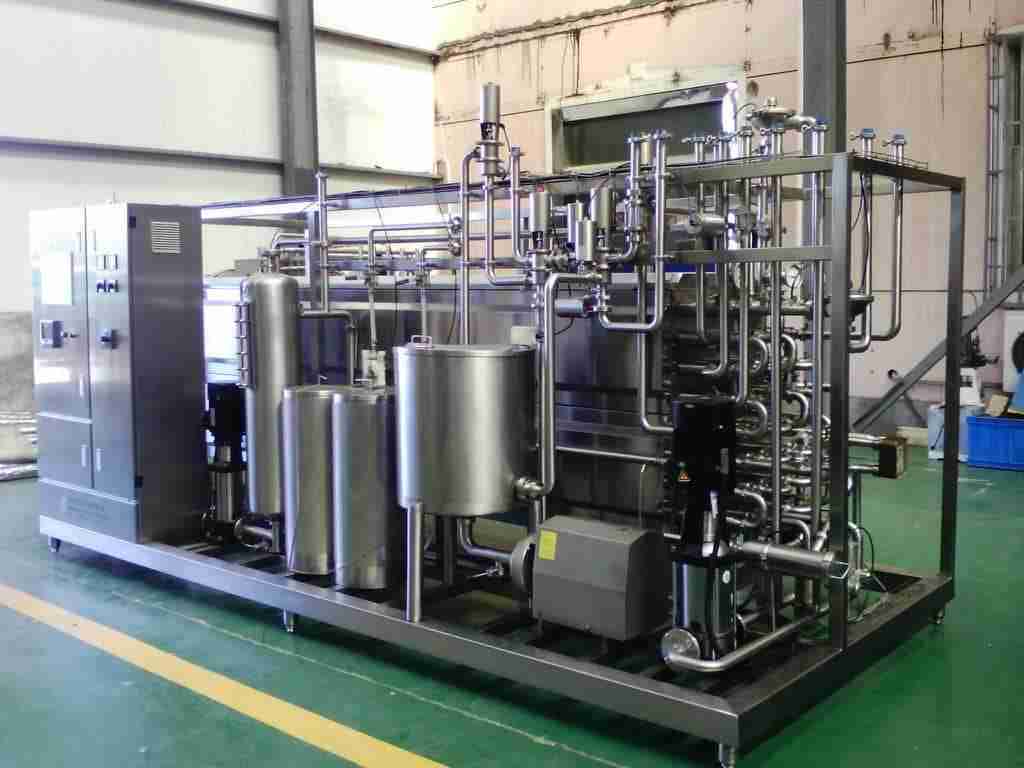
Sterilization Equipment in Beverage Production
Sterilization is a critical process in beverage manufacturing, ensuring product safety, quality, and shelf-life. This essential step in beverage production involves specialized equipment designed to eliminate harmful microorganisms and deactivate enzymes that could lead to spoilage.
Definition:
Beverage sterilization is the process of eliminating or deactivating all forms of life and other biological agents present in a beverage or on beverage manufacturing equipment.
- Categories of Sterilization Methods in Beverage Industry
Sterilization methods in the beverage industry can be broadly categorized into two main types:
Table 1: Sterilization Methods in Beverage Production
| Method | Type | Examples |
|---|---|---|
| Physical | Heat Sterilization | Pasteurization, HTST, UHT |
| Physical | Cold Sterilization | UV radiation, Ionizing radiation |
| Chemical | Chemical Agents | Hydrogen peroxide, Ethylene oxide |
- Physical Sterilization Methods
Physical sterilization methods are preferred in modern beverage manufacturing due to their effectiveness and minimal impact on product quality.
2.1 Heat Sterilization Techniques
a) Pasteurization:
Definition: A low-temperature, long-term sterilization process.
• Temperature: Below 100°C
• Duration: About 30 minutes
• Application: Milk, fruit juices
b) High-Temperature Short-Time (HTST) Sterilization:
Definition: A process involving higher temperatures for shorter durations.
• Temperature: Below 100°C (e.g., 85°C for milk)
• Duration: Over 15 seconds
• Application: Milk, liquid egg products
c) Ultra-High Temperature (UHT) Instantaneous Sterilization:
Definition: A process using very high temperatures for very short durations.
• Temperature: Above 120°C
• Duration: A few seconds
• Application: Milk, fruit juices, sports drinks
Formula for Thermal Death Time (TDT):
log(N0/N) = (t/D)
Where:
N0 = Initial number of microorganisms
N = Number of surviving microorganisms
t = Exposure time
D = Decimal reduction time
2.2 Cold Sterilization Techniques
a) Ultraviolet (UV) Radiation:
• Wavelength: 200-280 nm
• Application: Water treatment, surface sterilization
b) Ionizing Radiation:
• Types: Gamma rays, X-rays, electron beams
• Application: Fruit juices, packaged beverages
c) Freezing:
• Temperature: Below -18°C
• Application: Concentrates, some fruit juices
- Chemical Sterilization Methods
While less common in modern beverage production due to residue concerns, chemical sterilization still has specific applications:
Sublist of chemical sterilants:
• Hydrogen peroxide
• Ethylene oxide
• Sodium hypochlorite
- Sterilization Equipment in Beverage Production
Beverage sterilization equipment can be categorized based on the type of beverage and packaging:
4.1 Sterilization Equipment for Fluid Beverages
a) Direct Steam Injection:
• Method: Steam sprayed directly into the product
• Advantage: Rapid heating
• Application: Milk, fruit juices
b) Indirect Heat Exchangers:
• Types: Plate heat exchangers, Tubular heat exchangers
• Advantage: No direct contact with heating medium
• Application: Sensitive beverages
4.2 Sterilization Equipment for Canned Beverages
a) Atmospheric Pressure Sterilizers:
• Operating temperature: Below 100°C
• Application: Beverages with pH below 4.5
b) Pressure Sterilizers:
• Operating pressure: Above 0.1 MPa
• Operating temperature: Usually around 120°C
• Application: Low-acid beverages
4.3 Physical Sterilization Equipment Using Electromagnetic Waves
This category represents a promising direction in beverage processing:
a) Microwave Sterilizers:
• Frequency: 915 MHz or 2450 MHz
• Advantage: Rapid, volumetric heating
b) Far-Infrared Sterilizers:
• Wavelength: 3-1000 μm
• Advantage: Deep penetration, energy-efficient
c) UV Sterilizers:
• Wavelength: 200-280 nm
• Advantage: No heat, no chemical residues
Table 2: Comparison of Sterilization Methods for Beverages
| Method | Temperature | Time | Energy Efficiency | Product Impact |
|---|---|---|---|---|
| Pasteurization | <100°C | ~30 min | Moderate | Low |
| HTST | <100°C | >15 sec | High | Low |
| UHT | >120°C | Few sec | Very High | Moderate |
| UV | Ambient | Seconds | High | Very Low |
- Factors Influencing Sterilization Effectiveness
Several factors affect the efficiency of beverage sterilization:
a) Initial Microbial Load:
• Higher initial contamination requires more intense treatment
b) pH of the Beverage:
• Acidic beverages (pH <4.5) require less intense treatment
c) Thermal Resistance of Target Microorganisms:
• Some microorganisms are more heat-resistant than others
d) Physical Properties of the Beverage:
• Viscosity, particle size, and heat transfer properties affect sterilization
Formula for Sterilization Efficiency:
SE = (1 - Nf/Ni) × 100%
Where:
SE = Sterilization Efficiency
Nf = Final number of microorganisms
Ni = Initial number of microorganisms
Sterilization equipment plays a crucial role in ensuring the safety and quality of beverages. The choice of sterilization method and equipment depends on various factors, including the type of beverage, packaging, and desired shelf-life.
Sterilization Equipment Parameter Calculator
Calculate sterilization parameters for different beverage types and packaging forms.
Sterilization Parameters:
Temperature: °C
Time: minutes
Pressure: bar
We value your feedback! Please send your comments to aquamo@gmail.com
3. Automatic bottle washing machine in beverage industry
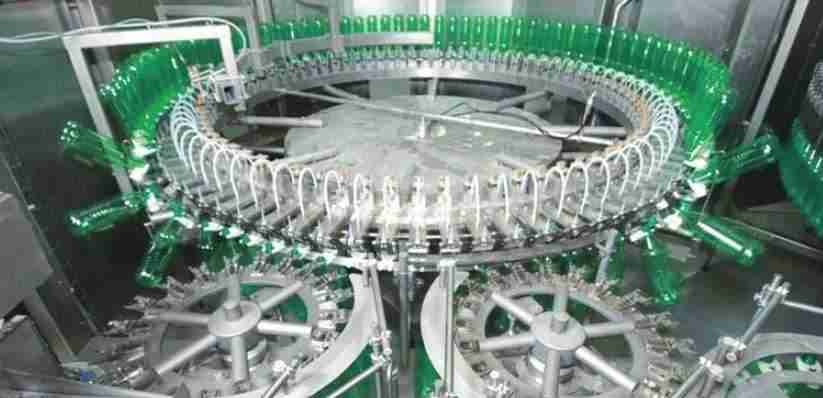
Automatic Bottle Washing Machines in Beverage Industry
Automatic bottle washing machines are crucial equipment in the beverage industry, ensuring the cleanliness and sanitation of bottles before filling. These machines play a vital role in maintaining product quality and safety throughout the beverage manufacturing process.
Definition: An automatic bottle washing machine is a piece of beverage production equipment designed to clean and sanitize bottles efficiently and consistently before the filling process.
Classification of Automatic Bottle Washing Machines
Bottle washing machines can be categorized based on several factors:
Table 1: Classification of Automatic Bottle Washing Machines
| Classification Factor | Types |
|---|---|
| Bottle Entry/Exit | Double-end, Single-end |
| Conveying Technique | Continuous, Intermittent |
| Processing Approach | Spraying, Brushing, Immersion |
Types of Bottle Washing Methods in Beverage Industry
2.1 Jet-type Bottle Washing Machine
Definition: A bottle washing machine that uses high-pressure nozzles to clean both the interior and exterior of bottles.
Key features:
• Nozzle alignment with bottle center
• Ideal for crown caps with small bottlenecks (5mm)
• High-pressure detergent spraying
Advantages:
• Effective for interior and exterior cleaning
• Suitable for bottles with small openings
Challenges:
• Foam generation
• Difficulty in label removal
• Reduced concentration due to lotion and CO2 in air
Formula for Jet Pressure:
P = F / A
Where:
P = Pressure (Pa)
F = Force (N)
A = Area (m²)
2.2 Immersion-type Bottle Washing Machine
Definition: A bottle washing machine that combines hot water jet washes with continuous submersion in washing tanks at varying temperatures.
Process steps:
Initial hot water jet wash
Continuous submersion in washing tanks
Final hot and cold water jet rinses
Advantages:
• Thorough cleaning and disinfection
• Effective removal of residual lotion
Challenges:
• Relatively uncommon in the beverage industry
• Higher water consumption
2.3 Soaking and Scrubbing Type Bottle Washer
Definition: A bottle washing machine that combines soaking and mechanical scrubbing for effective bottle wall cleaning.
Key features:
• Combination of soaking and scrubbing
• Use of synthetic brush materials
Advantages:
• Effective bottle wall cleaning
• Improved results with synthetic brush materials
Challenges:
• Complex washing component structure
• Limited widespread use due to alignment requirements
2.4 Soaking and Jetting Bottle Washing Machine
Definition: A bottle washing machine that combines the advantages of soaking and high-pressure jetting.
Key components:
• One or more soaking tanks
• Multiple jetting components with high-pressure nozzles
Advantages:
• Combines benefits of soaking and jetting
• High-pressure spraying comparable to brush scrubbing
• Efficient cleaning process
Table 2: Comparison of Bottle Washing Methods
| Method | Cleaning Efficiency | Water Usage | Energy Consumption | Label Removal |
|---|---|---|---|---|
| Jet-type | High | Moderate | High | Poor |
| Immersion | Very High | High | Moderate | Good |
| Soaking & Scrubbing | High | Moderate | Moderate | Very Good |
| Soaking & Jetting | High | Moderate | High | Good |
Factors Affecting Bottle Washing Efficiency
Several factors influence the effectiveness of bottle washing in beverage production:
a) Water Temperature:
• Higher temperatures generally improve cleaning efficiency
• Formula: Cleaning Efficiency ∝ Temperature
b) Detergent Concentration:
• Optimal concentration depends on bottle material and soiling level
• Formula: Cleaning Efficiency ∝ log(Detergent Concentration)
c) Mechanical Action:
• Includes spraying pressure, brush rotation speed, or immersion agitation
• Formula: Cleaning Efficiency ∝ Mechanical Force
d) Contact Time:
• Longer contact time generally improves cleaning results
• Formula: Cleaning Efficiency ∝ log(Contact Time)
Advancements in Bottle Washing Technology
Recent developments in bottle washing machinery for the beverage industry include:
a) Water and Energy Conservation:
• Recycling and filtration systems for wash water
• Heat recovery systems to reduce energy consumption
b) Improved Cleaning Agents:
• Eco-friendly, low-foam detergents
• Enzymes for targeted soil removal
c) Automation and Control:
• PLC-based control systems for precise process management
• Real-time monitoring of cleaning parameters
d) Flexible Design:
• Multi-format capabilities for different bottle sizes and shapes
• Quick changeover features for increased production flexibility
Integration of Bottle Washing in Beverage Production Lines
Bottle washing machines are crucial components in the overall beverage production process:
Sublist of integration aspects:
• Synchronized operation with filling and capping machines
• Compatibility with bottle inspection systems
• Integration with clean-in-place (CIP) systems
• Compliance with food safety and quality standards
Automatic bottle washing machines are essential equipment in the beverage industry, ensuring the cleanliness and safety of bottles before filling. The choice of washing method depends on various factors, including the type of beverage, bottle material, and production volume.
Bottle Washer Efficiency Evaluation Tool
Optimize your beverage equipment performance in the beverages industry.
We value your feedback! Please send your comments to aquamo@gmail.com
4. Bottle filling machine

Bottle Filling Machines in Beverage Industry
Bottle filling machines are essential equipment in beverage production, responsible for accurately dispensing liquid products into containers. These machines play a crucial role in ensuring product quality, consistency, and efficiency in the beverage manufacturing process.
Definition: A bottle filling machine is a piece of beverage production equipment designed to dispense a precise amount of liquid into containers at high speeds while maintaining product integrity and hygiene standards.
Classification of Bottle Filling Machines
Bottle filling machines can be categorized based on several factors:
Table 1: Classification of Bottle Filling Machines
| Classification Factor | Types |
|---|---|
| Packaging Material | Liquid, Paste, Powder, Granule |
| Automation Level | Semi-automatic, Fully automatic |
| Filling Pressure | Isobaric, Normal pressure, Negative pressure |
Types of Bottle Filling Machines in Beverage Industry
2.1 Isobaric Filling Machine
Definition: A filling machine that maintains a constant pressure in the storage tank and container during the filling process.
Key features:
• Suitable for carbonated beverages
• Pressure-controlled filling process
• Gas return system
Isobaric filling process steps:
- Initial position
- Inflation
- Liquid injection and gas return
- Valve closure
- Filling
- Pressure release
Formula for Isobaric Filling:
P1V1 = P2V2
Where:
P1 = Initial pressure
V1 = Initial volume
P2 = Final pressure
V2 = Final volume
2.2 Normal Pressure Filling Machine
Definition: A filling machine that operates at atmospheric pressure, suitable for non-carbonated beverages.
Key components:
• Filling system
• Bottle mechanisms
• Lifting and tank mechanisms
• Workbench
• Transmission system
Applications:
• Juice
• Milky drinks
• Syrup in secondary soda filling
Operating principle:
• Rotary design
• Dosing cup system
• Cam-activated bottle lifting
2.3 Negative Pressure Filling Machine
Definition: A filling machine that creates a vacuum in the bottle before filling, also known as a vacuum cylinder.
Key features:
• Suitable for non-gas liquids
• Vacuum-assisted filling
• Precise bottle specifications required
Advantages:
• Prevents leakage in case of bottle damage
• Suitable for juice and still beverages
Challenges:
• Potential aroma loss in fragrant liquids
• Lower precision compared to other methods
Table 2: Comparison of Filling Machine Types
| Type | Pressure | Suitable Products | Filling Accuracy | Speed |
|---|---|---|---|---|
| Isobaric | High | Carbonated beverages | High | High |
| Normal Pressure | Atmospheric | Non-carbonated beverages | Moderate | Moderate |
| Negative Pressure | Vacuum | Still beverages, juice | Moderate | Moderate |
Factors Affecting Filling Accuracy and Efficiency
Several factors influence the performance of bottle filling machines in beverage production:
a) Viscosity of the Liquid:
• Higher viscosity requires specialized filling valves
• Formula: Flow Rate = (πr⁴ΔP) / (8ηL)
Where: r = pipe radius, ΔP = pressure difference, η = viscosity, L = pipe length
b) Temperature:
• Affects liquid density and flow characteristics
• Formula: Volume = V₀
Where: V₀ = initial volume, α = coefficient of thermal expansion, T = temperature
c) Foam Formation:
• Can affect filling accuracy and speed
• Mitigation: Anti-foaming nozzles or filling techniques
d) Fill Level Control:
• Ensures consistent product volume
• Methods: Weight-based, volumetric, or level sensors
4. Advancements in Bottle Filling Technology
Recent developments in bottle filling machinery for the beverage industry include:
a) High-speed Filling:
• Increased production rates
• Improved filling valve designs
b) Aseptic Filling:
• Sterile filling for extended shelf life
• Integrated sterilization systems
c) Multi-product Flexibility:
• Quick changeover capabilities
• Adjustable filling parameters for different products
d) Smart Filling Systems:
• IoT integration for real-time monitoring
• Predictive maintenance capabilities
5. Integration of Filling Machines in Beverage Production Lines
Bottle filling machines are crucial components in the overall beverage production process:
Sublist of integration aspects:
• Synchronized operation with capping and labeling machines
• Integration with conveyor systems
• Compatibility with clean-in-place (CIP) systems
• Compliance with food safety and quality standards
Environmental Considerations in Bottle Filling
Modern bottle filling machines are designed with sustainability in mind:
a) Water Conservation:
• Reduced water usage in cleaning and sanitization
• Recycling of process water
b) Energy Efficiency:
• Variable speed drives for optimal energy use
• Heat recovery systems
c) Waste Reduction:
• Precise filling to minimize product waste
• Recyclable or biodegradable packaging options
Formula for Filling Efficiency:
Efficiency (%) = (Actual Fill Rate / Theoretical Maximum Fill Rate) × 100
Bottle filling machines are essential equipment in the beverage industry, ensuring accurate and efficient dispensing of liquid products into containers. The choice of filling machine depends on various factors, including the type of beverage, production volume, and packaging requirements.
Filling Machine Speed Calculator
Calculate the required filling machine speed and capacity based on bottle type, beverage type, and production needs.
We value your feedback! Please send your comments to aquamo@gmail.com
5. CIP cleaning system
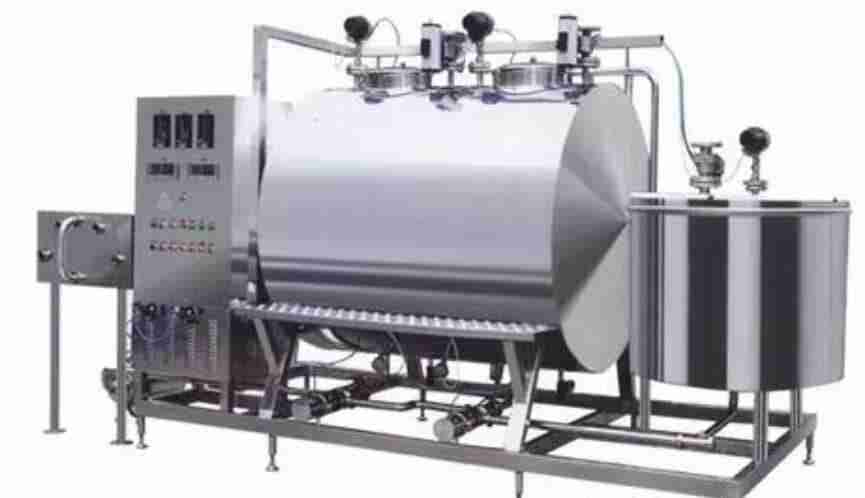
CIP Cleaning Systems in Beverage Industry
Clean-in-Place (CIP) systems are crucial components of beverage manufacturing equipment, ensuring hygiene and product safety without the need for disassembly. These systems play a vital role in maintaining the cleanliness of production equipment throughout the beverage process.
Definition: Clean-in-Place (CIP) is an automated cleaning method that allows cleaning and sanitization of beverage production equipment without disassembly, using high-temperature, high-concentration cleaning solutions to clean food contact surfaces.
Principles of CIP Cleaning in Beverage Industry
CIP cleaning in beverage production involves several key principles:
Table 1: CIP Cleaning Principles
| Principle | Description |
|---|---|
| No Disassembly | Cleaning is performed without the need to dismantle or disassemble the equipment. |
| Automated Process | The cleaning process is controlled and automated, requiring minimal manual intervention. |
| High-Temperature Cleaning | Hot cleaning solutions are used to improve the cleaning efficacy. |
| Chemical Action | Specialized detergents and sanitizers are utilized to break down and remove soils. |
| Mechanical Action | Turbulent flow is created within the system to enhance the cleaning effectiveness. |
CIP Cleaning Process in Beverage Manufacturing
The CIP cleaning process typically involves the following steps:
a) Pre-rinse: Removal of loose soil and product residues
b) Detergent wash: Application of cleaning chemicals
c) Intermediate rinse: Removal of detergent residues
d) Sanitization: Application of sanitizing agents
e) Final rinse: Removal of sanitizer residues
Formula for CIP Cleaning Efficiency:
CE = (1 - Cf/Ci) × 100%
Where:
CE = Cleaning Efficiency
Cf = Final contamination level
Ci = Initial contamination level
Sources of Cleaning Ability in CIP Systems
CIP systems rely on three primary sources of cleaning ability:
a) Kinetic Energy:
• Generated from the flow of cleaning liquid
• Formula: KE = ½mv²
Where: m = mass of liquid, v = velocity
b) Chemical Energy:
• Derived from the detergent used
• Factors: Concentration, pH, temperature
c) Heat Energy:
• Provided by the temperature of the cleaning liquid
• Formula: Q = mcΔT
Where: m = mass, c = specific heat capacity, ΔT = temperature change
Advantages of CIP Systems in Beverage Manufacturing Equipment
CIP systems offer numerous benefits in beverage production:
Sublist of CIP advantages:
• Improved product safety through consistent cleaning
• Reduced operation time and increased efficiency
• Labor savings and enhanced operational safety
• Water and steam conservation
• Stable hygiene levels with optimized cleaning agent usage
• Facilitation of large-scale production equipment
• Increased automation in cleaning processes
• Enhanced durability of beverage production equipment
Table 2: Comparison of CIP vs. Manual Cleaning
| Aspect | CIP Cleaning | Manual Cleaning |
|---|---|---|
| Time Efficiency | High | Low |
| Consistency | High | Variable |
| Labor Requirement | Low | High |
| Water Usage | Optimized | Often excessive |
| Chemical Control | Precise | Variable |
| Scalability | Excellent | Limited |
CIP System Components in Beverage Industry
A typical CIP system in beverage manufacturing includes:
a) CIP Supply Tanks:
• For storing cleaning and sanitizing solutions
b) Circulation Pump:
• To provide adequate flow and pressure
c) Heat Exchanger:
• For maintaining optimal cleaning temperatures
d) Spray Devices:
• To ensure thorough coverage of equipment surfaces
e) Control System:
• For automating and monitoring the cleaning process
Formula for CIP Flow Rate:
Q = v × A
Where:
Q = Flow rate
v = Velocity
A = Cross-sectional area of pipe
Factors Affecting CIP Cleaning Effectiveness
Several factors influence the efficiency of CIP cleaning in beverage production:
a) Time:
• Longer contact time generally improves cleaning results
• Formula: Cleaning Effectiveness ∝ log(Contact Time)
b) Temperature:
• Higher temperatures enhance cleaning efficiency
• Typical range: 60-80°C for most applications
c) Concentration:
• Optimal detergent concentration depends on soil type
• Formula: Cleaning Effectiveness ∝ log(Concentration)
d) Mechanical Action:
• Turbulent flow enhances cleaning
• Reynolds Number (Re) > 10,000 for turbulent flow
Advancements in CIP Technology for Beverage Industry
Recent developments in CIP systems include:
a) Smart CIP Systems:
• IoT integration for real-time monitoring
• Predictive maintenance capabilities
b) Sustainable CIP Solutions:
• Water recycling and reuse technologies
• Energy-efficient heating systems
c) Enhanced Chemical Formulations:
• Eco-friendly, low-foam detergents
• Enzymes for targeted soil removal
d) Optimization Software:
• AI-driven cleaning cycle optimization
• Resource usage minimization
CIP cleaning systems are essential components of modern beverage manufacturing equipment, ensuring consistent hygiene standards and product safety. By automating the cleaning process, CIP systems offer significant advantages in terms of efficiency, consistency, and resource conservation.
CIP Cleaning System Design Tool
Design a suitable CIP cleaning system based on your production line layout and cleaning requirements.
We value your feedback! Please send your comments or suggestions to aquamo@gmail.com
04.
Conclusion
Conclusion paragraph: In the beverage industry, there are a variety of different machines that can be used to fill drinks. These include carbonated drink filling equipment and rotary heat exchangers for cold beverages. If you have any questions about what type of machine would work best in your situation or how much it will cost, contact us today by below form! We’re happy to answer all your product related inquiries so that you can make an informed decision on which equipment is right for your business.
Equipment Energy Consumption Analysis Tool
Analyze energy consumption of various equipment used in beverage industry
Analysis Result:
We value your feedback! Please send your comments or suggestions to aquamo@gmail.com
FAQ
Latest Innovations in Beverage Production TechnologyThe beverages industry is constantly evolving, with new technologies emerging to improve efficiency, quality, and sustainability in beverage production. This article explores some of the most recent advancements in production processes and equipment for beverage production.
1. Automated Process Control Systems
Modern beverage production facilities are increasingly adopting automated process control systems to optimize the beverage production process:
Real-time monitoring of production parameters
Predictive maintenance capabilities for equipment used in beverage industry
Integration with Internet of Things (IoT) devices
Artificial Intelligence (AI) for optimization
These systems enhance productivity, reduce human error, and ensure consistent product quality across various beverages types.
2. Advanced Filtration Technologies
Innovative filtration methods are revolutionizing beverage clarity and safety in the production processes:
Ceramic membrane filtration
Higher flux rates
Improved temperature resistance
Electrochemical filtration
Removes contaminants at the molecular level
Reduces energy consumption
These technologies not only improve product quality but also extend shelf life for various beverages types.
3. Sustainable Packaging Solutions
Eco-friendly packaging is a major focus of recent innovations in the beverage production process:
Plant-based plastics
Edible packaging materials
Biodegradable can linings
These solutions address environmental concerns while maintaining product integrity throughout the plant layout of beverage industry.
4. High-Pressure Processing (HPP)
HPP technology is gaining traction as essential equipment for beverage production:
Non-thermal pasteurization method
Preserves nutritional value and flavor
Extends shelf life without additives
This technology is particularly valuable for premium juices and functional beverages in the beverages industry.
5. Precision Fermentation
Advancements in fermentation technology are opening new possibilities in beverage production:
Engineered microorganisms for specific flavor profiles
Controlled fermentation environments
Rapid prototyping of new beverage formulations
This technology enables the creation of unique, customized beverages with enhanced nutritional profiles, expanding the range of beverages types available.
Comparison of Beverage Production Technologies
Technology | Efficiency | Product Quality | Sustainability | Cost |
|---|---|---|---|---|
Automated Control Systems | High | High | Medium | High |
Advanced Filtration | Medium | High | Medium | Medium |
Sustainable Packaging | Low | Medium | High | Medium |
High-Pressure Processing | Medium | High | High | High |
Precision Fermentation | High | High | Medium | High |
This table provides an overview of how different equipment for beverage production impacts various aspects of the manufacturing process.
Conclusion
The beverages industry is witnessing a technological revolution in its production processes. From automated control systems to precision fermentation, these innovations in equipment used in beverage industry are enhancing product quality, improving efficiency, and addressing sustainability concerns. As these technologies continue to evolve, we can expect even more exciting developments in the future of beverage production, potentially reshaping plant layouts of beverage industry and expanding the range of beverages types available to consumers.
How does Industry 4.0 impact beverage manufacturing equipment?Industry 4.0, also known as the Fourth Industrial Revolution, is significantly transforming beverage manufacturing equipment and processes in the beverages industry. This digital revolution is reshaping the industry through advanced technologies, data-driven decision-making, and increased automation. Here’s an in-depth look at how Industry 4.0 is impacting equipment for beverage production:
Smart Manufacturing Systems
- Integration of Internet of Things (IoT) devices across the plant layout of beverage industry
- Real-time monitoring and data collection in beverage production process
- Predictive maintenance capabilities for equipment used in beverage industry
- Enhanced quality control through AI-powered systems for various beverages types
Automation and Robotics
- Increased use of robotic systems for packaging and palletizing in beverage production
- Automated guided vehicles (AGVs) for material handling
- Collaborative robots (cobots) working alongside human operators
- Reduced manual labor and improved safety in production processes
Data Analytics and Machine Learning
- Advanced analytics for process optimization in beverage production
- Predictive modeling for demand forecasting of different beverages types
- Quality assurance through pattern recognition
- Energy efficiency improvements through data-driven insights
Digital Twin Technology
- Virtual replicas of physical equipment and processes
- Simulation and testing of new configurations for plant layout of beverage industry
- Optimization of production lines without disrupting operations
- Enhanced training for operators using virtual environments
Additive Manufacturing (3D Printing)
- Rapid prototyping of equipment parts for beverage production equipment
- On-demand production of spare parts
- Customization of packaging and mold designs
- Reduced inventory costs and lead times for equipments needed in production
Augmented Reality (AR) and Virtual Reality (VR)
- AR-assisted maintenance and repair procedures for equipment used in beverage industry
- Virtual training programs for equipment operators
- Remote expert assistance for troubleshooting
- Improved safety through immersive training scenarios
Cybersecurity Measures
- Enhanced protection against cyber threats in beverage production processes
- Secure data transmission and storage
- Regular software updates and patch management
- Compliance with industry-specific security standards
Impact on Key Performance Indicators (KPIs) in beverage production:
| KPI | Impact of Industry 4.0 |
|---|---|
| Overall Equipment Effectiveness (OEE) | 15-20% improvement |
| Downtime Reduction | 30-50% decrease |
| Energy Efficiency | 10-20% increase |
| Product Quality | 20-30% improvement |
| Time-to-Market | 30-50% reduction |
Industry 4.0 technologies are revolutionizing beverage manufacturing equipment by enhancing efficiency, flexibility, and product quality across various beverages types. Smart manufacturing systems enable real-time monitoring and data-driven decision-making, leading to optimized production processes. Automation and robotics reduce labor costs and improve safety, while data analytics and machine learning drive continuous improvement in the beverage production process.
Digital twin technology allows for virtual testing and optimization, reducing the risk and cost of physical modifications to the plant layout of beverage industry. Additive manufacturing enables rapid prototyping and on-demand spare parts production, significantly reducing downtime and inventory costs for equipments needed. AR and VR applications enhance training and maintenance procedures, improving operator skills and equipment reliability.
As the beverages industry continues to adopt Industry 4.0 technologies, manufacturers can expect to see significant improvements in productivity, quality, and sustainability. However, this digital transformation also brings challenges, such as the need for workforce reskilling and robust cybersecurity measures to protect sensitive data and connected systems in beverage production.
In conclusion, Industry 4.0 is reshaping equipment for beverage production, offering unprecedented opportunities for optimization and innovation. Companies that embrace these technologies will be better positioned to meet evolving consumer demands, navigate market challenges, and maintain a competitive edge in the rapidly changing beverage industry landscape.
What are the benefits of using modular beverage production systems?Modular beverage production systems offer numerous advantages for manufacturers in the beverages industry. These innovative systems provide flexibility, efficiency, and scalability, revolutionizing the way beverages are produced. Here are the key benefits of implementing modular beverage production systems:
Increased Flexibility
- Easily adapt to changing market demands for various beverages types
- Quick product changeovers in the beverage production process
- Accommodate various bottle sizes and shapes
- Modify production lines without extensive downtime
Enhanced Efficiency
- Streamlined production processes in beverage manufacturing
- Reduced labor requirements
- Minimized waste and product loss
- Improved energy efficiency of equipment used in beverage industry
Scalability
- Expand production capacity as needed
- Add new modules to existing systems
- Gradual investment in equipment for beverage production
- Adapt to seasonal fluctuations in demand
Improved Quality Control
- Consistent product quality across batches
- Real-time monitoring and data collection
- Automated quality checks and adjustments
- Reduced risk of human error in the beverage production process
Cost-effectiveness
- Lower initial investment compared to traditional systems
- Reduced maintenance costs for equipment needed in beverage production
- Optimized resource utilization
- Faster return on investment (ROI)
Space Optimization
- Compact design for efficient use of floor space in the plant layout of beverage industry
- Vertical integration of processes
- Reduced footprint compared to traditional production lines
Faster Time-to-Market
- Quicker installation and setup of beverage production equipment
- Reduced testing and validation time
- Faster product launches and line extensions
Customization Options
- Tailor systems to specific product requirements for different beverages types
- Integrate specialized modules for unique processes
- Accommodate various ingredients and formulations
Improved Hygiene and Sanitation
- Easy-to-clean modular components
- Simplified maintenance procedures for equipment used in beverage industry
- Enhanced compliance with food safety regulations
Sustainability Benefits
- Reduced water and energy consumption in beverage production
- Minimized carbon footprint
- Improved recycling and waste management capabilities
To illustrate the efficiency gains of modular beverage production systems, consider the following comparison table:
| Metric | Traditional System | Modular System | Improvement |
|---|---|---|---|
| Production Changeover Time | 4-6 hours | 30-60 minutes | 75-87.5% |
| Floor Space Requirements | 100% | 70-80% | 20-30% |
| Energy Consumption | 100% | 80-90% | 10-20% |
| Product Loss During Changeovers | 2-3% | 0.5-1% | 50-83% |
| Time-to-Market for New Products | 6-12 months | 2-4 months | 66-67% |
These benefits collectively contribute to a more agile, efficient, and competitive beverage production process. Manufacturers who adopt modular systems can respond more quickly to market trends, reduce operational costs, and maintain high product quality standards. As the beverages industry continues to evolve, modular production systems are becoming increasingly essential for companies looking to stay ahead in a dynamic and challenging market environment.
How can beverage manufacturers optimize their production line layout?Optimizing production line layout is crucial for beverage manufacturers to enhance efficiency, reduce costs, and improve overall productivity in the beverages industry. Here are key strategies to achieve an optimized layout for beverage production:
Process Flow Analysis
- Conduct a detailed analysis of the current beverage production process
- Identify bottlenecks and inefficiencies in the existing plant layout of beverage industry
- Map out the ideal flow of materials and products for different beverages types
Equipment Placement
- Arrange machinery and equipment for beverage production in a logical sequence
- Minimize the distance between interconnected equipment used in beverage industry
- Ensure adequate space for maintenance and operator access to all production processes
Ergonomic Considerations
- Design workstations with employee comfort and safety in mind
- Implement adjustable equipment to accommodate different worker heights
- Provide proper lighting and ventilation throughout the facility
Efficient Material Handling
- Implement conveyor systems to automate product movement in the beverage production process
- Use gravity-fed systems where possible to reduce energy consumption
- Install automated guided vehicles (AGVs) for flexible material transport
Storage and Inventory Management
- Integrate raw material storage areas near the beginning of the production line
- Implement a just-in-time (JIT) inventory system to reduce storage space requirements
- Design efficient packaging and finished product storage areas for various beverages types
Quality Control Integration
- Strategically place quality control checkpoints throughout the production line
- Implement in-line testing and inspection equipment for beverage production
- Designate areas for product sampling and laboratory testing
Flexibility and Scalability
- Design the layout to accommodate future expansion of the beverage production process
- Use modular equipment that can be easily reconfigured
- Plan for the integration of new technologies and automation systems
Waste Management and Sustainability
- Incorporate recycling and waste sorting stations within the layout
- Design efficient water and energy management systems
- Plan for the integration of renewable energy sources in the beverages industry
To illustrate the impact of an optimized production line layout, consider the following table:
| Metric | Before Optimization | After Optimization | Improvement |
|---|---|---|---|
| Production Output (units/hour) | 1,000 | 1,300 | +30% |
| Cycle Time (minutes) | 15 | 11 | -27% |
| Floor Space Utilization | 70% | 85% | +21% |
| Energy Consumption (kWh/unit) | 0.5 | 0.4 | -20% |
| Defect Rate | 2% | 1% | -50% |
By implementing these optimization strategies, beverage manufacturers can significantly improve their production line efficiency. The key is to approach the layout design holistically, considering all aspects of the manufacturing process, from raw material intake to finished product storage. Regular assessment and continuous improvement of the layout will ensure that the production line remains optimized as technology advances and market demands evolve in the beverages industry.
Key Factors to Consider When Selecting Beverage Bottling EquipmentWhen choosing beverage bottling equipment for your production line, several critical factors must be taken into account to ensure efficiency, quality, and cost-effectiveness in the beverages industry. This article explores the key considerations that should guide your decision-making process for equipment used in beverage industry.
Production Capacity:
- Assess your current and projected production volumes
- Choose equipment for beverage production that can handle your peak requirements
- Consider scalability for future growth in beverage production process
Bottle Type and Size:
- Ensure compatibility with your specific bottle materials (glass, plastic, metal)
- Accommodate various bottle sizes and shapes for different beverages type
- Consider quick-change capabilities for different product lines
Filling Technology:
- Evaluate different filling methods:
• Gravity filling
• Counter-pressure filling
• Volumetric filling - Select based on beverage characteristics (carbonated, hot-fill, etc.)
- Consider accuracy and consistency requirements in production processes
- Evaluate different filling methods:
Automation Level:
- Determine the desired level of automation:
• Fully automated systems
• Semi-automated equipment
• Manual operations - Balance initial investment with long-term labor costs in beverage production
- Determine the desired level of automation:
Cleaning and Sanitization:
- Assess Clean-in-Place (CIP) capabilities
- Consider equipment materials (stainless steel for easy cleaning)
- Evaluate compliance with food safety regulations in the beverages industry
Energy Efficiency:
- Analyze power consumption of different models
- Consider energy-saving features and technologies
- Factor in long-term operational costs for equipment needed in production
Maintenance and Support:
- Evaluate ease of maintenance and availability of spare parts
- Consider manufacturer’s reputation and after-sales support
- Assess training requirements for operators of beverage production equipment
Integration with Existing Systems:
- Ensure compatibility with your current production line
- Consider space constraints and plant layout of beverage industry
- Evaluate potential for future upgrades or expansions
Quality Control Features:
- Assess built-in inspection systems (fill level, cap integrity, etc.)
- Consider traceability options for batch tracking
- Evaluate rejection mechanisms for defective products in the beverage production process
Cost Considerations:
- Balance initial investment with long-term ROI
- Consider total cost of ownership, including maintenance and energy costs
- Evaluate financing options and payback periods for equipment used in beverage industry
Table: Comparison of Filling Technologies
| Filling Technology | Advantages | Best Suited For |
|---|---|---|
| Gravity Filling | Simple, cost-effective | Still beverages, low-volume production |
| Counter-pressure | Ideal for carbonated drinks, minimizes foaming | Carbonated beverages, high-speed lines |
| Volumetric Filling | High accuracy, consistent fill levels | Premium products, precise dosing requirements |
When selecting beverage bottling equipment, it’s crucial to consider these factors holistically. The right choice will depend on your specific production needs, beverage characteristics, and business goals. By carefully evaluating each aspect, you can invest in equipment that optimizes your production process, ensures product quality, and supports your company’s growth objectives in the dynamic beverages industry.
How do beverage companies ensure product consistency across different production facilities?In the beverage industry, maintaining product consistency across multiple production facilities is crucial for brand reputation, customer satisfaction, and quality assurance. Beverage companies employ various strategies and techniques to achieve this consistency. Here’s an overview of the key methods used:
Standardized recipes and processes
- Detailed formulation documentation
- Step-by-step production guidelines
- Automated recipe management systems
Quality control measures
- Regular sensory evaluations
- Chemical and microbiological testing
- Statistical process control (SPC)
Ingredient sourcing and management
- Centralized procurement
- Supplier qualification programs
- Rigorous ingredient specifications
Technology and equipment standardization
- Uniform beverage production equipment across facilities
- Calibration and maintenance protocols for beverages machinery
- Process automation for consistency in the beverage process
Training and skill development
- Comprehensive employee training programs
- Cross-facility knowledge sharing
- Regular skill assessments and certifications
Data-driven decision making
- Real-time production monitoring
- Advanced analytics for process optimization
- Predictive maintenance to prevent inconsistencies in beverage industry equipment
Quality assurance teams
- Dedicated QA personnel at each facility
- Regular audits and inspections
- Continuous improvement initiatives
To ensure product consistency, beverage companies often implement a multi-tiered quality control system:
| Quality Control Level | Description | Frequency |
|---|---|---|
| In-process checks | Real-time monitoring of critical parameters | Continuous |
| Batch testing | Comprehensive analysis of finished products | Every batch |
| Sensory evaluation | Taste, aroma, and appearance assessment | Daily |
| External laboratory testing | Third-party verification of product qualities | Weekly or monthly |
| Consumer feedback analysis | Review of customer complaints and suggestions | Ongoing |
One of the most critical aspects of maintaining consistency is the use of standardized recipes and processes. This involves creating detailed documentation that outlines exact ingredient quantities, mixing times, temperatures, and other crucial parameters. Many companies in the beverage industry utilize automated recipe management systems that ensure the same formulation is used across all facilities.
Ingredient sourcing and management play a vital role in product consistency. Beverage companies often centralize their procurement processes to ensure that all facilities use identical ingredients from approved suppliers. This may involve establishing supplier qualification programs and maintaining strict ingredient specifications.
Technology and equipment standardization is another key factor in beverage production. By using uniform beverage machinery across facilities and implementing rigorous calibration and maintenance protocols, companies can minimize variations in the production process. Process automation further enhances consistency by reducing human error in the beverage process.
Training and skill development are essential for maintaining consistency. Companies invest in comprehensive employee training programs to ensure that all staff members understand and follow standardized procedures. Cross-facility knowledge sharing and regular skill assessments help maintain a high level of expertise across the organization, which is crucial in the beverage industry.
Data-driven decision making has become increasingly important in recent years. Real-time production monitoring, advanced analytics, and predictive maintenance help companies identify and address potential inconsistencies before they become significant issues. This approach has revolutionized quality control in beverage production.
By implementing these strategies and continuously refining their processes, beverage companies can ensure that their products maintain consistent quality, taste, and appearance across different production facilities, meeting consumer expectations and maintaining brand integrity. The evolution of beverages equipment and technology has played a significant role in achieving this level of consistency, marking an important chapter in the history of beverages and their production.
Emerging Trends in Beverage Packaging Materials and Their Impact on EquipmentThe beverage industry is experiencing significant changes driven by sustainability concerns, technological advancements, and shifting consumer preferences. These emerging trends in packaging materials are having a profound impact on beverage production equipment and the overall beverage process. Here’s an overview of the key trends and their implications:
- Sustainable Packaging Materials
- Biodegradable and compostable materials
- Recycled and recyclable plastics
- Plant-based materials (e.g., PLA, sugarcane-based polymers)
Impact on Beverage Industry Equipment:
• Modification of existing beverage machinery to handle new materials
• Investment in specialized equipment for bio-based material processing
• Enhanced cleaning and sterilization systems for recycled materials
- Lightweight Packaging
- Thinner plastic bottles and metal cans
- Reduced material usage in caps and closures
Impact on Beverages Equipment:
• Adjustments to filling and capping machines for lighter containers
• Increased precision in handling and transportation systems
• Upgraded quality control equipment for thinner materials
- Smart and Active Packaging
- Integration of QR codes and NFC technology
- Oxygen scavenging and antimicrobial packaging
Impact on Beverage Production Equipment:
• Installation of advanced printing and labeling systems
• Integration of sensors and monitoring devices in packaging lines
• New equipment for applying active coatings or integrating smart components
- Flexible Packaging
- Stand-up pouches
- Bag-in-box containers
Impact on Beverage Machinery:
• Investment in form-fill-seal machines for flexible packaging
• Adaptation of filling systems for different package shapes
• New sealing and closure equipment for pouches and flexible containers
- Alternative Materials
- Aluminum bottles
- Glass alternatives (e.g., coated paper bottles)
Impact on Equipment in Beverage Industry:
• Retooling of production lines for new container types
• Upgrades to handling and conveying systems
• Modifications to filling and capping equipment
Table: Adoption Rate of Sustainable Packaging Materials in the Beverage Industry
| Material Type | Adoption Rate (2023) | Projected Growth (2025) |
|---|---|---|
| Recycled PET | 35% | 50% |
| Bio-based PLA | 10% | 20% |
| Paper Bottles | 5% | 15% |
| rPET | 25% | 40% |
These emerging trends in beverage packaging materials are driving significant changes in packaging equipment. Manufacturers are faced with the challenge of adapting existing machinery or investing in new beverages equipment to accommodate these innovative materials and formats. The impact extends beyond just the packaging lines, affecting the entire beverage production process from material handling to quality control.
Key equipment adaptations include:
- Enhanced flexibility in production lines to handle multiple packaging types
- Improved sanitization systems for recycled and bio-based materials
- Advanced vision systems and sensors for quality control of new materials
- Integration of digital technologies for smart packaging production
- Energy-efficient systems to process sustainable materials
As the beverage industry continues to evolve, equipment manufacturers are focusing on developing modular and adaptable systems that can easily switch between different packaging materials and formats. This flexibility is crucial for beverage producers to remain competitive and responsive to changing consumer demands and regulatory requirements.
The shift towards sustainable and innovative packaging materials presents both challenges and opportunities for the beverage industry. While it requires significant investment in new equipment and technologies, it also opens up new possibilities for product differentiation, improved sustainability credentials, and enhanced consumer engagement through smart packaging solutions. This evolution in packaging materials and equipment marks a new chapter in the history of beverages, shaping the future of the industry.
How can small-scale beverage producers compete with larger manufacturers in terms of equipment efficiency?Small-scale beverage producers face significant challenges when competing with larger manufacturers, particularly in terms of equipment efficiency in the beverage industry. However, there are several strategies these smaller companies can employ to enhance their competitiveness:
Invest in versatile beverage production equipment
- Multi-purpose machinery that can handle various production tasks
- Modular systems that allow for easy reconfiguration and scalability
- Beverages equipment with quick changeover capabilities to minimize downtime
Embrace automation and smart technologies
- Implement IoT-enabled devices for real-time monitoring and predictive maintenance
- Utilize automated cleaning and sanitization systems to reduce labor costs
- Incorporate artificial intelligence for quality control and beverage process optimization
Focus on niche markets and specialized production
- Invest in beverage industry equipment tailored for small-batch, artisanal production
- Utilize flexible packaging solutions to cater to diverse consumer preferences
- Implement rapid prototyping equipment for product development and testing
Optimize facility layout and workflow
- Design an efficient production line to maximize space utilization
- Implement lean manufacturing principles to reduce waste and improve productivity
- Create a modular facility layout that allows for easy expansion and reconfiguration of beverage machinery
Collaborate and share resources
- Form cooperatives with other small producers to share beverages equipment and facilities
- Utilize contract manufacturing services for specialized processes
- Explore equipment leasing options to access advanced beverage industry equipment without high upfront costs
Prioritize energy efficiency and sustainability
- Invest in energy-efficient equipment to reduce operational costs
- Implement heat recovery systems and renewable energy sources
- Utilize water recycling and treatment systems to minimize resource consumption
Table: Comparison of Equipment Efficiency Strategies for Small-Scale Beverage Producers
| Strategy | Benefits | Challenges |
|---|---|---|
| Versatile beverage production equipment | Increased flexibility, reduced space requirements | Higher initial investment, potential complexity |
| Automation and smart technologies | Improved efficiency, reduced labor costs | Technical expertise required, cybersecurity concerns |
| Niche market focus | Differentiation, higher profit margins | Limited market size, specialized beverages machinery needs |
| Optimized facility layout | Improved productivity, scalability | Potential disruption during implementation |
| Collaboration and resource sharing | Access to advanced equipment, reduced costs | Coordination challenges, potential conflicts |
| Energy efficiency and sustainability | Lower operational costs, improved brand image | Initial investment, regulatory compliance |
By implementing these strategies, small-scale beverage producers can significantly improve their equipment efficiency and overall competitiveness in beverage production. The key lies in leveraging flexibility, embracing technology, and focusing on areas where they can differentiate themselves from larger manufacturers. While challenges remain, these approaches can help level the playing field and allow smaller producers to thrive in a competitive beverage industry market.
What are the advantages of using robotic systems in beverage production?Robotic systems have revolutionized various industries, and the beverage production sector is no exception. The integration of robotics in beverage industry equipment offers numerous advantages, enhancing efficiency, quality, and safety. This article explores the key benefits of implementing robotic systems in beverage production.
Increased Efficiency and Productivity
- Higher production speeds with advanced beverage machinery
- Continuous operation (24/7 capability)
- Reduced downtime for maintenance of beverages equipment
- Faster changeovers between product lines
Improved Quality Control
- Consistent product quality throughout the beverage process
- Precise measurements and ingredient ratios
- Reduced human error in production processes
- Enhanced traceability and data collection
Enhanced Safety and Hygiene
- Minimized human contact with products
- Reduced risk of contamination in the beverage industry
- Improved worker safety in hazardous environments
- Ability to handle extreme temperatures and chemicals safely
Cost Reduction
- Lower labor costs in the long term
- Reduced waste and product loss
- Optimized use of raw materials
- Energy efficiency through precise control of beverage production equipment
Flexibility and Scalability
- Easy reconfiguration for different product lines
- Ability to handle various container sizes and shapes
- Rapid adaptation to changing market demands
- Scalable solutions for growing production needs in the beverage industry
Advanced Automation Capabilities
- Integration with IoT and Industry 4.0 technologies
- Real-time monitoring and data analytics
- Predictive maintenance to prevent equipment failures
- Automated inventory management and supply chain integration
Robotic systems in beverage production offer significant advantages in various areas of the manufacturing process. From filling and capping to palletizing and packaging, robots can perform tasks with high precision and consistency. For instance, in the bottle filling process, robotic systems can achieve remarkable accuracy:
| Process | Traditional Method | Robotic System |
|---|---|---|
| Filling Accuracy | ±2% variation | ±0.1% variation |
| Speed | 100-200 bottles/min | Up to 1000 bottles/min |
| Changeover Time | 30-60 minutes | 5-10 minutes |
The implementation of robotic systems in beverage production leads to substantial improvements in overall equipment effectiveness (OEE). Many manufacturers report OEE increases of 15-25% after integrating robotic solutions into their production lines.
Moreover, the use of robotics in quality control processes, such as vision systems for inspection, can detect defects with an accuracy rate of up to 99.9%, significantly reducing the risk of subpar products reaching consumers. This level of precision was unimaginable in the history of beverages production.
In conclusion, the advantages of using robotic systems in beverage production are numerous and impactful. From increased efficiency and improved quality control to enhanced safety and cost reduction, robotics offer beverage manufacturers the tools to stay competitive in a rapidly evolving market. As technology continues to advance, the integration of robotics in beverage production is likely to become even more prevalent, driving further innovations in the industry and revolutionizing beverage industry equipment.
How can beverage producers minimize downtime during equipment changeovers?In the fast-paced beverage industry, producers face significant challenges when it comes to equipment changeovers, as these processes can lead to substantial downtime and reduced productivity. Minimizing this downtime is crucial for maintaining efficiency and meeting production targets in beverage production. Here are several strategies that beverage producers can implement to streamline their changeover processes:
Implement SMED (Single-Minute Exchange of Die) techniques:
- Analyze current changeover processes to identify areas for improvement
- Separate internal and external setup activities
- Convert internal setup activities to external ones where possible
- Streamline remaining internal activities
- Standardize and simplify changeover procedures for beverage production equipment
Invest in flexible equipment:
- Use modular beverage industry equipment designs that allow for quick modifications
- Implement quick-connect systems for utilities and product lines
- Utilize adjustable beverages machinery that can accommodate different product sizes and formats
Optimize production scheduling:
- Group similar products together to minimize the need for major changeovers
- Use software tools to plan optimal production sequences
- Implement just-in-time production strategies to reduce inventory and changeover frequency
Train and empower employees:
- Provide comprehensive training on changeover procedures for beverage process equipment
- Encourage cross-training to ensure multiple team members can perform changeovers
- Implement a continuous improvement culture where employees suggest and implement process enhancements
Utilize technology and automation:
- Implement automated Clean-In-Place (CIP) systems
- Use programmable logic controllers (PLCs) for quick recipe changes
- Employ robotics for repetitive changeover tasks in beverage machinery
Standardize parts and tools:
- Use common parts across different beverages equipment where possible
- Create standardized tool kits for each changeover type
- Implement a well-organized tool management system
Conduct regular maintenance:
- Perform preventive maintenance to reduce unexpected breakdowns during changeovers
- Use predictive maintenance techniques to anticipate and address potential issues with beverage industry equipment
To illustrate the potential impact of these strategies, consider the following table showcasing typical changeover time reductions in beverage production:
| Changeover Type | Before Optimization | After Optimization | Time Savings |
|---|---|---|---|
| Flavor change | 120 minutes | 45 minutes | 62.5% |
| Package size | 90 minutes | 30 minutes | 66.7% |
| Product type | 180 minutes | 60 minutes | 66.7% |
By implementing these strategies, beverage producers can significantly reduce downtime during equipment changeovers. This not only improves overall equipment effectiveness (OEE) but also enhances production flexibility, allowing manufacturers to respond more quickly to changing market demands. Additionally, minimizing changeover times can lead to reduced waste, improved product quality, and increased profitability in the beverage industry.
It’s important to note that the process of optimizing changeovers is ongoing. Beverage producers should continuously monitor and analyze their changeover procedures, seeking new opportunities for improvement and adapting to new technologies and best practices in the industry. While the history of beverages has seen significant advancements in production methods, today’s focus on efficiency and flexibility is more critical than ever in meeting the diverse and rapidly changing consumer preferences.
Key Considerations for Implementing a Preventive Maintenance Program for Beverage EquipmentImplementing a preventive maintenance program for beverage equipment is crucial for ensuring optimal performance, extending equipment lifespan, and maintaining product quality. This applies to all types of beverage manufacturing equipment, from small laboratory devices to large-scale machinery. Here are the key considerations to keep in mind:
Equipment Inventory and Documentation
- Create a comprehensive beverage equipment list
- Document specifications, serial numbers, and maintenance history
- Develop equipment-specific maintenance checklists for various beverage equipments
Maintenance Schedule
- Establish regular maintenance intervals based on manufacturer recommendations
- Consider factors such as equipment usage, age, and environmental conditions
- Create a calendar system to track and schedule maintenance tasks for all beverage manufacturing machinery
Staff Training
- Provide thorough training on preventive maintenance procedures for beverage equipment
- Ensure staff understands the importance of regular maintenance
- Conduct refresher courses and update training materials as needed
Standard Operating Procedures (SOPs)
- Develop detailed SOPs for each type of beverage manufacturing equipment
- Include step-by-step instructions for maintenance tasks
- Regularly review and update SOPs based on equipment changes or new best practices
Cleaning and Sanitization
- Implement rigorous cleaning and sanitization protocols for all beverage equipments
- Use appropriate cleaning agents and methods for each equipment type
- Establish a schedule for deep cleaning and sanitization
Inspection and Testing
- Conduct regular visual inspections for signs of wear or damage on beverage equipment
- Perform functional tests to ensure equipment operates within specifications
- Use diagnostic tools to identify potential issues before they escalate
Parts Management
- Maintain an inventory of critical spare parts for beverage manufacturing machinery
- Establish relationships with reliable suppliers for quick parts procurement
- Implement a system to track parts usage and reorder as needed
Record Keeping
- Maintain detailed records of all maintenance activities on beverage equipment
- Document equipment issues, repairs, and parts replacements
- Use this data to identify patterns and optimize the maintenance program
Performance Monitoring
- Track key performance indicators (KPIs) such as equipment downtime and repair costs
- Analyze data to identify areas for improvement in the maintenance program
- Use metrics to demonstrate the value of preventive maintenance to stakeholders
Continuous Improvement
- Regularly review and assess the effectiveness of the maintenance program for beverage manufacturing equipment
- Solicit feedback from maintenance staff and equipment operators
- Stay informed about industry best practices and new maintenance technologies for beverage lab equipment
Table: Common Beverage Equipment Maintenance Frequencies
| Equipment Type | Daily | Weekly | Monthly | Quarterly | Annually |
|---|---|---|---|---|---|
| Dispenser | Clean | Sanitize | Check valves | Calibrate | Overhaul |
| Ice Machine | Clean | Sanitize | Check filters | Descale | Full service |
| Coffee Brewer | Clean | Descale | Check seals | Calibrate | Replace parts |
| Blender | Clean | Inspect blades | Lubricate | Check motor | Replace seals |
| Refrigerator | Check temp | Clean coils | Check seals | Service compressor | Full inspection |
By considering these key factors and implementing a comprehensive preventive maintenance program, beverage businesses can ensure their equipment operates efficiently, extend its lifespan, and maintain consistent product quality. This proactive approach can lead to significant cost savings in the long run by reducing unexpected breakdowns, minimizing downtime, and improving overall operational efficiency of beverage manufacturing equipment.
What are the latest developments in beverage labeling and coding equipment?The beverage industry is witnessing significant advancements in labeling and coding equipment, driven by the need for improved efficiency, accuracy, and sustainability. These innovations are transforming various aspects of beverage manufacturing equipment. Here are the key developments:
Laser Coding Technology
- Increased adoption of CO2 and fiber laser systems in beverage manufacturing machinery
- Benefits:
• High-speed marking capabilities
• Permanent, high-contrast codes
• Reduced consumables and maintenance costs - Applications: Date codes, lot numbers, and traceability information on beverage equipment
Digital Printing Solutions
- Integration of digital inkjet technology in labeling processes for beverage equipments
- Advantages:
• On-demand printing capabilities
• Customization and personalization options
• Reduced waste and inventory costs - Use cases: Short-run productions, limited editions, and promotional campaigns
Smart Labeling Technologies
- Implementation of RFID and NFC-enabled labels as part of modern beverage equipment list
- Features:
• Real-time tracking and inventory management
• Enhanced consumer engagement through interactive packaging
• Improved anti-counterfeiting measures - Growing popularity in premium beverage segments
Eco-friendly Labeling Solutions
- Shift towards sustainable materials and processes in beverage manufacturing equipment
- Innovations:
• Biodegradable and compostable label materials
• Water-soluble adhesives for easy label removal during recycling
• Low-energy consumption coding equipment - Alignment with corporate sustainability goals and consumer preferences
Automation and Integration
- Enhanced connectivity between labeling equipment and production systems in beverage manufacturing machinery
- Benefits:
• Improved accuracy and consistency in labeling
• Reduced human error and labor costs
• Seamless integration with Industry 4.0 initiatives - Implementation of vision systems for quality control and verification
Table: Comparison of Labeling Technologies in Beverage Equipment
| Technology | Speed | Customization | Sustainability | Initial Cost |
|---|---|---|---|---|
| Laser Coding | High | Medium | High | High |
| Digital Printing | Medium | High | Medium | Medium |
| Smart Labels | Low | High | Low | High |
| Eco-friendly Labels | Medium | Medium | High | Medium |
These developments are reshaping the beverage labeling and coding landscape, offering manufacturers increased flexibility, efficiency, and sustainability. As consumer demands evolve and regulations become more stringent, the industry continues to innovate, focusing on solutions that balance performance, cost-effectiveness, and environmental responsibility.
The integration of these technologies is enabling beverage companies to not only meet compliance requirements but also leverage packaging as a powerful marketing tool. As the sector moves forward, we can expect further advancements in areas such as augmented reality labels, edible inks, and AI-driven labeling systems, further revolutionizing the way beverages are labeled and coded. These innovations may even extend to beverage lab equipment, enhancing quality control and research capabilities in the industry.
How do beverage manufacturers ensure equipment compliance with different international standards?Beverage manufacturers face the challenge of ensuring their beverage manufacturing equipment complies with various international standards to maintain product quality, safety, and regulatory compliance. Here’s how they achieve this:
Understanding Relevant Standards
- Identify applicable standards for target markets
- Stay updated on changes in regulations
- Collaborate with industry associations for guidance on beverage equipments
Implementing Quality Management Systems
- Adopt ISO 9001 for overall quality management
- Implement HACCP principles for food safety
- Utilize Six Sigma methodologies for process improvement in beverage manufacturing machinery
Equipment Selection and Procurement
- Choose suppliers with proven compliance track records for beverage equipment
- Request certification documentation for all beverage lab equipment
- Conduct thorough pre-purchase audits of equipment specifications
Regular Audits and Inspections
- Perform internal audits on a scheduled basis
- Engage third-party auditors for unbiased assessments of beverage manufacturing equipment
- Participate in surprise inspections by regulatory bodies
Employee Training and Awareness
- Provide comprehensive training on equipment standards
- Develop standard operating procedures (SOPs) for each piece of beverage equipment
- Encourage a culture of compliance among staff
Documentation and Record-Keeping
- Maintain detailed records of equipment specifications
- Document all maintenance, repairs, and upgrades
- Keep calibration certificates up-to-date for all beverage equipments
Continuous Monitoring and Testing
- Implement real-time monitoring systems for critical parameters
- Conduct regular product testing to ensure consistent quality
- Utilize statistical process control (SPC) for trend analysis in beverage manufacturing
Adapting to Regional Variations
- Tailor equipment configurations to meet specific regional requirements
- Work with local regulatory bodies to ensure compliance of beverage manufacturing machinery
- Consider cultural and environmental factors in equipment design
Technology Integration
- Utilize IoT devices for remote monitoring and data collection
- Implement blockchain for transparent supply chain management
- Adopt AI and machine learning for predictive maintenance of beverage equipment
Supplier Collaboration
- Establish long-term partnerships with beverage equipment suppliers
- Engage in joint research and development initiatives
- Share compliance-related information and best practices for beverage manufacturing equipment
Table: Key International Standards for Beverage Manufacturing Equipment
| Standard | Focus Area | Relevance |
|---|---|---|
| ISO 22000 | Food Safety Management | Ensures food safety throughout the supply chain |
| FDA 21 CFR Part 11 | Electronic Records | Governs electronic documentation and signatures |
| EU Machinery Directive | Machine Safety | Sets safety requirements for beverage equipments in the EU |
| 3-A Sanitary Standards | Hygienic Design | Focuses on sanitary equipment design in the US |
| EHEDG Guidelines | Hygienic Engineering | Provides guidelines for hygienic beverage equipment design in Europe |
By following these strategies and adhering to relevant international standards, beverage manufacturers can ensure their equipment complies with diverse regulatory requirements. This approach not only helps in maintaining product quality and safety but also facilitates market access and enhances consumer trust. As global markets continue to evolve, staying proactive in equipment compliance remains crucial for success in the beverage industry. A comprehensive beverage equipment list and regular updates on beverage lab equipment standards are essential for maintaining compliance across all aspects of production.
What are the emerging technologies for reducing water usage in beverage production?The beverage industry is increasingly focusing on water conservation due to environmental concerns and operational costs. Several innovative technologies are emerging to reduce water usage in beverage production, revolutionizing beverage manufacturing equipment:
Membrane Filtration Systems
- Reverse Osmosis (RO)
- Nanofiltration (NF)
- Benefits:
• Efficient water purification
• Reduced chemical usage
• Lower energy consumption in beverage manufacturing machinery
Water Recovery and Recycling
- Closed-loop systems
- Wastewater treatment and reuse
- Advantages:
• Significant water savings
• Reduced environmental impact
• Cost-effectiveness in long term for beverage equipment
Dry Lubrication Technologies
- Silicone-based lubricants
- PTFE (Polytetrafluoroethylene) coatings
- Impact:
• Eliminates need for water-based conveyor lubrication
• Reduces water consumption in cleaning processes for beverage equipments
Advanced Cleaning-in-Place (CIP) Systems
- Electrolyzed water cleaning
- Enzyme-based cleaning solutions
- Benefits:
• Reduced water and chemical usage
• Shorter cleaning cycles
• Improved sanitation efficiency for beverage manufacturing equipment
Smart Metering and Monitoring
- IoT-enabled water meters
- Real-time data analytics
- Advantages:
• Precise water usage tracking
• Quick leak detection
• Optimization of water-intensive processes in beverage production
Waterless Bottle Rinsing
- Air rinsing technologies
- UV sterilization
- Impact:
• Eliminates water usage in bottle preparation
• Reduces energy consumption in beverage manufacturing machinery
Drought-Resistant Crop Development
- Genetically modified ingredients
- Hydroponic farming for raw materials
- Benefits:
• Reduced water usage in agricultural phase
• Increased crop yield with less water, impacting beverage lab equipment needs
Table: Water Savings Potential of Emerging Technologies in Beverage Equipment
| Technology | Estimated Water Savings |
|---|---|
| Membrane Filtration | 20-30% |
| Water Recovery and Recycling | 50-70% |
| Dry Lubrication | 20-25% |
| Advanced CIP Systems | 30-40% |
| Smart Metering | 10-15% |
| Waterless Bottle Rinsing | 5-10% |
These emerging technologies offer significant potential for reducing water usage in beverage production. By implementing a combination of these innovations, beverage companies can substantially decrease their water footprint while maintaining product quality and safety standards. The beverage equipment list for modern facilities increasingly includes these water-saving technologies.
The adoption of these technologies not only addresses environmental concerns but also offers long-term cost savings and improved operational efficiency. As water scarcity becomes an increasingly pressing global issue, the beverage industry’s investment in water-saving technologies and equipment is likely to intensify.
It’s important to note that the effectiveness of these technologies may vary depending on factors such as production scale, local water availability, and specific product requirements. Beverage companies should carefully evaluate each technology’s applicability to their unique production processes and environmental conditions to maximize water conservation efforts and optimize their beverage manufacturing equipment.
How can beverage producers optimize their cleaning and sanitization processes?Beverage producers must prioritize cleaning and sanitization to ensure product quality, safety, and regulatory compliance. Optimizing these processes can lead to improved efficiency, cost savings, and consistent product quality. Here are key strategies for beverage producers to enhance their cleaning and sanitization procedures for various beverage manufacturing equipment:
Implement Cleaning-in-Place (CIP) systems
- Automate cleaning processes for tanks, pipes, and beverage equipment
- Reduce manual labor and ensure consistent cleaning results
- Optimize chemical usage and water consumption
Use appropriate cleaning agents and sanitizers
- Select chemicals compatible with beverage manufacturing machinery materials
- Consider environmentally friendly options when possible
- Rotate sanitizers to prevent microbial resistance
Establish Standard Operating Procedures (SOPs)
- Develop detailed protocols for each cleaning and sanitization task
- Train staff thoroughly on proper procedures for all beverage equipments
- Regularly review and update SOPs based on effectiveness and efficiency
Optimize cleaning schedules
- Implement risk-based cleaning frequencies for different types of beverage equipment
- Balance production demands with sanitation requirements
- Use production data to identify optimal cleaning windows
Employ monitoring and verification systems
- Utilize ATP testing for rapid hygiene verification on beverage manufacturing machinery
- Implement microbial testing programs using beverage lab equipment
- Use data logging and tracking systems for cleaning processes
Invest in equipment design and maintenance
- Choose beverage manufacturing equipment with hygienic design features
- Implement preventive maintenance programs for all beverage equipments
- Regularly inspect and replace worn parts
Optimize water usage
- Implement water recycling and reuse systems for beverage manufacturing machinery
- Use high-pressure, low-volume cleaning methods
- Monitor and control water quality for cleaning processes
Utilize technology for process improvement
- Implement SCADA systems for real-time monitoring of beverage equipment
- Use data analytics to identify optimization opportunities
- Consider IoT sensors for equipment performance tracking
Table: Comparison of Cleaning Methods in Beverage Production
| Method | Advantages | Disadvantages | Best For |
|---|---|---|---|
| Manual Cleaning | – Flexible<br>- Low initial cost | – Labor-intensive<br>- Inconsistent results | Small-scale operations with limited beverage equipment |
| CIP Systems | – Consistent results<br>- Reduced labor costs | – High initial investment<br>- Less flexible | Large-scale operations with extensive beverage manufacturing machinery |
| Automated COP | – Efficient for removable parts<br>- Consistent cleaning | – Limited to certain equipment types | Medium to large operations with diverse beverage equipment list |
By implementing these strategies, beverage producers can significantly improve their cleaning and sanitization processes for all types of beverage manufacturing equipment. This optimization leads to enhanced product quality, reduced contamination risks, and improved operational efficiency. Regular evaluation and continuous improvement of these processes ensure that producers stay ahead of industry standards and maintain a competitive edge in the market, while also extending the lifespan of their beverage equipments.
What are the key factors to consider when selecting equipment for beverage product development and testing?When developing and testing new beverage products, selecting the right equipment is crucial for success. This article explores the key factors to consider in this process, ensuring optimal product quality, efficiency, and consistency in beverage manufacturing.
Product Specifications and Requirements
- Viscosity and texture
- Temperature sensitivity
- Carbonation levels
- Ingredient particulates
Production Scale
- Laboratory-scale equipment for initial testing
- Pilot-scale equipment for process validation
- Full-scale beverage systems for production
Processing Methods
- Mixing and blending capabilities
- Homogenization requirements
- Pasteurization or sterilization needs
- Filtration systems
Material Compatibility
- Equipment material (e.g., stainless steel, glass, food-grade plastics)
- Chemical resistance to acidic or alkaline ingredients
- Ease of cleaning and sanitization
Precision and Accuracy
- Measurement and dosing capabilities
- Temperature control
- Pressure regulation for carbonated beverages
Flexibility and Scalability
- Adaptability to different product formulations
- Ease of reconfiguration for various batch sizes
- Potential for future expansion, including small batch beverage manufacturing
Regulatory Compliance
- Adherence to food safety standards (e.g., FDA, HACCP)
- Traceability features
- Documentation capabilities
Cost Considerations
- Initial investment in beverage making machines
- Operating costs
- Maintenance and replacement parts
Vendor Support and Reliability
- Technical support availability from beverage machine manufacturers
- Training programs
- Spare parts availability
Automation and Control Systems
- Process control capabilities
- Data logging and analysis features
- Integration with existing beverage industry processes
Equipment Selection Criteria Comparison
| Criteria | Laboratory Scale | Pilot Scale | Full Production Scale |
|---|---|---|---|
| Capacity | 1-10 L | 10-100 L | >100 L |
| Flexibility | High | Medium | Low |
| Cost | Low-Medium | Medium-High | High |
| Precision | Very High | High | Medium-High |
| Automation | Low-Medium | Medium-High | High |
| Scalability | Low | Medium | High |
When selecting food and beverage manufacturing equipment for product development and testing, it’s essential to consider the entire product lifecycle, from initial concept to full-scale production. The right equipment should not only meet current needs but also accommodate future growth and product variations.
Key considerations include the specific requirements of the beverage being developed, such as carbonation levels, viscosity, and temperature sensitivity. The equipment must be capable of handling these parameters accurately and consistently throughout the beverage industry process.
Scalability is another crucial factor. Starting with laboratory-scale equipment allows for cost-effective initial testing, while pilot-scale equipment enables process validation before committing to full-scale production. Ensuring compatibility and similar processing conditions across these scales can significantly streamline the development process.
Material compatibility and ease of cleaning are vital for maintaining product quality and safety. Equipment should be constructed from materials that won’t react with the beverage ingredients and should be easily sanitized to prevent contamination.
Regulatory compliance is non-negotiable in the beverage industry. Selected equipment must meet all relevant food safety standards and provide necessary documentation and traceability features. This is particularly important when compiling a food and beverage equipment list for your facility.
Lastly, consider the total cost of ownership, including initial investment, operating costs, and ongoing maintenance. While high-quality equipment may have a higher upfront cost, it can lead to long-term savings through improved efficiency and reduced downtime.
By carefully evaluating these factors, beverage developers can select equipment that not only meets their current needs but also supports future innovation and growth in the competitive beverage market.
What are the latest innovations in beverage flavor infusion equipment?The beverage industry has seen significant advancements in flavor infusion technology, revolutionizing the way drinks are crafted and enhancing consumer experiences. These innovations in beverage systems cater to both commercial and home brewing applications, offering improved efficiency, consistency, and flavor complexity in the beverage industry process.
Key innovations in beverage flavor infusion equipment include:
Ultrasonic Cavitation Systems
- Utilize high-frequency sound waves to create micro-bubbles
- Enhance flavor extraction and infusion speed
- Maintain ingredient integrity by avoiding excessive heat
Pressurized Infusion Chambers
- Apply controlled pressure to accelerate flavor absorption
- Allow for cold infusion, preserving delicate flavors
- Reduce infusion time from days to hours
Programmable Automated Infusers
- Offer precise control over infusion parameters
- Store multiple recipes for consistent results
- Integrate with mobile apps for remote monitoring and control
Vacuum Infusion Technology
- Creates a vacuum environment to draw flavors into liquids
- Enhances flavor intensity and reduces infusion time
- Ideal for creating unique cocktail ingredients
Microencapsulation Systems
- Encapsulate flavors in microscopic shells
- Release flavors gradually for a sustained taste experience
- Allow for layered flavor profiles in a single beverage
These innovations have significantly impacted beverage manufacturing, enabling the creation of more complex and nuanced flavor profiles. For example, craft breweries and small batch beverage manufacturing operations now use pressurized infusion chambers to infuse beers with fruit flavors without compromising alcohol content or introducing unwanted bacteria.
The coffee industry has also benefited from these advancements in beverage making machines. Ultrasonic cavitation systems are being used to create cold brew coffee in a fraction of the traditional time, while maintaining the smooth, low-acid profile that consumers enjoy.
Table: Comparison of Traditional vs. Innovative Infusion Methods
| Aspect | Traditional Methods | Innovative Methods |
|---|---|---|
| Infusion Time | Hours to days | Minutes to hours |
| Flavor Intensity | Variable | Consistently high |
| Temperature Control | Limited | Precise |
| Scalability | Often manual | Easily automated |
| Flavor Complexity | Basic | Multi-layered |
The cocktail industry has embraced vacuum infusion technology, allowing mixologists to create unique infusions that were previously impossible or impractical. This has led to the development of signature drinks that set establishments apart in a competitive market.
In the realm of tea production, microencapsulation systems are being used to create novel blends that release different flavor notes as the tea steeps, providing a more engaging and dynamic drinking experience.
These innovations are not limited to commercial applications. Home brewing enthusiasts now have access to smaller-scale versions of these technologies, enabling them to experiment with flavor infusions in their own kitchens.
As the demand for unique and premium beverages continues to grow, we can expect further advancements from beverage machine manufacturers. Future innovations in food and beverage manufacturing equipment may focus on:
- Integration of artificial intelligence for flavor profile optimization
- Development of sustainable and eco-friendly infusion methods
- Miniaturization of commercial-grade equipment for home use
In conclusion, the latest innovations in beverage flavor infusion equipment have opened up new possibilities for flavor creation and extraction. These technologies are transforming the beverage industry, offering improved efficiency, consistency, and the ability to create complex flavor profiles that meet the evolving preferences of consumers. As these advancements continue, we can expect to see an expanding food and beverage equipment list that caters to both large-scale manufacturers and small batch producers alike.
How can beverage producers improve their traceability systems through equipment choices?Beverage producers can significantly enhance their traceability systems by making strategic equipment choices. Implementing the right technology and machinery can streamline the tracking process, improve accuracy, and ensure compliance with regulations. Here are several ways beverage producers can leverage equipment to boost their traceability capabilities within the beverage industry process:
- Automated Data Collection Systems
- Barcode scanners and RFID readers
- IoT sensors for real-time monitoring
- Vision systems for quality control and packaging verification
Implementing automated data collection systems reduces human error and increases the speed and accuracy of data capture. These systems, often integrated into modern beverage making machines, can track ingredients, batches, and finished products throughout the production process, providing a comprehensive digital trail.
- Integrated Manufacturing Execution Systems (MES)
- Real-time production monitoring
- Batch tracking and genealogy
- Electronic batch records
An integrated MES connects various production equipment and processes in beverage manufacturing, creating a centralized platform for traceability. This system can track materials from receipt to finished product, enabling quick identification of potential issues and facilitating efficient recalls if necessary.
- Advanced Labeling and Marking Equipment
- High-resolution inkjet printers
- Laser marking systems
- RFID tag applicators
Investing in advanced labeling and marking equipment ensures that each product carries unique, traceable information. These systems, often provided by leading beverage machine manufacturers, can apply lot codes, expiration dates, and serialized identifiers, enhancing product traceability and reducing counterfeiting risks.
- Blockchain-enabled Traceability Platforms
- Immutable record-keeping
- End-to-end supply chain visibility
- Smart contract capabilities
Blockchain technology offers a secure and transparent way to track products from source to consumer. Equipment that integrates with blockchain platforms can automatically record and verify transactions, enhancing trust and traceability across the supply chain, which is particularly valuable for small batch beverage manufacturing.
- Quality Testing and Analysis Equipment
- Spectrophotometers for composition analysis
- Chromatography systems for contaminant detection
- Automated sampling systems
Advanced quality testing equipment, a crucial part of food and beverage manufacturing equipment, can ensure product consistency and safety while generating valuable traceability data. These systems can detect anomalies early in the production process, preventing potential quality issues and enhancing overall traceability.
Table: Benefits of Traceability Equipment Upgrades in Beverage Systems
| Equipment Type | Primary Benefit | Secondary Benefit |
|---|---|---|
| Automated Data Collection | Reduced Human Error | Increased Efficiency |
| Integrated MES | Centralized Tracking | Improved Recall Management |
| Advanced Labeling | Enhanced Product Identification | Anti-counterfeiting |
| Blockchain Platforms | Transparent Supply Chain | Increased Consumer Trust |
| Quality Testing | Early Issue Detection | Consistent Product Quality |
By investing in these equipment upgrades, beverage producers can create a more robust and efficient traceability system. This not only helps in meeting regulatory requirements but also enhances consumer trust and brand reputation. The ability to quickly trace products and ingredients can significantly reduce the impact of potential recalls and improve overall quality control.
Moreover, improved traceability systems can lead to better inventory management, reduced waste, and optimized production processes. As the beverage industry continues to evolve, producers who prioritize traceability through smart equipment choices will be better positioned to meet future challenges and capitalize on emerging opportunities in the market.
For those interested in implementing these solutions, consulting a comprehensive food and beverage equipment list can provide valuable insights into the latest traceability technologies available for the industry.
What are the challenges in producing carbonated beverages and how does equipment address them?Carbonated beverages are a staple in the global beverage industry, but their production comes with unique challenges. This article explores the key difficulties faced in carbonated beverage product manufacturing and how specialized beverage processing machinery helps overcome these obstacles.
- Carbonation Process Challenges:
- Maintaining consistent CO2 levels
- Preventing overcarbonation or undercarbonation
- Ensuring proper gas dissolution
Equipment solution: Carbonation systems (part of the beverage processing machine lineup)
- Utilize pressure-controlled tanks
- Employ precise gas injection mechanisms
- Incorporate monitoring devices for real-time CO2 level tracking
- Temperature Control:
- Maintaining optimal temperature for carbonation
- Preventing CO2 loss due to temperature fluctuations
- Ensuring product quality and consistency
Equipment solution: Chilling and temperature control systems
- Use plate heat exchangers for rapid cooling
- Implement in-line temperature sensors
- Utilize automated temperature adjustment mechanisms
- Filling and Packaging Challenges:
- Minimizing foam formation during filling
- Preventing CO2 loss during the bottling process
- Ensuring proper sealing to maintain carbonation
Equipment solution: High-speed filling and capping machines (essential soft drink process machinery)
- Employ counter-pressure filling technology
- Use foam control mechanisms
- Integrate precise capping systems for airtight seals
- Quality Control and Consistency:
- Maintaining uniform taste and mouthfeel
- Ensuring consistent carbonation levels across batches
- Detecting and addressing production anomalies
Equipment solution: Automated quality control systems
- Implement in-line CO2 volume measurement devices
- Utilize vision systems for bottle inspection
- Employ computerized process control systems
- Ingredient Mixing and Blending:
- Achieving precise ingredient ratios
- Ensuring thorough mixing without compromising carbonation
- Maintaining product integrity during the blending process
Equipment solution: Advanced mixing and blending systems (crucial for handling raw materials used in beverage industry)
- Use high-efficiency in-line mixers
- Implement programmable recipe management systems
- Utilize gentle agitation techniques to preserve carbonation
- Sterilization and Sanitation:
- Maintaining a sterile production environment
- Preventing microbial contamination
- Ensuring equipment cleanliness without affecting carbonation
Equipment solution: Clean-in-Place (CIP) systems (a vital component in any food and beverage equipment list)
- Employ automated cleaning cycles
- Utilize sanitizing agents compatible with carbonated beverage production
- Implement UV sterilization for additional microbial control
Table: Carbonation Levels in Popular Beverages
| Beverage Type | CO2 Volumes |
|---|---|
| Beer | 2.2 – 2.8 |
| Soft Drinks | 3.0 – 4.0 |
| Sparkling Water | 2.5 – 3.5 |
| Champagne | 5.0 – 6.0 |
The production of carbonated beverages presents numerous challenges, from maintaining consistent carbonation levels to ensuring product quality and safety. Specialized beverage processing machinery plays a crucial role in addressing these challenges, enabling manufacturers to produce high-quality carbonated beverages efficiently and consistently. By leveraging advanced technologies in carbonation, temperature control, filling, quality assurance, and sanitation, beverage producers can overcome the inherent difficulties of carbonated beverage production and meet the ever-growing consumer demand for these popular drinks.
What are the emerging trends in beverage quality testing equipment?The beverage product manufacturing industry is constantly evolving, and with it, the technology used for quality testing. As consumer preferences shift and regulatory standards become more stringent, manufacturers are adopting innovative equipment to ensure product consistency, safety, and quality. Here are the key emerging trends in beverage quality testing equipment, which are reshaping the landscape of beverage processing machinery:
Non-destructive testing methods
- Near-infrared spectroscopy (NIR)
- Allows rapid analysis of multiple parameters simultaneously
- Eliminates the need for sample preparation of raw materials used in beverage industry
- Raman spectroscopy
- Provides detailed molecular information
- Effective for detecting adulterants and contaminants
- Near-infrared spectroscopy (NIR)
Automation and robotics
- Automated sampling systems
- Reduce human error and contamination risks
- Increase testing throughput in soft drink process machinery
- Robotic liquid handling
- Improve precision in sample preparation
- Enable high-volume testing capabilities
- Automated sampling systems
Portable and handheld devices
- Compact spectrophotometers
- Allow on-site testing for color and clarity
- Provide instant results for quality control in beverage processing
- Pocket-sized pH meters and refractometers
- Enable quick checks throughout the production process
- Facilitate field testing for raw ingredients
- Compact spectrophotometers
Advanced microbial detection
- Rapid microbial testing kits
- Deliver results in hours instead of days
- Improve product release times in beverage processing machine operations
- Flow cytometry
- Enables real-time monitoring of microbial populations
- Detects viable but non-culturable (VBNC) organisms
- Rapid microbial testing kits
Integration of IoT and data analytics
- Connected sensors and equipment
- Allow real-time monitoring of quality parameters
- Enable predictive maintenance of food and beverage equipment
- Cloud-based data management systems
- Facilitate trend analysis and reporting
- Support compliance documentation
- Connected sensors and equipment
Enhanced sensory evaluation tools
- Electronic noses and tongues
- Provide objective analysis of flavor and aroma profiles
- Complement human sensory panels in assessing beverage products
- Digital image analysis
- Assesses visual attributes consistently
- Detects defects and inconsistencies in packaging
- Electronic noses and tongues
Table: Comparison of Traditional vs. Emerging Quality Testing Methods in Beverage Processing
| Aspect | Traditional Methods | Emerging Methods |
|---|---|---|
| Speed | Slow (days) | Rapid (hours or minutes) |
| Sample preparation | Often required | Minimal or none |
| Portability | Limited | High |
| Data integration | Manual | Automated and cloud-connected |
| Cost per test | Variable, often high | Initially high, but decreasing over time |
| Skill level required | High | Moderate to low |
These emerging trends in beverage quality testing equipment are driven by the industry’s need for faster, more accurate, and more efficient quality control processes. As technology continues to advance, we can expect to see further innovations that will help beverage manufacturers maintain high standards while meeting the demands of a rapidly changing market. These advancements are not only improving quality control but also enhancing the overall efficiency of beverage processing machinery throughout the production line.
How can beverage producers optimize their energy consumption through equipment selection?In the competitive world of beverage product manufacturing, optimizing energy consumption through strategic equipment selection is crucial. This approach not only reduces operational costs but also enhances sustainability efforts in the soft drink process machinery sector. Here are key strategies for energy optimization through equipment selection:
High-efficiency motors and drives
- Implement variable frequency drives (VFDs) for pumps and conveyor systems
- Choose premium efficiency motors that meet or exceed IE3 standards
- Utilize synchronous reluctance motors for constant-speed applications in beverage processing machinery
Energy-efficient heating and cooling systems
- Install heat recovery systems to capture waste heat from processes
- Opt for high-efficiency chillers with advanced control systems
- Implement thermal energy storage solutions for load shifting in beverage processing machines
Advanced pasteurization and sterilization equipment
- Adopt high-temperature short-time (HTST) pasteurization systems
- Consider aseptic processing technology for extended shelf-life products
- Implement regenerative heat exchangers to reduce energy consumption in handling raw materials used in beverage industry
Optimized filling and packaging lines
- Select energy-efficient bottle blowers and fillers
- Implement lightweight packaging solutions to reduce material and energy use
- Choose packaging equipment with quick changeover capabilities to minimize downtime
Smart monitoring and control systems
- Install energy management systems (EMS) for real-time monitoring and optimization
- Implement predictive maintenance systems to prevent energy waste from equipment failures
- Utilize IoT-enabled sensors for precise control of production parameters
To illustrate the potential energy savings from equipment selection, consider the following table, which could be part of a comprehensive food and beverage equipment list:
| Equipment Type | Conventional Energy Use | Optimized Energy Use | Potential Savings |
|---|---|---|---|
| Motors | 100 kWh/day | 80 kWh/day | 20% |
| Chillers | 500 kWh/day | 400 kWh/day | 20% |
| Pasteurizers | 300 kWh/day | 225 kWh/day | 25% |
| Filling Lines | 200 kWh/day | 160 kWh/day | 20% |
When selecting equipment for energy optimization, beverage producers should consider:
- Life-cycle cost analysis rather than just upfront costs
- Scalability and flexibility to accommodate future production changes
- Integration capabilities with existing systems and infrastructure
- Compliance with industry standards and regulations
By focusing on energy-efficient equipment selection, beverage producers can achieve significant reductions in energy consumption, leading to lower operational costs and improved environmental performance. This approach aligns with the industry’s growing emphasis on sustainability and can provide a competitive advantage in the market for companies involved in beverage processing machinery.
What are the key considerations for implementing a HACCP system in beverage production?Implementing a Hazard Analysis and Critical Control Points (HACCP) system in beverage product manufacturing is crucial for ensuring food safety and quality. Here are the key considerations for effective HACCP implementation in the beverage processing industry:
Prerequisite Programs
- Establish Good Manufacturing Practices (GMPs)
- Implement Sanitation Standard Operating Procedures (SSOPs)
- Develop employee training programs
- Ensure proper facility design and maintenance of beverage processing machinery
Assemble HACCP Team
- Include members from various departments (production, quality control, maintenance)
- Ensure team members have relevant expertise and training in soft drink process machinery
- Designate a HACCP coordinator to oversee the process
Product Description and Intended Use
- Define product characteristics (ingredients, processing methods, packaging)
- Identify target consumers and potential allergens
- Specify storage conditions and shelf life
- List raw materials used in beverage industry for each product
Process Flow Diagram
- Create a detailed step-by-step diagram of the production process
- Verify the diagram on-site to ensure accuracy
- Include all inputs, outputs, and potential hazards at each step of the beverage processing machine operation
Hazard Analysis
- Identify potential biological, chemical, and physical hazards
- Assess the severity and likelihood of each hazard
- Determine appropriate control measures for each piece of beverage processing machinery
Critical Control Points (CCPs) Identification
- Use a decision tree to identify CCPs
- Focus on points where hazards can be prevented, eliminated, or reduced to acceptable levels
Establish Critical Limits
- Set measurable parameters for each CCP (e.g., temperature, time, pH)
- Ensure critical limits are scientifically validated for specific beverage product manufacturing processes
Monitoring Procedures
- Develop procedures to monitor CCPs (what, how, when, who)
- Use appropriate monitoring equipment and techniques
- Train personnel on monitoring procedures for various food and beverage equipment
Corrective Actions
- Establish procedures for when critical limits are exceeded
- Define responsibilities for implementing corrective actions
- Document all corrective actions taken
Verification Procedures
- Conduct regular audits and reviews of the HACCP system
- Perform product testing and equipment calibration
- Review monitoring and corrective action records
Record-Keeping and Documentation
- Maintain accurate and up-to-date records of all HACCP activities
- Implement a robust documentation system
- Ensure records are easily accessible for audits and inspections
Continuous Improvement
- Regularly review and update the HACCP plan
- Incorporate new technologies and industry best practices in beverage processing
- Conduct periodic employee training and refresher courses on food and beverage equipment list usage
Implementing these key considerations will help beverage producers establish an effective HACCP system, ensuring product safety and quality throughout the production process.
Table: Common CCPs in Beverage Production
| Process Step | Potential Hazard | Critical Limit | Monitoring Procedure |
|---|---|---|---|
| Pasteurization | Pathogen survival | Minimum temperature: 71.7°C (161°F) for 15 seconds | Continuous temperature monitoring |
| Filtration | Microbial contamination | Filter integrity and pore size | Pre- and post-use integrity testing |
| Filling | Foreign object contamination | No detectable metal fragments > 2mm | Metal detector check every 30 minutes |
| Cold storage | Microbial growth | Maximum temperature: 4°C (39.2°F) | Automated temperature logging every hour |
By carefully addressing these considerations and implementing a robust HACCP system, beverage producers can significantly enhance food safety, minimize risks, and maintain consistent product quality across their beverage product manufacturing processes.
What are the latest developments in beverage temperature control equipment?The beverage industry has seen significant advancements in temperature control equipment, driven by consumer demands for consistent quality and energy efficiency. These innovations are crucial for beverage product manufacturing, ensuring that products maintain optimal temperature throughout the production and distribution process. Here are the latest developments in this field:
Smart IoT-enabled systems
- Remote monitoring and control capabilities
- Real-time temperature data collection and analysis
- Predictive maintenance features
- Integration with inventory management systems for efficient beverage processing machinery
Advanced cooling technologies
- Thermoelectric cooling for precise temperature control
- Phase change materials for energy-efficient cooling
- Magnetic refrigeration for eco-friendly cooling solutions in soft drink process machinery
Modular and customizable designs
- Scalable systems to accommodate different beverage types and raw materials used in beverage industry
- Interchangeable components for easy maintenance and upgrades
- Flexible configurations for various retail and foodservice environments
Energy-efficient innovations
- High-efficiency compressors and motors
- Advanced insulation materials
- Adaptive defrost cycles
- LED lighting with motion sensors, enhancing the efficiency of beverage processing machines
Rapid chilling technologies
- Blast chillers for quick temperature reduction
- Vortex cooling systems for instant beverage chilling
- Supercooling technology to maintain beverages at sub-zero temperatures without freezing
Multi-temperature zone equipment
- Simultaneous storage of different beverage types at optimal temperatures
- Adjustable temperature zones for customized storage conditions
- Microclimate control for specialty beverages, essential in comprehensive food and beverage equipment lists
Sustainable and eco-friendly solutions
- Use of natural refrigerants (e.g., CO2, propane)
- Solar-powered cooling systems for off-grid locations
- Heat recovery systems for energy recycling in beverage processing machinery
User-friendly interfaces
- Touchscreen displays with intuitive controls
- Mobile app integration for remote management
- Voice-activated controls for hands-free operation of beverage processing machines
These advancements have significantly improved the efficiency and effectiveness of beverage temperature control equipment. To illustrate the impact of these developments, consider the following comparison table:
| Feature | Traditional Equipment | Latest Equipment |
|---|---|---|
| Energy Efficiency | Moderate | High (up to 40% reduction in energy consumption) |
| Temperature Precision | ±2°C | ±0.5°C |
| Remote Monitoring | Limited or None | Comprehensive IoT integration |
| Customization | Fixed designs | Modular and adaptable |
| Maintenance | Reactive | Predictive and proactive |
| Cooling Speed | Standard | Rapid chilling capabilities |
| Environmental Impact | Higher | Reduced (use of eco-friendly refrigerants) |
The beverage industry continues to innovate in temperature control equipment, focusing on sustainability, precision, and user experience. These advancements not only improve product quality but also contribute to operational efficiency and environmental conservation efforts in the food and beverage sector. As beverage product manufacturing evolves, these temperature control innovations play a crucial role in ensuring the quality and safety of a wide range of beverages, from soft drinks to specialty craft beverages.
How can beverage producers improve their waste management through equipment choices?In the competitive world of beverage product manufacturing, producers can significantly enhance their waste management practices by making strategic equipment choices. This approach not only reduces environmental impact but also improves operational efficiency and cost-effectiveness in soft drink process machinery. Here’s how beverage manufacturers can optimize their waste management through equipment selection:
Implement advanced filtration systems
- Utilize membrane filtration technologies
- Adopt reverse osmosis systems for water purification
- Employ ultrafiltration for product recovery
Invest in energy-efficient equipment
- Choose high-efficiency boilers and coolers
- Install variable frequency drives (VFDs) on motors
- Opt for heat recovery systems to recapture wasted energy
Adopt water-saving technologies
- Implement CIP (Clean-in-Place) systems with water recycling capabilities
- Use air rinsers instead of water rinsers for bottle cleaning
- Install flow meters and automatic shut-off valves to prevent water waste
Utilize waste reduction packaging equipment
- Select filling machines with minimal product loss
- Implement packaging equipment with precise portion control
- Use lightweight packaging materials and designs
Incorporate waste-to-energy solutions
- Install anaerobic digesters to convert organic waste into biogas
- Implement biomass boilers to utilize solid waste as fuel
- Consider pyrolysis systems for plastic waste conversion
By focusing on these equipment choices, beverage producers can significantly reduce their waste output and improve resource efficiency in beverage processing machinery. For instance, advanced filtration systems can recover valuable product that would otherwise be lost, while water-saving technologies can dramatically reduce water consumption.
Table: Potential waste reduction through equipment choices
| Equipment Type | Potential Waste Reduction |
|---|---|
| Advanced filtration systems | Up to 95% product recovery |
| Energy-efficient equipment | 20-30% energy savings |
| Water-saving technologies | 30-50% water use reduction |
| Waste reduction packaging | 5-10% reduction in packaging waste |
| Waste-to-energy solutions | 70-90% reduction in landfill waste |
It’s important to note that the effectiveness of these equipment choices can vary depending on the specific beverage processing machine and scale of operations. However, implementing a combination of these technologies can lead to substantial improvements in waste management.
Moreover, beverage producers should consider the following when making equipment choices:
- Life cycle assessment of equipment
- Integration with existing systems
- Training requirements for staff
- Maintenance needs and costs
- Regulatory compliance
When selecting from a food and beverage equipment list, producers should prioritize items that contribute to waste reduction and efficiency. This approach not only addresses waste management but also optimizes the use of raw materials used in beverage industry production.
By carefully selecting and implementing these equipment solutions, beverage producers can create a more sustainable operation, reducing their environmental footprint while potentially improving their bottom line through increased efficiency and resource recovery in the beverage processing machinery sector.
How do beverage manufacturers ensure equipment flexibility for future product innovations?In the dynamic world of beverage product manufacturing, ensuring equipment flexibility is crucial for future innovations. Manufacturers in the soft drink process machinery sector face constant pressure to adapt to changing consumer preferences. Here’s how they achieve this flexibility:
Modular equipment design
- Utilize modular components that can be easily reconfigured
- Allow for quick changeovers between different product types
- Enable easy upgrades and replacements of specific parts
Scalable production lines
- Implement equipment that can handle various batch sizes
- Use adjustable filling and packaging systems
- Incorporate expandable storage and mixing capabilities for diverse raw materials used in beverage industry
Multi-functional processing units
- Invest in versatile beverage processing machinery capable of handling multiple processes
- Employ units that can process various ingredients and formulations
- Utilize adaptable heating, cooling, and mixing systems
Automation and digitalization
- Implement flexible automation systems
- Use programmable logic controllers (PLCs) for easy recipe changes
- Incorporate IoT sensors for real-time monitoring and adjustments
Rapid changeover technologies
- Employ quick-connect fittings and sanitary couplings
- Use CIP (Clean-in-Place) systems for efficient cleaning between batches
- Implement tool-less changeover mechanisms for beverage processing machines
Pilot-scale equipment
- Utilize small-scale versions of production equipment for testing
- Allow for experimentation with new formulations and processes
- Enable seamless scaling from pilot to full production
Collaborative equipment design
- Work closely with equipment manufacturers for customized solutions
- Participate in co-creation of flexible machinery designs
- Engage in ongoing feedback loops for continuous improvement of food and beverage equipment list
To illustrate the importance of equipment flexibility, consider the following data on new product launches in the beverage industry:
| Year | Number of New Beverage Products Launched Globally |
|---|---|
| 2018 | 12,500 |
| 2019 | 13,800 |
| 2020 | 14,200 |
| 2021 | 15,600 |
| 2022 | 16,900 |
This data shows a steady increase in new beverage product launches, highlighting the need for flexible equipment that can adapt to changing market demands.
Manufacturers also focus on future-proofing their equipment by:
- Investing in research and development to anticipate future trends
- Maintaining open communication channels with suppliers and industry experts
- Regularly reviewing and updating equipment capabilities
- Training staff on new technologies and operation of beverage processing machinery
- Implementing predictive maintenance to ensure equipment longevity
By adopting these strategies, beverage manufacturers can ensure their equipment remains flexible and adaptable to future product innovations. This approach not only facilitates the introduction of new products but also helps maintain competitiveness in a rapidly evolving market.
The key to success lies in striking a balance between current production needs and future flexibility. Manufacturers must carefully assess their long-term goals and invest in equipment that can evolve with changing consumer preferences and technological advancements. This forward-thinking approach enables beverage companies to stay ahead of the curve and respond quickly to market opportunities, whether in soft drink process machinery or other beverage processing sectors.
What are the emerging trends in beverage filtration technology?The beverage industry is constantly evolving, and filtration technology plays a crucial role in ensuring product quality and consistency. This article explores the latest trends in beverage filtration technology, focusing on innovations that are shaping the future of beverage production processes and equipment used in beverage industry.
Advanced Membrane Filtration
- Nanofiltration (NF) and Reverse Osmosis (RO) systems
• Higher efficiency in removing contaminants
• Improved retention of beneficial compounds - Ceramic membranes
• Enhanced durability and longer lifespan
• Better resistance to harsh cleaning chemicals used in beverage industry equipment
- Nanofiltration (NF) and Reverse Osmosis (RO) systems
Sustainable Filtration Solutions
- Bio-based filter materials
• Environmentally friendly alternatives to synthetic materials
• Reduced carbon footprint in production and disposal of beverage manufacturing equipment - Energy-efficient systems
• Lower power consumption during filtration processes
• Integration of renewable energy sources in beverage production equipment
- Bio-based filter materials
Smart Filtration Technologies
- IoT-enabled filtration systems
• Real-time monitoring of filtration parameters in beverage production process
• Predictive maintenance capabilities for beverage machinery - Artificial Intelligence (AI) in process optimization
• Automated adjustments for optimal filtration performance
• Data-driven decision-making for quality control in beverage industry
- IoT-enabled filtration systems
Cross-flow Filtration Advancements
- High-shear dynamic filtration
• Improved flux rates and reduced fouling in beverages equipment
• Enhanced efficiency in processing viscous beverages types - Vibrating membrane technology
• Increased throughput and reduced membrane clogging
• Better handling of challenging beverage formulations
- High-shear dynamic filtration
Cold Filtration Techniques
- Cryogenic filtration
• Preservation of volatile flavor compounds in various beverages types
• Improved clarity in temperature-sensitive beverages - Electrodialysis for wine stabilization
• Tartrate removal without affecting organoleptic properties
• Reduced processing time compared to traditional methods in beverage process
- Cryogenic filtration
Table: Comparison of Emerging Filtration Technologies in Beverage Industry
| Technology | Efficiency | Sustainability | Cost-effectiveness | Product Quality Impact |
|---|---|---|---|---|
| Advanced Membranes | High | Medium | Medium | High |
| Sustainable Materials | Medium | High | Low | Medium |
| Smart Systems | High | Medium | High | High |
| Cross-flow Advancements | High | Medium | Medium | High |
| Cold Filtration | Medium | High | Medium | Very High |
These emerging trends in beverage filtration technology are driving significant improvements in product quality, operational efficiency, and sustainability. Advanced membrane filtration is pushing the boundaries of contaminant removal while preserving desirable compounds in the beverage production process. Sustainable solutions are addressing environmental concerns, with bio-based materials and energy-efficient systems becoming increasingly popular in beverage industry equipment.
Smart filtration technologies are revolutionizing process control and optimization, leveraging IoT and AI to enhance performance and reduce downtime of beverage production equipment. Cross-flow filtration advancements are tackling longstanding challenges in handling difficult-to-filter beverages, while cold filtration techniques are opening new possibilities for preserving delicate flavors and aromas in various beverages types.
As the beverages industry continues to innovate, these filtration trends are likely to play a crucial role in shaping the future of beverage production. Manufacturers who stay abreast of these developments and integrate them into their processes will be well-positioned to meet evolving consumer demands for high-quality, sustainable beverage products. The evolution of beverage machinery and equipment for beverage production continues to drive progress in the industry, building upon the rich history of beverages and paving the way for future advancements in beverage manufacturing equipment.
What are the latest innovations in beverage mixing and blending equipment?The beverage industry is constantly evolving, with manufacturers seeking to improve efficiency, quality, and sustainability in their production processes. Recent advancements in mixing and blending equipment have revolutionized the way beverages are created. Here are some of the latest innovations in beverage production equipment:
High-Shear Mixing Technology
- Improved particle size reduction
- Enhanced emulsification and homogenization
- Faster mixing times and increased productivity in beverage production
Advanced Control Systems
- Precision temperature and pressure control
- Real-time monitoring and adjustment capabilities
- Integration with IoT for remote operation and data analysis in beverage manufacturing equipment
Hygienic Design Improvements
- Easy-to-clean surfaces and components
- Self-draining designs to prevent contamination
- Use of FDA-approved materials for food-grade applications in equipment used in beverage industry
Energy-Efficient Solutions
- Variable speed drives for optimized power consumption
- Heat recovery systems to reduce energy waste
- Improved insulation for temperature-sensitive processes in beverage machinery
Modular and Flexible Equipment
- Easily reconfigurable systems for different product lines and beverages type
- Quick changeover capabilities for diverse beverage types
- Scalable solutions for growing businesses in the beverages industry
One of the most significant innovations in beverage industry equipment is the development of continuous flow mixing systems. These systems offer several advantages over traditional batch mixing in the beverage production process:
- Consistent product quality
- Reduced processing time
- Lower labor requirements
- Minimal product loss
- Improved energy efficiency
Table: Comparison of Batch vs. Continuous Flow Mixing in Beverage Production
| Feature | Batch Mixing | Continuous Flow Mixing |
|---|---|---|
| Production Rate | Limited | High |
| Product Consistency | Variable | Consistent |
| Changeover Time | Longer | Shorter |
| Floor Space | Larger | Smaller |
| Energy Efficiency | Lower | Higher |
Another notable innovation in equipment for beverage production is the integration of artificial intelligence (AI) and machine learning algorithms in mixing equipment. These technologies enable:
- Predictive maintenance to reduce downtime
- Optimization of mixing parameters for different formulations
- Automatic recipe adjustments based on ingredient variations
- Quality control through real-time analysis of product characteristics
Sustainability has also become a key focus in beverages equipment design. Manufacturers are developing:
- Water-saving cleaning systems
- Low-emission motors and pumps
- Equipment made from recycled and recyclable materials
The rise of plant-based and functional beverages has led to innovations in handling complex ingredient formulations, impacting the plant layout of beverage industry:
- High-performance dispersers for powdered ingredients
- Nano-emulsion technology for improved stability of oil-based components
- Ultrasonic mixing for delicate ingredients like proteins and vitamins
In conclusion, the latest innovations in beverage mixing and blending equipment are focused on improving efficiency, product quality, and sustainability in the beverage process. From advanced control systems to AI integration and sustainable designs, these technologies are shaping the future of beverage production, enabling manufacturers to meet the evolving demands of consumers and regulatory requirements in the beverage industry.
How can beverage producers improve their product shelf life through equipment choices?In the competitive beverage industry, producers are constantly seeking ways to extend product shelf life. By making strategic choices in beverage production equipment, manufacturers can significantly enhance the longevity of their products. This article explores key equipment considerations and their impact on extending the shelf life of various beverage types.
Aseptic Processing Equipment:
- Utilizes high-temperature, short-time (HTST) technology in beverage production process
- Eliminates harmful microorganisms without compromising product quality
- Reduces the need for preservatives
- Extends shelf life by several months to years
Advanced Filling Systems:
- Employ clean-room technology to minimize contamination in beverage manufacturing equipment
- Use inert gas flushing to remove oxygen from containers
- Implement precise filling controls to reduce headspace
- Result in extended product freshness and stability
High-Pressure Processing (HPP) Equipment:
- Applies intense pressure to inactivate pathogens and spoilage organisms
- Preserves nutritional value and sensory qualities
- Extends shelf life without thermal treatment
- Particularly effective for juices and smoothies in the beverages industry
Effective Filtration Systems:
- Remove impurities and microorganisms as part of the beverage process
- Options include membrane filtration, reverse osmosis, and ultrafiltration
- Improve product clarity and stability
- Extend shelf life by reducing potential contaminants
Advanced Packaging Equipment:
- Utilize materials with enhanced barrier properties
- Implement modified atmosphere packaging (MAP) technology
- Apply UV-resistant or light-blocking packaging for sensitive products
- Result in improved product protection and extended shelf life
Cold Chain Management Systems:
- Implement temperature monitoring and control equipment used in beverage industry
- Use refrigerated storage and transportation systems
- Maintain consistent cold temperatures throughout the supply chain
- Slow down microbial growth and chemical reactions
Quality Control and Testing Equipment:
- Employ rapid microbial detection systems as part of beverages machinery
- Utilize advanced spectroscopy for compositional analysis
- Implement in-line monitoring systems for critical parameters
- Ensure early detection of potential shelf life issues
Table: Impact of Equipment Choices on Beverage Shelf Life
| Equipment Type | Shelf Life Extension | Primary Benefit |
|---|---|---|
| Aseptic Processing | 6-12 months | Microbial control |
| Advanced Filling | 2-4 months | Reduced oxidation |
| HPP | 30-60 days | Freshness preservation |
| Filtration | 1-3 months | Improved stability |
| Advanced Packaging | 3-6 months | Enhanced protection |
| Cold Chain Management | 2-4 weeks | Temperature control |
| Quality Control | Varies | Early issue detection |
By investing in these advanced equipment solutions for beverage production, producers can significantly extend their products’ shelf life. This not only improves product quality and consumer satisfaction but also expands market reach and reduces waste. The choice of equipment for beverage production should be based on the specific beverage type, target market, and desired shelf life goals. Implementing a combination of these technologies can provide a comprehensive approach to shelf life extension, ensuring that beverages maintain their quality and safety for longer periods.
The plant layout of beverage industry facilities should be designed to accommodate these various types of equipment efficiently, optimizing production processes and product flow. As the beverage industry continues to evolve, staying up-to-date with the latest advancements in beverage industry equipment is crucial for producers looking to maintain a competitive edge in the market.
What are the emerging trends in beverage cap and closure technology?The beverage industry is constantly evolving, with cap and closure technology playing a crucial role in product innovation, consumer convenience, and sustainability efforts. This article explores the latest trends shaping the future of beverage cap and closure technology, which are integral to the beverage production process.
Sustainability-driven innovations
- Lightweight designs: Reducing material usage without compromising functionality in beverage manufacturing equipment
- Mono-material solutions: Enhancing recyclability by using single-material components for various beverages types
- Bio-based materials: Incorporating renewable resources like plant-based plastics in beverage production equipment
- Recycled content: Increasing the use of post-consumer recycled (PCR) materials in beverage industry equipment
Smart packaging integration
- NFC-enabled caps: Facilitating product authentication and consumer engagement across the beverage industry
- QR code integration: Providing easy access to product information and promotions, including the history of beverages
- Tamper-evident features: Enhancing product safety and consumer trust in the beverage production process
- Temperature-sensitive indicators: Ensuring optimal product quality and freshness throughout the beverage process
Enhanced functionality and convenience
- Resealable closures: Improving product preservation and portability for various beverages types
- Easy-open designs: Catering to consumers with limited dexterity, a consideration in beverage industry equipment design
- Portion control caps: Enabling precise dosing for concentrated beverages, impacting plant layout of beverage industry
- Dual-chamber closures: Allowing for on-demand mixing of separate ingredients in beverage production
Customization and personalization
- 3D-printed closures: Enabling unique designs and small-batch production with specialized beverages machinery
- Color-changing caps: Creating interactive and visually appealing packaging for the beverage industry
- Texturized surfaces: Enhancing grip and tactile experience, a consideration in beverage manufacturing equipment
- Brand-specific shapes: Differentiating products on store shelves, influencing equipment for beverage production
Advancements in manufacturing processes
- In-mold labeling: Integrating decorative elements during the molding process with beverage production equipment
- Digital printing: Facilitating short-run productions and personalized designs in beverage machinery
- Compression molding: Improving efficiency and reducing material waste in beverage manufacturing equipment
- Robotic automation: Enhancing production speed and quality control in equipment used in beverage industry
Table: Comparison of Emerging Cap and Closure Technologies in Beverage Production
| Technology | Sustainability Impact | Consumer Benefits | Manufacturing Challenges |
|---|---|---|---|
| Lightweight designs | High (reduced material use) | Lower product cost | Maintaining structural integrity |
| Smart packaging | Medium (potential for reuse) | Enhanced engagement | Integration complexity |
| Resealable closures | Medium (extended product life) | Improved convenience | Balancing seal strength and ease of use |
| Bio-based materials | High (renewable resources) | Eco-friendly appeal | Material consistency and performance |
| 3D-printed closures | Low to medium (customization potential) | Unique designs | Scaling production |
These emerging trends in beverage cap and closure technology are driven by a combination of consumer demands, regulatory pressures, and industry innovation. As manufacturers continue to invest in research and development of beverages equipment, we can expect to see further advancements that address sustainability concerns, enhance user experience, and provide new opportunities for brand differentiation in the competitive beverage market.
The integration of these technologies presents both challenges and opportunities for the beverage industry. While some innovations may require significant upfront investment in new beverage production equipment or processes, they also offer the potential for long-term cost savings, improved market positioning, and enhanced consumer loyalty. As the beverage landscape continues to evolve, cap and closure technology will play an increasingly important role in shaping the future of packaging solutions and beverage machinery.
What are the latest developments in beverage inspection and quality control equipment?Latest Developments in Beverage Inspection and Quality Control Equipment
The beverage industry constantly evolves to meet consumer demands for higher quality and safety standards. Recent advancements in inspection and quality control equipment have revolutionized the way beverages are produced and monitored. This article explores the cutting-edge technologies and innovations shaping the future of beverage quality assurance in the beverage production process.
- Advanced Imaging Systems
• High-speed cameras with enhanced resolution
• Multi-spectral and hyperspectral imaging for detailed analysis
• AI-powered defect detection algorithms
Modern imaging systems, a crucial part of beverage industry equipment, utilize state-of-the-art cameras and sophisticated software to detect even the smallest imperfections in beverages and packaging. These systems can identify foreign particles, label defects, and fill level inconsistencies at unprecedented speeds and accuracy, enhancing the overall beverage manufacturing equipment lineup.
- Non-Destructive Testing Technologies
• X-ray inspection for internal contaminants
• Ultrasonic testing for seal integrity
• Near-infrared spectroscopy for composition analysis
Non-destructive testing methods allow for thorough inspection without compromising product integrity. X-ray systems can detect dense foreign objects like glass or metal fragments, while ultrasonic testing ensures proper sealing of containers, crucial for maintaining product freshness and safety throughout the beverage production process.
- In-line Monitoring Systems
• Real-time pH and conductivity sensors
• Continuous flow cytometry for microbial detection
• Optical oxygen sensors for shelf-life prediction
In-line monitoring equipment provides constant, real-time data on critical quality parameters throughout the production processes. This allows for immediate adjustments and ensures consistent product quality across various beverages types.
- Smart Packaging Solutions
• QR codes for traceability and consumer engagement
• NFC tags for authenticity verification
• Time-temperature indicators for cold chain monitoring
Intelligent packaging technologies not only enhance quality control but also improve supply chain management and consumer interaction. These solutions offer valuable data on product handling and storage conditions, benefiting the entire beverage industry.
- Data Analytics and IoT Integration
• Cloud-based quality management systems
• Predictive maintenance algorithms
• Blockchain for transparent supply chain tracking
The integration of Internet of Things (IoT) devices and advanced data analytics platforms enables comprehensive quality control across the entire production and distribution process. This interconnected approach allows for proactive problem-solving and continuous improvement in beverage machinery and equipment used in beverage industry.
Table: Comparison of Beverage Inspection Technologies
| Technology | Speed | Accuracy | Cost | Application |
|---|---|---|---|---|
| High-speed cameras | Very High | High | Moderate | Surface defects, label inspection |
| X-ray inspection | High | Very High | High | Internal contamination detection |
| In-line sensors | Very High | High | Low-Moderate | Real-time quality parameter monitoring |
| Smart packaging | N/A | Moderate-High | Low | Supply chain tracking, consumer engagement |
These advancements in beverage inspection and quality control equipment offer numerous benefits for beverage production:
• Enhanced product safety and quality assurance
• Reduced waste and recall risks
• Improved production efficiency and consistency
• Better compliance with regulatory standards
• Increased consumer trust and brand loyalty
As the beverages industry continues to grow and diversify, the importance of robust quality control measures cannot be overstated. The latest developments in inspection and quality control equipment provide beverage manufacturers with powerful tools to ensure product excellence, maintain consumer trust, and stay competitive in a rapidly evolving market.
By leveraging these cutting-edge technologies, beverage companies can not only meet but exceed the ever-increasing expectations for product quality and safety in the 21st century. The evolution of beverage production equipment continues to shape the industry, building upon the rich history of beverages and paving the way for future innovations in beverage process and machinery.



